
Blue dragon
Glaucus atlanticus
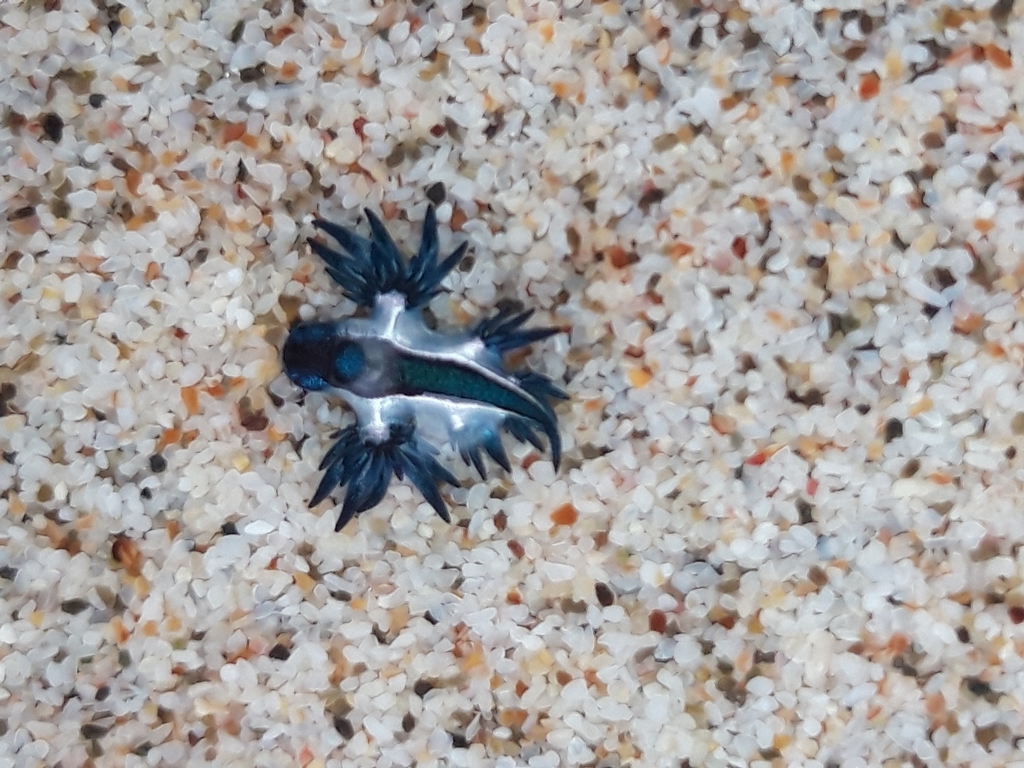
Glaucus atlanticus (common names include the blue sea dragon, sea swallow, blue angel, blue glaucus, dragon slug, blue dragon, blue sea slug, and blue ocean slug) is a species of sea slug in the family Glaucidae.
- Kingdom
- Animalia
- Phylum
- Mollusca
- Class
- Gastropoda
- Order
- Nudibranchia
- Family
- Glaucidae
- Genus
- Glaucus
- Species
- Glaucus atlanticus
Description
Glaucus atlanticus (common names include the blue sea dragon, sea swallow, blue angel, blue glaucus, dragon slug, blue dragon, blue sea slug, and blue ocean slug) is a species of sea slug in the family Glaucidae. These sea slugs live in the pelagic zone (open ocean), where they float upside-down by using the surface tension of the water to stay afloat. In addition, they have a gas bubble in their stomach that makes it easier for them to float. They are carried along by the winds and ocean currents. G. atlanticus makes use of countershading; the blue side of their bodies faces upwards, blending in with the blue of the water. The silver-grey dorsal side of the sea slug faces downwards, blending in with the sunlight shining through the ocean's surface when viewed from below the surface of the water. G. atlanticus feeds on other pelagic creatures, including the Portuguese man o' war and other venomous siphonophores. This sea slug stores stinging nematocysts from the siphonophores within its own tissues as defence against predators. Humans handling the slug may receive a very painful and potentially dangerous sting.
Gallery
Ajouter des photos
Partagez vos photos de cette espèce (jusqu'à 20 à la fois) : elles sont vérifiées automatiquement, puis publiées.
Répartition
Occurrences observées (données GBIF). Les zones hors aire d'origine peuvent indiquer une présence introduite ou invasive.
Sources et crédits
Informations provenant de plusieurs sources vérifiées. Dernière mise à jour : .
Crédits photos (5)
- Photo : Emilia Peñaherrera (@emiliapenaherrera) · CC BY-NC 4.0 · via iNaturalist
- Photo : Andrew Spurgeon (@indeynz) · CC BY-NC 4.0 · via iNaturalist
- Photo : Thomas Mesaglio (@thebeachcomber) · CC BY 4.0 · via iNaturalist
- Photo : Dubravka Skalamera (@duka_skalamera) · CC BY-NC 4.0 · via iNaturalist
- Photo : Jacob Crisp (@jacob-crisp) · CC BY-NC 4.0 · via iNaturalist
Mentions de licence
Texte disponible sous licence CC BY-SA 4.0. Il adapte notamment Wikipedia (CC BY-SA) : Glaucus atlanticus (Wikipédia, auteurs dans l’historique de l’article).
- Taxonomie : GBIF Backbone Taxonomy (CC BY 4.0)
- Carte : occurrences GBIF, fond © contributeurs OpenStreetMap (ODbL)
Détail : Sources et licences.
Discussion (0)
Aucun message pour l’instant. Lancez la discussion sur cette fiche (sources, précisions, débats éditoriaux).
Connectez-vous pour participer à la discussion.