
Kerry Slug
Geomalacus maculosus
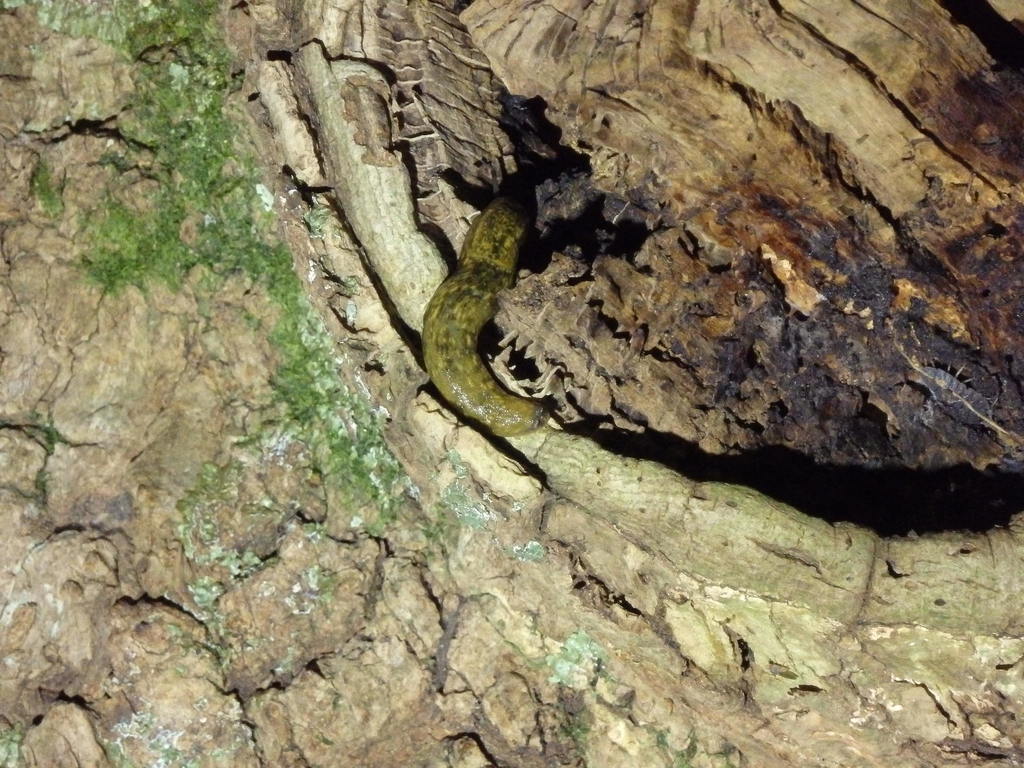
The Kerry slug or Kerry spotted slug (Geomalacus maculosus) is a species of terrestrial, pulmonate, gastropod mollusc.
- Kingdom
- Animalia
- Phylum
- Mollusca
- Class
- Gastropoda
- Order
- Stylommatophora
- Family
- Arionidae
- Genus
- Geomalacus
- Species
- Geomalacus maculosus
Description
The Kerry slug or Kerry spotted slug (Geomalacus maculosus) is a species of terrestrial, pulmonate, gastropod mollusc. It is a medium-to-large sized, air-breathing land slug in the family of roundback slugs, Arionidae. Adult Kerry slugs generally measure 7–8 cm (2.8–3.1 in) in length; they are dark-grey or brown with yellowish spots. The internal anatomy of the slug has some unusual features and some characteristic differences from the genus Arion, also part of Arionidae. The Kerry slug was described in 1843-later than many other relatively large land gastropods present in Ireland and Great Britain-an indication of its restricted distribution and secretive habits. Although the distribution of this slug species includes south-western Ireland-including County Kerry-the species is more widespread in north-western Spain and central-to-northern Portugal. Given that the slug has thus far been recorded exclusively at locations in Ireland and north-western Iberia, it can be said to tentatively possess a Lusitanian distribution. The species appears to require environments that have high humidity, warm summer temperatures and acidic soils with no calcium carbonate. The slug is mostly nocturnal or crepuscular but in Ireland it is active on overcast days. It feeds on lichens, liverworts, mosses and fungi, which grow on boulders and tree trunks. The Kerry slug is protected by conservation laws in the three countries in which it occurs. It is now known to be less dependent on sensitive, wild habitats than when these laws were introduced. Attempts have been made to establish breeding populations in captivity to ensure the survival of this slug species but these have been only partly successful.
Gallery
Ajouter des photos
Partagez vos photos de cette espèce (jusqu'à 20 à la fois) : elles sont vérifiées automatiquement, puis publiées.
Répartition
Occurrences observées (données GBIF). Les zones hors aire d'origine peuvent indiquer une présence introduite ou invasive.
Sources et crédits
Informations provenant de plusieurs sources vérifiées. Dernière mise à jour : .
Crédits photos (6)
- Photo : Carminda Santos (@cminda) · CC BY 4.0 · via iNaturalist
- Photo : @paleogirl · CC BY-NC 4.0 · via iNaturalist
- Photo : Loïs Rancilhac (@lois_rancilhac) · CC BY-NC 4.0 · via iNaturalist
- Photo : Óscar Sampedro (@hosquillar) · CC BY 4.0 · via iNaturalist
- Photo : Daniel Raposo (@draposo79) · CC BY-NC 4.0 · via iNaturalist
- Photo : Miguel Ángel Bermejo Roa (@brutaflor) · CC BY-NC 4.0 · via iNaturalist
Mentions de licence
Texte disponible sous licence CC BY-SA 4.0. Il adapte notamment Wikipedia (CC BY-SA) : Kerry slug (Wikipédia, auteurs dans l’historique de l’article).
- Taxonomie : GBIF Backbone Taxonomy (CC BY 4.0)
- Carte : occurrences GBIF, fond © contributeurs OpenStreetMap (ODbL)
- Statut de conservation : Liste rouge de l'UICN, via Wikidata (CC0)
Détail : Sources et licences.
Discussion (0)
Aucun message pour l’instant. Lancez la discussion sur cette fiche (sources, précisions, débats éditoriaux).
Connectez-vous pour participer à la discussion.