
Humboldt Squid
Dosidicus gigas
The Humboldt squid (Dosidicus gigas), also known as the red devil, jumbo squid, or jumbo flying squid, is a large, predatory squid living in the eastern Pacific Ocean.
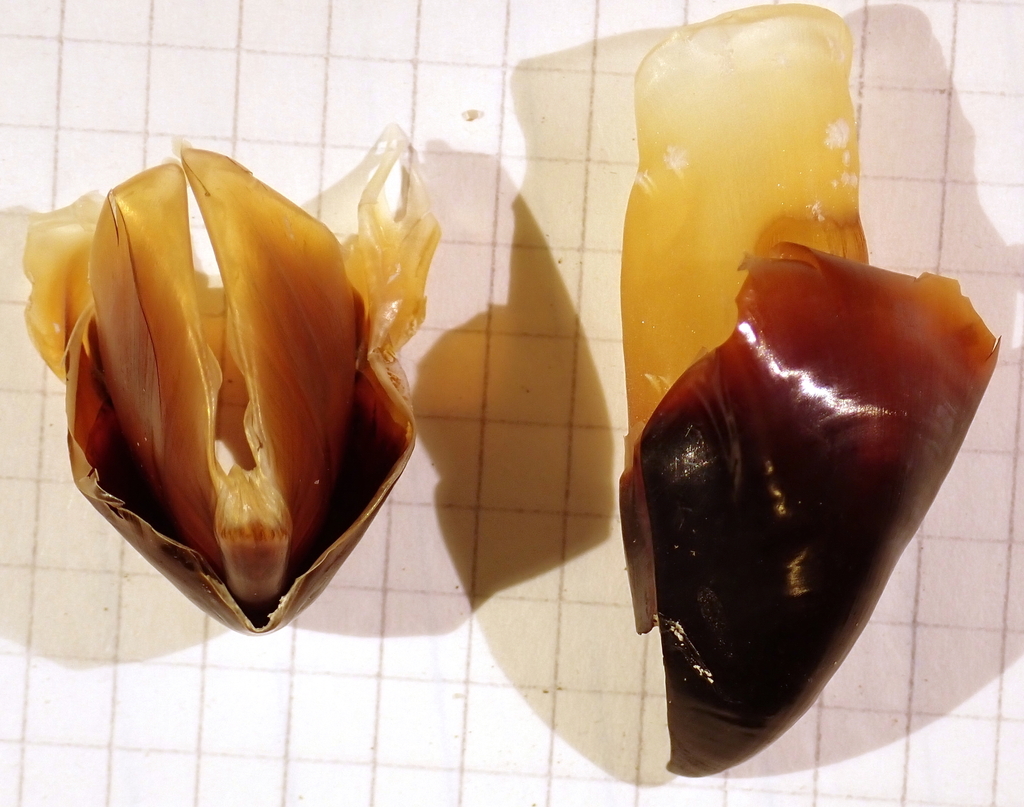
- Kingdom
- Animalia
- Phylum
- Mollusca
- Class
- Cephalopoda
- Order
- Oegopsida
- Family
- Ommastrephidae
- Genus
- Dosidicus
- Species
- Dosidicus gigas
Description
The Humboldt squid (Dosidicus gigas), also known as the red devil, jumbo squid, or jumbo flying squid, is a large, predatory squid living in the eastern Pacific Ocean. It is the only known species of the genus Dosidicus of the subfamily Ommastrephinae, family Ommastrephidae. Humboldt squid typically reach a mantle length of 1.5 m (5 ft), making the species the largest member of its family, and one of the largest species of squid. They are most commonly found at depths of 200 to 700 m (660 to 2,300 ft), from Tierra del Fuego to California. This species is currently spreading north into the waters of the Pacific Northwest, in Oregon, Washington, British Columbia, and Alaska. Like other members of the subfamily Ommastrephinae, they possess chromatophores which enable them to quickly change body coloration, known as 'metachrosis' which is the rapid flash of their skin from red to white. They have a relatively short lifespan of just 1–2 years. This species is the most important squid worldwide for commercial fisheries, with the catch predominantly landed in Chile, Peru and Mexico; however, a 2015 warming waters fishery collapse in the Gulf of California remains unrecovered. They have a reputation for aggression toward humans, although this behavior may only occur during feeding times.
Gallery
Ajouter des photos
Partagez vos photos de cette espèce (jusqu'à 20 à la fois) : elles sont vérifiées automatiquement, puis publiées.
Répartition
Occurrences observées (données GBIF). Les zones hors aire d'origine peuvent indiquer une présence introduite ou invasive.
Sources et crédits
Informations provenant de plusieurs sources vérifiées. Dernière mise à jour : .
Crédits photos (2)
- Photo : Tomas Cedhagen (@tomas_cedhagen) · CC BY-NC 4.0 · via iNaturalist
- Photo : Alex Bairstow (@alex_bairstow) · CC BY-NC 4.0 · via iNaturalist
Mentions de licence
Texte disponible sous licence CC BY-SA 4.0. Il adapte notamment Wikipedia (CC BY-SA) : Humboldt squid (Wikipédia, auteurs dans l’historique de l’article).
- Taxonomie : GBIF Backbone Taxonomy (CC BY 4.0)
- Carte : occurrences GBIF, fond © contributeurs OpenStreetMap (ODbL)
- Statut de conservation : Liste rouge de l'UICN, via Wikidata (CC0)
Détail : Sources et licences.
Discussion (0)
Aucun message pour l’instant. Lancez la discussion sur cette fiche (sources, précisions, débats éditoriaux).
Connectez-vous pour participer à la discussion.