
Red Pine
Dacrydium cupressinum
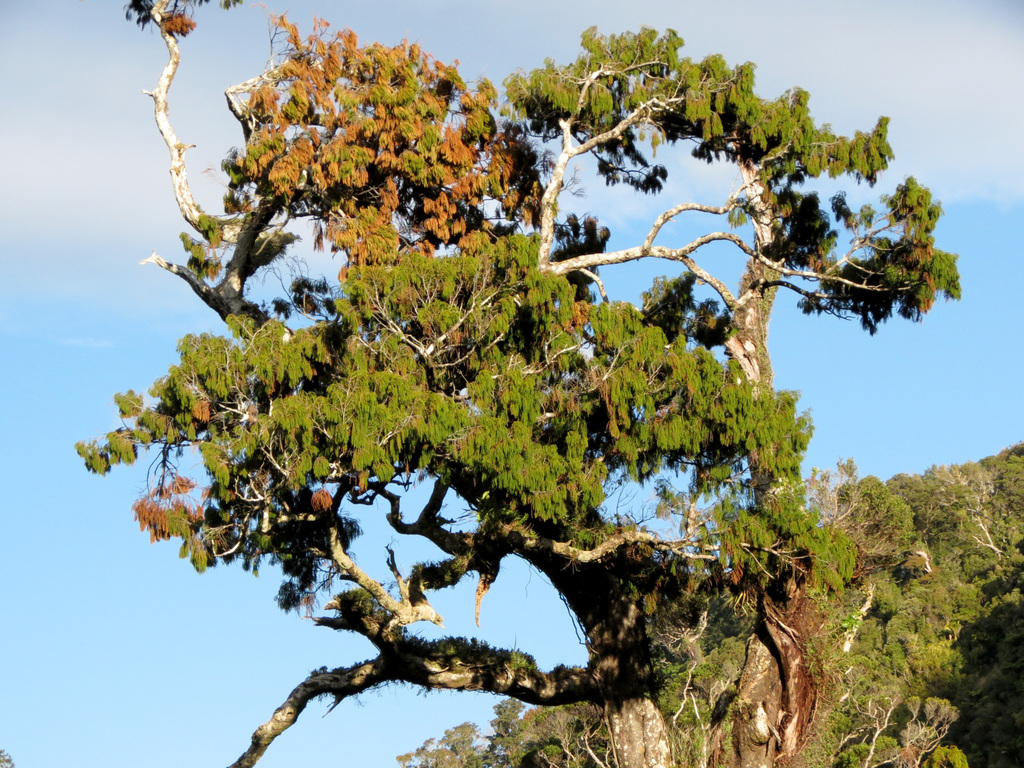
Dacrydium cupressinum, commonly known as rimu, is a species of conifer in the family Podocarpaceae, native to New Zealand.
- Kingdom
- Animalia
- Phylum
- Mollusca
- Class
- Bivalvia
- Order
- Mytilida
- Family
- Mytilidae
- Genus
- Dacrydium
- Species
- Dacrydium cupressinum
Description
Dacrydium cupressinum, commonly known as rimu, is a species of conifer in the family Podocarpaceae, native to New Zealand. The tree usually reaches 35 metres (100 feet) in height, but may reach up to 60 metres (200 feet) and can have a stout trunk up to 2 m (6 ft 7 in) in diameter. It is dioecious, meaning individual trees are either male or female. Rimu is the country's most common native conifer, its range covers the North, South, and Stewart Islands. Rimu has an estimated lifespan of 600–800 years, although it may live as long as 1,200 years. The name D. cupressinum was first published invalidly in 1786 by Daniel Solander and Georg Forster. However the species was first given a valid description in 1806 by Aylmer Lambert. The second part of the scientific name, cupressinum, was given because of the tree's similarity with cypress species. Rimu's fruits are consumed by various birds such as bellbirds, kererū, and the tūī. Rimu's fruits also provide an important source of food and vitamins for the native flightless parrot, the critically endangered kākāpō, which will only mate during years of heavy fruiting. Many different plants grow on the tree's trunk and branches, using it for support, which are called epiphytes and hemi-epiphytes. Rimu also plays host to numerous insect species. In Māori culture, D. cupressinum is of great importance. Rimu had several medicinal purposes for Māori, and the British missionary, Richard Taylor, described the fruit as prized by the natives. In 1773, the British explorer, James Cook, brewed the first native beer at Tamatea / Dusky Sound, by extracting the young tips of the tree's branches. Rimu was once the most harvested timber, popular for flooring, furniture making, wagon building, and other uses, before it was protected by law. The tree's timber has very durable and resilient texture. Rimu's conservation status was assessed by the IUCN Red List in 2013 as "Least Concern", and its population trend was assessed as "Stable".
Gallery
Ajouter des photos
Partagez vos photos de cette espèce (jusqu'à 20 à la fois) : elles sont vérifiées automatiquement, puis publiées.
Répartition
Occurrences observées (données GBIF). Les zones hors aire d'origine peuvent indiquer une présence introduite ou invasive.
Sources et crédits
Informations provenant de plusieurs sources vérifiées. Dernière mise à jour : .
Crédits photos (8)
- Photo : Katja Schulz (@treegrow) · CC BY 4.0 · via iNaturalist
- Photo : Ashley M Bradford (@ashley_bradford) · CC BY-NC 4.0 · via iNaturalist
- Photo : Chris Close (@chrisclose) · CC BY-NC 4.0 · via iNaturalist
- Photo : @greghadley1 · CC BY-NC 4.0 · via iNaturalist
- Photo : @gailtv · CC BY-NC 4.0 · via iNaturalist
- Photo : Alex Fergus (@fergus) · CC BY-NC 4.0 · via iNaturalist
- Photo : James Lennox (@tramperjames) · CC BY-NC 4.0 · via iNaturalist
- Photo : Arthur (@arthurbensana) · CC BY-NC 4.0 · via iNaturalist
Mentions de licence
Texte disponible sous licence CC BY-SA 4.0. Il adapte notamment Wikipedia (CC BY-SA) : Dacrydium cupressinum (Wikipédia, auteurs dans l’historique de l’article).
- Taxonomie : GBIF Backbone Taxonomy (CC BY 4.0)
- Carte : occurrences GBIF, fond © contributeurs OpenStreetMap (ODbL)
- Statut de conservation : Liste rouge de l'UICN, via Wikidata (CC0)
Détail : Sources et licences.
Discussion (0)
Aucun message pour l’instant. Lancez la discussion sur cette fiche (sources, précisions, débats éditoriaux).
Connectez-vous pour participer à la discussion.