
Callista chione
Callista chione
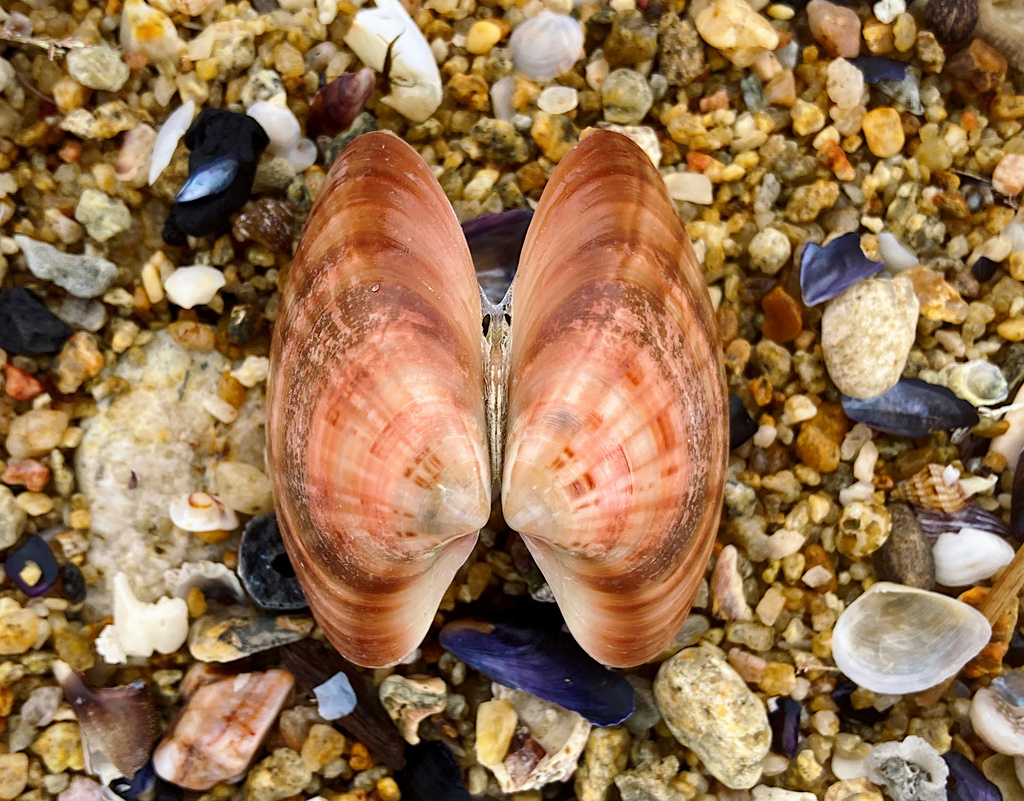
Callista chione, the smooth clam, is a rather large, temperate, marine, bivalve mollusc that inhabits sandy bottoms or with small pebbles in clean waters down to about 200 m from the British Isles to the Mediterranean.
- Kingdom
- Animalia
- Phylum
- Mollusca
- Class
- Bivalvia
- Order
- Venerida
- Family
- Veneridae
- Genus
- Callista
- Species
- Callista chione
Description
Callista chione, the smooth clam, is a rather large, temperate, marine, bivalve mollusc that inhabits sandy bottoms or with small pebbles in clean waters down to about 200 m from the British Isles to the Mediterranean. The shell can reach up to about 110 mm Ø, its outer side is smooth and ranges from light greenish creamy colour to medium brown, probably varies to match the background; the interior is white to soft pink. The concentric and radial growth lines are easily seen. Callista chione is edible, different dishes are prepared throughout the Mediterranean in Spain, Italy, France, the Balkan and the Maghreb countries. It has been found that, as is the case with many bivalve molluscs, which are filter-feeders, (they feed by filtering food particles from the water), that Callista chione, common in fish markets in the Mediterranean, concentrates toxins from dinoflagellates blooms associated with pollution events such as red tides, sewage water, old sediment dredging, ship ballast water dumping, etc. These toxins cannot be eliminated by the traditional cleansing of shellfish in clean water or by cooking, and can be responsible for complex human health problems: respiratory ailments, skin rashes, even paralysis, etc., such as it is known now to have occurred in New Orleans, associated with the contact or ingestion of severely contaminated water, left by Hurricane Katrina. The commonest of these dangers is known as PSP or paralytic shellfish poisoning.
Gallery
Ajouter des photos
Partagez vos photos de cette espèce (jusqu'à 20 à la fois) : elles sont vérifiées automatiquement, puis publiées.
Répartition
Occurrences observées (données GBIF). Les zones hors aire d'origine peuvent indiquer une présence introduite ou invasive.
Sources et crédits
Informations provenant de plusieurs sources vérifiées. Dernière mise à jour : .
Crédits photos (5)
- Photo : @g_tsakraklides · CC BY-NC 4.0 · via iNaturalist
- Photo : Mattia Menchetti (@mattiamenchetti) · CC BY 4.0 · via iNaturalist
- Photo : @dirtyicecream · CC BY-NC 4.0 · via iNaturalist
- Photo : @emmanuel_varlet · CC BY-NC 4.0 · via iNaturalist
- Photo : Alberto Colatore (@alberto_colatore) · CC BY-NC 4.0 · via iNaturalist
Mentions de licence
Texte disponible sous licence CC BY-SA 4.0. Il adapte notamment Wikipedia (CC BY-SA) : Callista chione (Wikipédia, auteurs dans l’historique de l’article).
- Taxonomie : GBIF Backbone Taxonomy (CC BY 4.0)
- Carte : occurrences GBIF, fond © contributeurs OpenStreetMap (ODbL)
Détail : Sources et licences.
Discussion (0)
Aucun message pour l’instant. Lancez la discussion sur cette fiche (sources, précisions, débats éditoriaux).
Connectez-vous pour participer à la discussion.