
Striped Polecat
Ictonyx striatus
The striped polecat (Ictonyx striatus), also called the African polecat, zoril, zorille, zorilla, African muishond, striped muishond, Cape polecat, and African skunk, is a species of mammal native to sub-Saharan Africa.
- Kingdom
- Animalia
- Phylum
- Chordata
- Class
- Mammalia
- Order
- Carnivora
- Family
- Mustelidae
- Genus
- Ictonyx
- Species
- Ictonyx striatus
Description
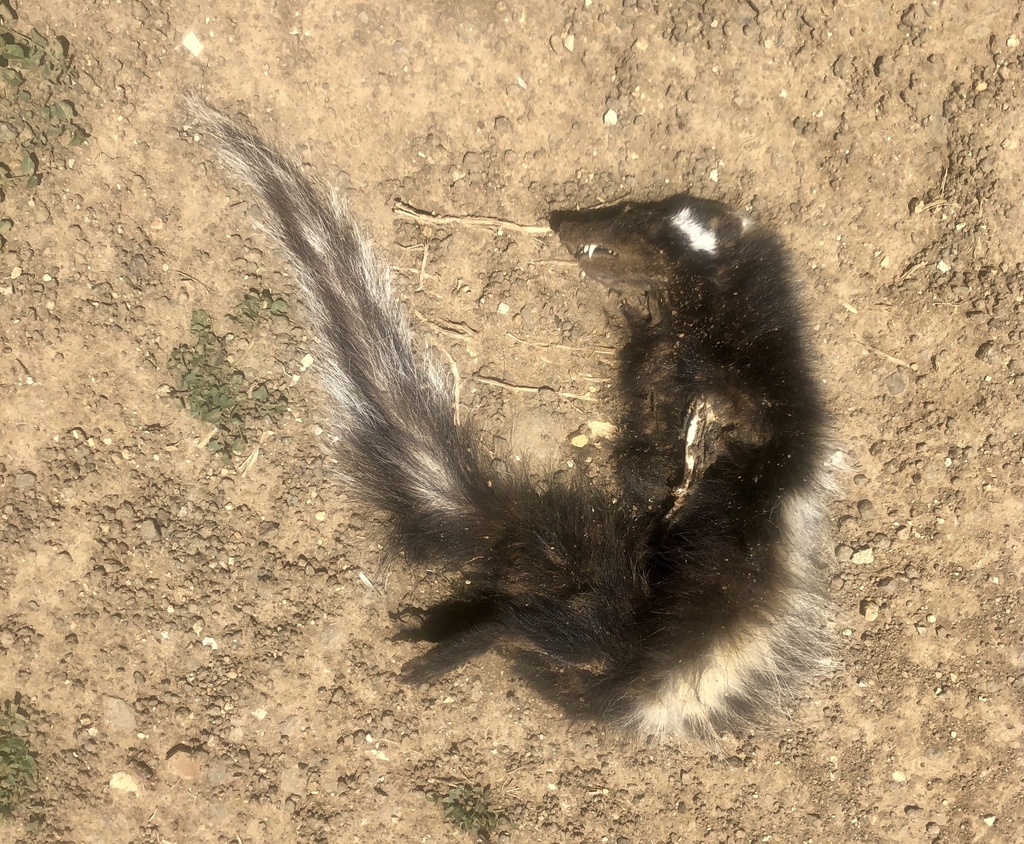
The striped polecat (Ictonyx striatus), also called the African polecat, zoril, zorille, zorilla, African muishond, striped muishond, Cape polecat, and African skunk, is a species of mammal native to sub-Saharan Africa. Despite bearing some resemblance to a skunk (of the family Mephitidae), it belongs in a separate family known as the Mustelidae, and genetic analysis suggests that its closest living relative is the African striped weasel. It is adaptable and lives in a wide range of habitats and elevations, preferring open environments with lower levels of shrubs. This species measures 30–38 cm (12–15 in) in length excluding the tail, with males growing larger than females. Its fur is mostly black, with distinctive white stripes running down its back and white patches on its face and tail, though the exact patterning is highly variable. The forelimbs of this animal bear long, curved claws which it uses to excavate burrows or dig for invertebrate prey in soil or dung. The striped polecat is a predatory and mostly carnivorous animal that primarily feeds on insects, rodents and small reptiles, but also eats birds, eggs, amphibians and other invertebrates. A nocturnal creature, it actively forages throughout the night and retreats to a resting area during the day, which is typically a burrow or other crevice. Near its anus, the striped polecat has glands which can spray a nauseating, irritating fluid at potential predators to defend itself. Its striking colouration is an example of aposematism, warning predators of its spray to deter them from attacking, and it takes a defensive stance with its back arched and tail raised before it sprays. Due to this, the striped polecat is rarely targeted by predators, and vehicular collision is a more common cause of death. The striped polecat is a mostly solitary animal, and adult males are hostile towards one another, though family groups do occur and multiple can be kept together in captivity. Females tolerate males during the breeding season, and after a gestation period of 36 days, the mother gives birth to and raises her litter of two or three young. Newborns have closed eyes and ears, and are almost hairless, with most of their pink skin visible. A variety of different calls are used by striped polecats to communicate with each other, as are behavioural cues and likely olfactic communication involving its odorous fluids. The striped polecat is common across most of its range, despite localized population declines, and is not believed to face any major threats to its overall survival as a species.
Gallery
Ajouter des photos
Partagez vos photos de cette espèce (jusqu'à 20 à la fois) : elles sont vérifiées automatiquement, puis publiées.
Répartition
Occurrences observées (données GBIF). Les zones hors aire d'origine peuvent indiquer une présence introduite ou invasive.
Sources et crédits
Informations provenant de plusieurs sources vérifiées. Dernière mise à jour : .
Crédits photos (5)
- Photo : @lance_robinson · CC BY-NC 4.0 · via iNaturalist
- Photo : Elana Kellerman (@ekellerman) · CC BY-NC 4.0 · via iNaturalist
- Photo : Justin Ponder (@justin_p) · CC BY 4.0 · via iNaturalist
- Photo : Sally Adam (@sallyslak) · CC BY-NC 4.0 · via iNaturalist
- Photo : @daanbuijs · CC BY-NC 4.0 · via iNaturalist
Mentions de licence
Texte disponible sous licence CC BY-SA 4.0. Il adapte notamment Zorille commune, Wikipedia (CC BY-SA) : Striped polecat (Wikipédia, auteurs dans l’historique de l’article).
- Taxonomie : GBIF Backbone Taxonomy (CC BY 4.0)
- Carte : occurrences GBIF, fond © contributeurs OpenStreetMap (ODbL)
- Statut de conservation : Liste rouge de l'UICN, via Wikidata (CC0)
Détail : Sources et licences.
Discussion (0)
Aucun message pour l’instant. Lancez la discussion sur cette fiche (sources, précisions, débats éditoriaux).
Connectez-vous pour participer à la discussion.