
New England cottontail
Sylvilagus transitionalis
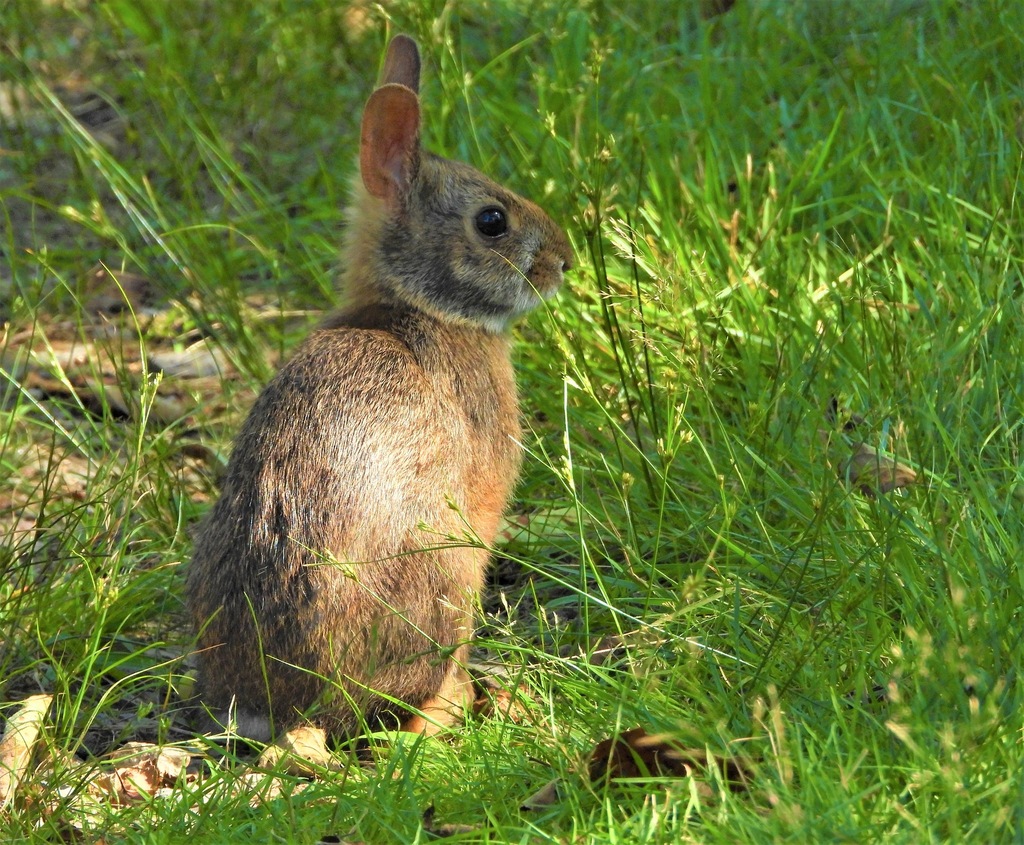
The New England cottontail (Sylvilagus transitionalis), also known as the gray rabbit, brush rabbit, wood hare, wood rabbit, or cooney, is a species of cottontail rabbit that appears in fragmented populations across New England and the…
- Kingdom
- Animalia
- Phylum
- Chordata
- Class
- Mammalia
- Order
- Lagomorpha
- Family
- Leporidae
- Genus
- Sylvilagus
- Species
- Sylvilagus transitionalis
Description
The New England cottontail (Sylvilagus transitionalis), also known as the gray rabbit, brush rabbit, wood hare, wood rabbit, or cooney, is a species of cottontail rabbit that appears in fragmented populations across New England and the state of New York, specifically from southern Maine to southern New York. This species bears a close resemblance to the eastern cottontail (Sylvilagus floridanus), which has been introduced in much of the New England cottontail home range. The eastern cottontail is now more common in it. In 2006, it was estimated that the current area of occupancy in its historic range is 12,180 km2 (4,700 sq mi) - some 86% less than the occupied range in 1960. Because of this decrease in this species' numbers and habitat, the New England cottontail is a candidate for protection under the Endangered Species Act. Cottontail hunting has been restricted in some areas where the eastern and New England cottontail species coexist in order to protect the remaining New England cottontail population. Rabbits require habitat patches of at least 12 acres (4.9 hectares) to maintain a stable population. In New Hampshire, the number of identified patches dropped from 20 to eight in the early 2000s. The ideal habitat is 25 acres (10 hectares) of continuous early successional habitat within a larger landscape that provides shrub wetlands and dense thickets. Federal funding has been used for habitat restoration work on state lands, including the planting of shrubs and other growth critical to the rabbit's habitat. Funding has also been made available to private landowners who are willing to create thicket-type brush habitat which does not have much economic value.
Gallery
Ajouter des photos
Partagez vos photos de cette espèce (jusqu'à 20 à la fois) : elles sont vérifiées automatiquement, puis publiées.
Répartition
Occurrences observées (données GBIF). Les zones hors aire d'origine peuvent indiquer une présence introduite ou invasive.
Sources et crédits
Informations provenant de plusieurs sources vérifiées. Dernière mise à jour : .
Crédits photos (7)
- Photo : Stephane Le Tirant (@stephane) · CC BY-NC 4.0 · via iNaturalist
- Photo : James Maughn (@jmaughn) · CC BY-NC 4.0 · via iNaturalist
- Photo : Will Kostick (@wkostick) · CC BY-NC 4.0 · via iNaturalist
- Photo : Alex Lamoreaux (@alexlamoreaux) · CC BY-NC 4.0 · via iNaturalist
- Photo : Mike Perrin (@mikeheron) · CC BY-NC 4.0 · via iNaturalist
- Photo : Nick Tepper (@ntepper) · CC BY-NC 4.0 · via iNaturalist
- Photo : Ken Janes (@kenjanes) · CC BY-NC 4.0 · via iNaturalist
Mentions de licence
Texte disponible sous licence CC BY-SA 4.0. Il adapte notamment Sylvilagus transitionalis, Wikipedia (CC BY-SA) : New England cottontail (Wikipédia, auteurs dans l’historique de l’article).
- Taxonomie : GBIF Backbone Taxonomy (CC BY 4.0)
- Carte : occurrences GBIF, fond © contributeurs OpenStreetMap (ODbL)
- Statut de conservation : Liste rouge de l'UICN, via Wikidata (CC0)
Détail : Sources et licences.
Discussion (0)
Aucun message pour l’instant. Lancez la discussion sur cette fiche (sources, précisions, débats éditoriaux).
Connectez-vous pour participer à la discussion.