
Siamang
Symphalangus syndactylus
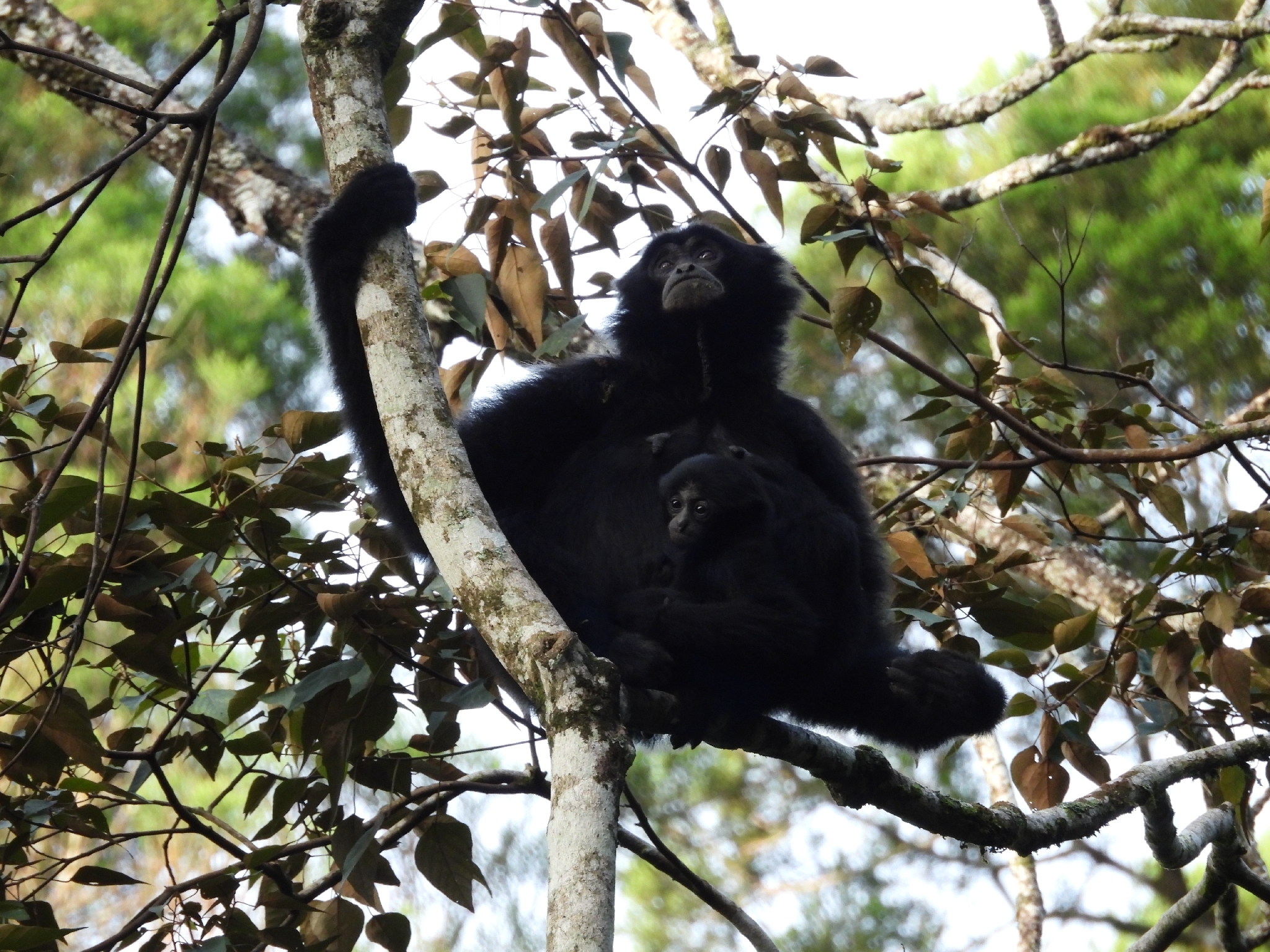
The siamang (, also UK: ; Symphalangus syndactylus) is an endangered arboreal, black-furred gibbon native to the tropical rainforests of Indonesia, Malaysia, and Thailand.
- Kingdom
- Animalia
- Phylum
- Chordata
- Class
- Mammalia
- Order
- Primates
- Family
- Hylobatidae
- Genus
- Symphalangus
- Species
- Symphalangus syndactylus
Description
The siamang (, also UK: ; Symphalangus syndactylus) is an endangered arboreal, black-furred gibbon native to the tropical rainforests of Indonesia, Malaysia, and Thailand. The largest of the gibbons, the siamang can be twice the size of other gibbons, reaching 1 m (3.3 ft) in height, and weighing up to 14 kg (31 lb). It is the only species in the genus Symphalangus. Fossils of siamangs date back to the Middle Pleistocene. Two features distinguish the siamang from other gibbons. First, two digits on each foot-the second and third toes-are partially joined by a membrane, hence the specific name syndactylus, from the Ancient Greek σύν, sun-, "with" + δάκτυλος, daktulos, "finger". Second, a large gular sac (throat pouch), found in both males and females of the species, can be inflated to the size of the siamang's head, allowing it to make resonating calls. Two subspecies of the siamang are the nominate Sumatran siamang (S. s. syndactylus) and the Malaysian siamang (S. s. continentis, in Malay Peninsula). Otherwise, the Malaysian individuals are only a population. The siamang occurs sympatrically with other gibbons; its two ranges are entirely within the combined ranges of the agile gibbon and the lar gibbon. The siamang can live to around 40 years in captivity. While the illegal pet trade takes a toll on wild populations, the principal threat to the siamang is habitat loss in both Indonesia and Malaysia. The palm oil production industry is clearing large swaths of forest, reducing the habitat of the siamang, along with those of other species, such as the Sumatran tiger.
Gallery
Ajouter des photos
Partagez vos photos de cette espèce (jusqu'à 20 à la fois) : elles sont vérifiées automatiquement, puis publiées.
Répartition
Occurrences observées (données GBIF). Les zones hors aire d'origine peuvent indiquer une présence introduite ou invasive.
Sources et crédits
Informations provenant de plusieurs sources vérifiées. Dernière mise à jour : .
Crédits photos (6)
- Photo : damiangan · CC BY-NC 4.0 · via GBIF
- Photo : Mark Clarke (@hatwise) · CC BY 4.0 · via iNaturalist
- Photo : @naturalistnatasha · CC BY-NC 4.0 · via iNaturalist
- Photo : @timboucher · CC BY-NC 4.0 · via iNaturalist
- Photo : @andraescholz · CC BY-NC 4.0 · via iNaturalist
- Photo : @ciniale · CC BY-NC 4.0 · via iNaturalist
Mentions de licence
Texte disponible sous licence CC BY-SA 4.0. Il adapte notamment Siamang, Wikipedia (CC BY-SA) : Siamang (Wikipédia, auteurs dans l’historique de l’article).
- Taxonomie : GBIF Backbone Taxonomy (CC BY 4.0)
- Carte : occurrences GBIF, fond © contributeurs OpenStreetMap (ODbL)
Détail : Sources et licences.
Discussion (0)
Aucun message pour l’instant. Lancez la discussion sur cette fiche (sources, précisions, débats éditoriaux).
Connectez-vous pour participer à la discussion.