
Small Five-toed Jerboa
Allactaga elater
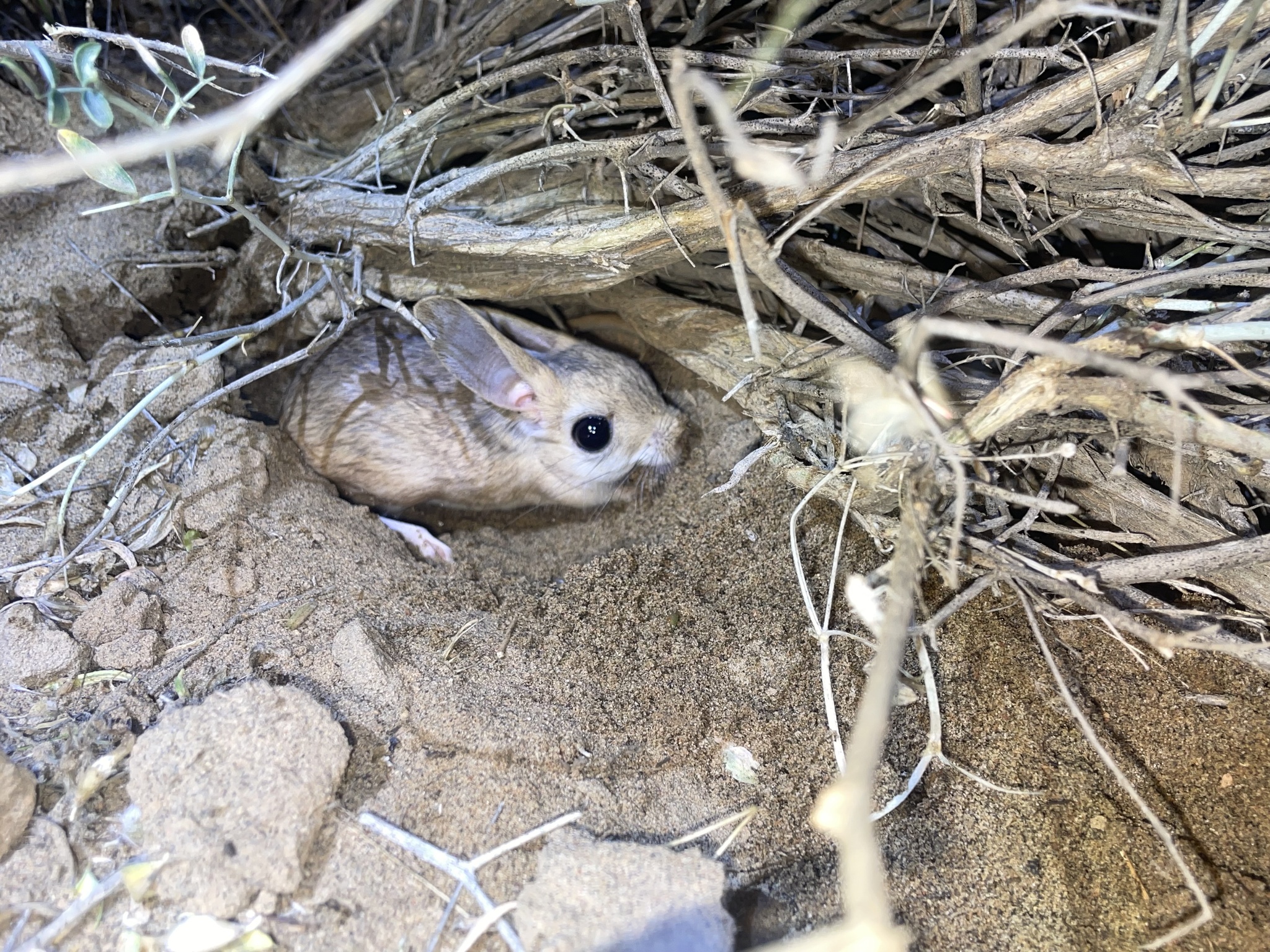
The small five-toed jerboa (Scarturus elater) is a rodent of the family Dipodidae and genus Scarturus, that has five digits.
- Kingdom
- Animalia
- Phylum
- Chordata
- Class
- Mammalia
- Order
- Rodentia
- Family
- Dipodidae
- Genus
- Allactaga
- Species
- Allactaga elater
Description
The small five-toed jerboa (Scarturus elater) is a rodent of the family Dipodidae and genus Scarturus, that has five digits. They are hopping rodents of the rocky deserts in Asia. They have been found in Afghanistan, Armenia, Azerbaijan, China, Georgia, Iran, Kazakhstan, Pakistan, Russia, Tajikistan, Turkey, and Turkmenistan. They have long hind feet, short forelimbs, and walk upright. The jerboa body length ranges from 5–15 cm and has a tail ranging from 7–25 cm. They have large ears in comparison to their body size and a large tail. The tail assists and serves as support when the jerboa is standing upright. These hopping rodents can reach a speed up to 48 km/h. The forelimbs of the jerboa serve as a pair of hands for feeding, grooming, etc. The male jerboa is usually larger in size and weight in comparison to the female jerboa. The pelt of the jerboa is either silky or velvety in texture and light in color, the coloration helps camouflage into surroundings to avoid predators. "Its coloration varies from sandy or buff to dark russet or black with pale under parts and a white strip on the hip”.
Ajouter des photos
Partagez vos photos de cette espèce (jusqu'à 20 à la fois) : elles sont vérifiées automatiquement, puis publiées.
Répartition
Occurrences observées (données GBIF). Les zones hors aire d'origine peuvent indiquer une présence introduite ou invasive.
Sources et crédits
Informations provenant de plusieurs sources vérifiées. Dernière mise à jour : .
Crédits photos (1)
- Photo : syrymbet · CC BY-NC 4.0 · via GBIF
Mentions de licence
Texte disponible sous licence CC BY-SA 4.0. Il adapte notamment Scarturus elater, Wikipedia (CC BY-SA) : Small five-toed jerboa (Wikipédia, auteurs dans l’historique de l’article).
- Taxonomie : GBIF Backbone Taxonomy (CC BY 4.0)
- Carte : occurrences GBIF, fond © contributeurs OpenStreetMap (ODbL)
Détail : Sources et licences.
Discussion (0)
Aucun message pour l’instant. Lancez la discussion sur cette fiche (sources, précisions, débats éditoriaux).
Connectez-vous pour participer à la discussion.