
Fin whale
Balaenoptera physalus
The fin whale (Balaenoptera physalus), also known as the finback whale or common rorqual, is a species of baleen whale and the second-longest cetacean after the blue whale.
- Kingdom
- Animalia
- Phylum
- Chordata
- Class
- Mammalia
- Order
- Cetacea
- Family
- Balaenopteridae
- Genus
- Balaenoptera
- Species
- Balaenoptera physalus
Description
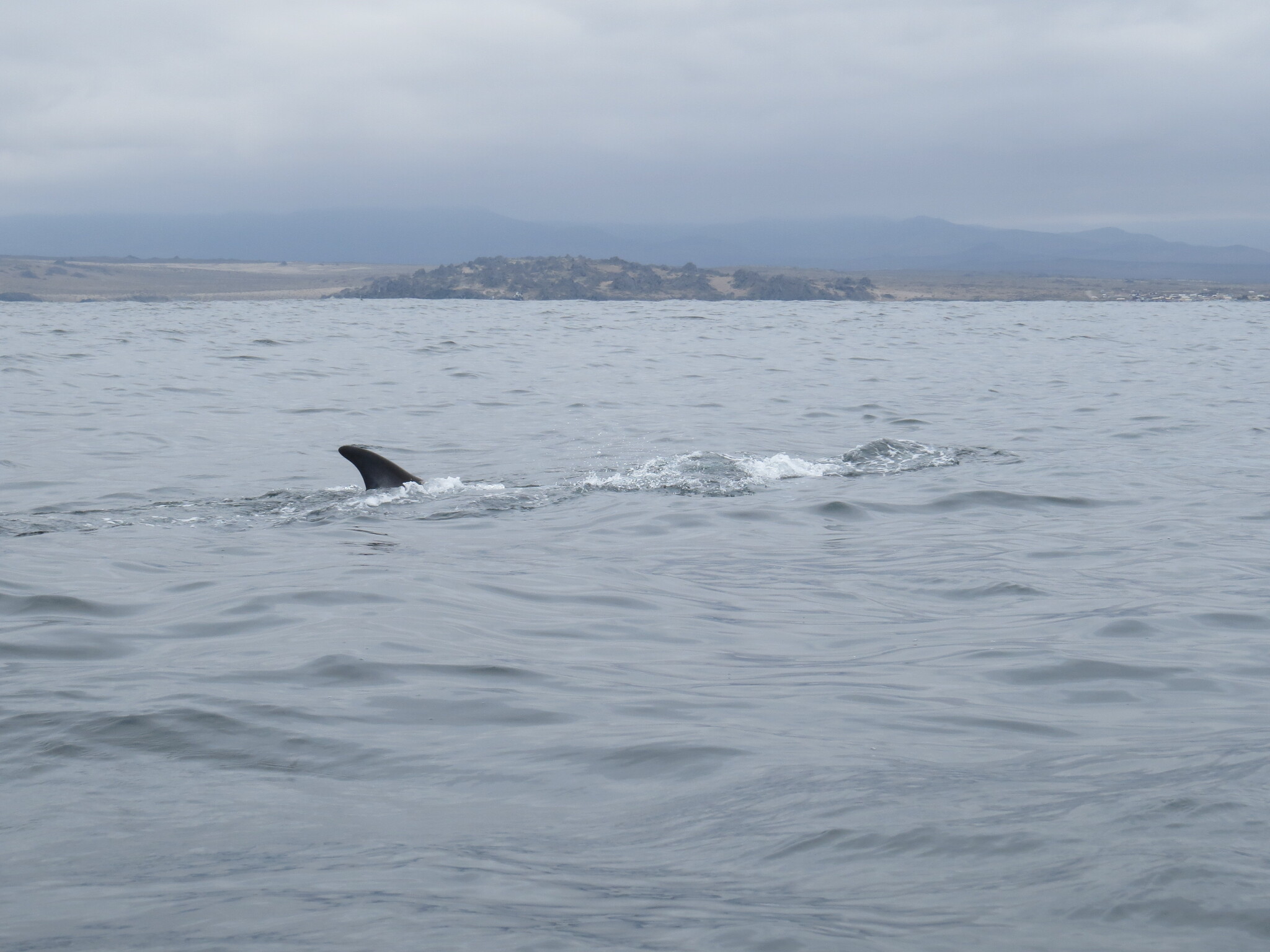
The fin whale (Balaenoptera physalus), also known as the finback whale or common rorqual, is a species of baleen whale and the second-longest cetacean after the blue whale. The biggest individual reportedly measured 26–27.3 m (85–90 ft) in length, with a maximum recorded weight of 65.5 to 120 tonnes (72.2 to 132.3 short tons; 64.5 to 118.1 long tons). The fin whale's body is long, slender, and brownish-gray in color, with a paler underside to appear less conspicuous from below (countershading). At least two recognized subspecies exist, one in the North Atlantic and one across the Southern Hemisphere. The species is found in all the major oceans, from polar to tropical waters, and is absent only from waters close to the pack ice at the poles and relatively small areas of water away from the open ocean. The highest population density occurs in temperate and cool waters. Its prey mainly consists of smaller schooling fish, small squid, and crustaceans, including copepods and krill. Mating takes place in temperate, low-latitude seas during the winter. Fin whales are often observed in pods of 6–10 animals, with whom they communicate using frequency-modulated sounds, ranging from 16 to 40 hertz. Like all other large whales, the fin whale was a prized kill during the "heyday" of whaling from 1840 to 1861. This remained so into the 20th century, but decades of overharvesting contributed to declining numbers through the late 20th century. Over 725,000 fin whales were reportedly taken from the Southern Hemisphere between 1905 and 1976. Postrecovery numbers of the southern subspecies are predicted to be less than 50% of the prewhaling population, even by 2010, due to long-lasting impacts of whaling and slow recovery rates. In the North Atlantic, it is considered to be fully recovered from past exploitation, while in other oceans, it is still in the process of recovery. As of 2018, it was assessed as vulnerable by the International Union for the Conservation of Nature.
Gallery
Ajouter des photos
Partagez vos photos de cette espèce (jusqu'à 20 à la fois) : elles sont vérifiées automatiquement, puis publiées.
Répartition
Occurrences observées (données GBIF). Les zones hors aire d'origine peuvent indiquer une présence introduite ou invasive.
Sources et crédits
Informations provenant de plusieurs sources vérifiées. Dernière mise à jour : .
Crédits photos (6)
- Photo : ignacio_diaz05 · CC BY 4.0 · via GBIF
- Photo : Steve Ansell (@steveansell) · CC BY-NC 4.0 · via iNaturalist
- Photo : Floyd E. Hayes (@floydehayes) · CC BY-NC 4.0 · via iNaturalist
- Photo : @swiftsoutdoors · CC BY-NC 4.0 · via iNaturalist
- Photo : Ingrid Messbauer (@iemess) · CC BY-NC 4.0 · via iNaturalist
- Photo : Ari Boehm (@ari10) · CC BY-NC 4.0 · via iNaturalist
Mentions de licence
Texte disponible sous licence CC BY-SA 4.0. Il adapte notamment Wikipedia (CC BY-SA) : Fin whale (Wikipédia, auteurs dans l’historique de l’article).
- Taxonomie : GBIF Backbone Taxonomy (CC BY 4.0)
- Carte : occurrences GBIF, fond © contributeurs OpenStreetMap (ODbL)
- Statut de conservation : Liste rouge de l'UICN, via Wikidata (CC0)
Détail : Sources et licences.
Discussion (0)
Aucun message pour l’instant. Lancez la discussion sur cette fiche (sources, précisions, débats éditoriaux).
Connectez-vous pour participer à la discussion.