
Volcano Rabbit
Romerolagus diazi
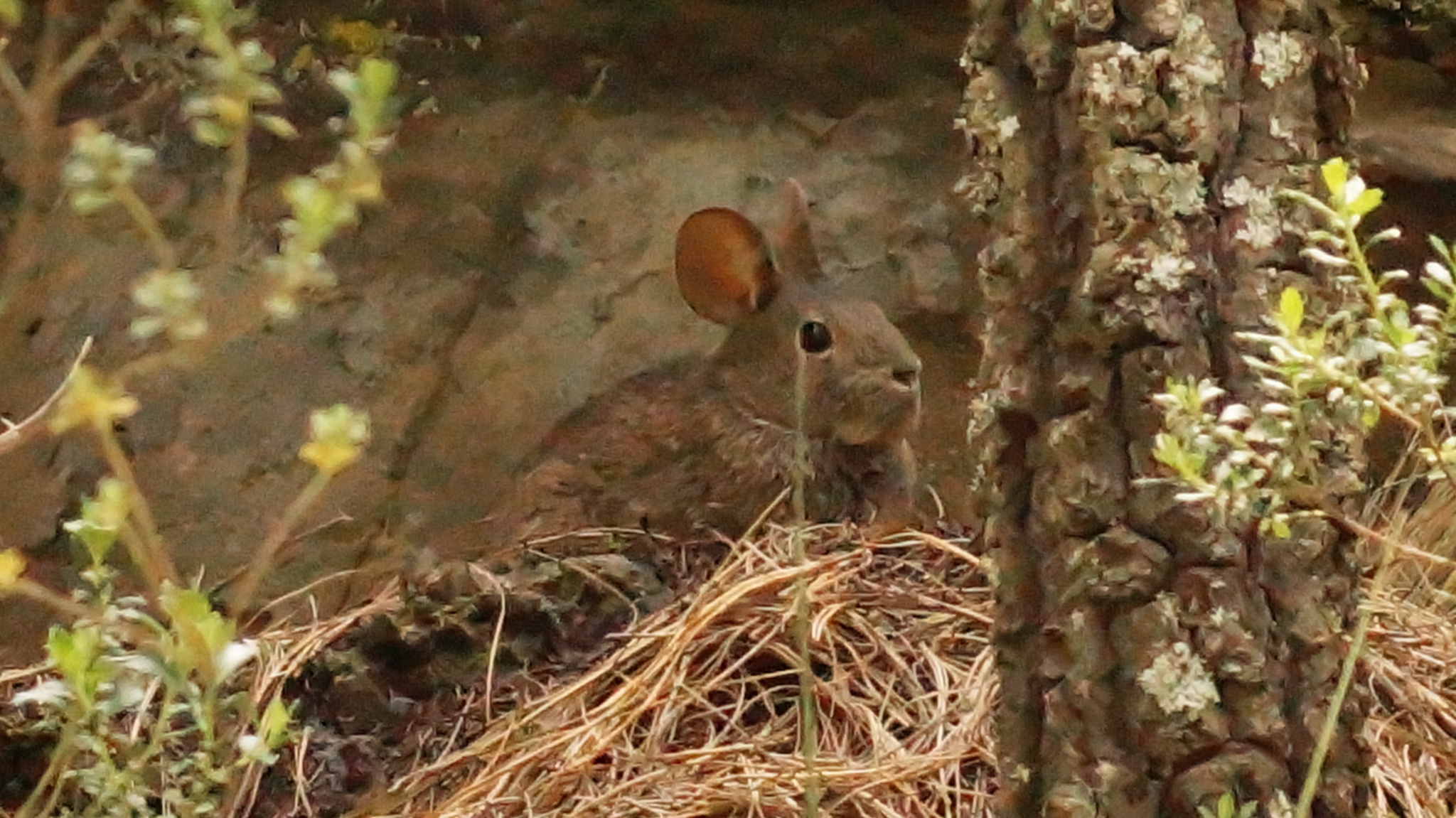
The volcano rabbit (Romerolagus diazi) (Spanish: conejo de los volcanes), also known as the teporingo or zacatuche, is a species of small rabbit that lives in pine and alder forests on volcanic slopes in Mexico.
- Kingdom
- Animalia
- Phylum
- Chordata
- Class
- Mammalia
- Order
- Lagomorpha
- Family
- Leporidae
- Genus
- Romerolagus
- Species
- Romerolagus diazi
Description
The volcano rabbit (Romerolagus diazi) (Spanish: conejo de los volcanes), also known as the teporingo or zacatuche, is a species of small rabbit that lives in pine and alder forests on volcanic slopes in Mexico. It is the only species in the genus Romerolagus and is considered to be the most primitive species among the rabbits and hares. It has small, rounded ears, short legs, a large forehead, and short, thick fur. It is one of the world's smallest rabbits, lives in groups consisting of between two and five members, and makes burrows (underground nests) and runways (worn-down, frequently traveled surface paths) among bunchgrasses. Up to three young are produced per litter, born in nests formed from shallow depressions in the ground lined with fur and plant matter. Uniquely among the rabbits, the volcano rabbit emits high-pitched sounds to warn other rabbits of danger, a habit common in the related pikas. It is awake and most active in the early morning and evening. Populations have been estimated as approximately 7,000 adult individuals over their entire range. Human developments surrounding the volcano rabbit's habitat-including overgrazing, hunting, and burning of the species' preferred scrublands-have caused significant declines in population, even in protected parks. Both the IUCN and the Mexican government consider the volcano rabbit an endangered species. It is listed on Appendix I of the CITES treaty, which is intended to restrict trade of the animal.
Gallery
Ajouter des photos
Partagez vos photos de cette espèce (jusqu'à 20 à la fois) : elles sont vérifiées automatiquement, puis publiées.
Répartition
Occurrences observées (données GBIF). Les zones hors aire d'origine peuvent indiquer une présence introduite ou invasive.
Sources et crédits
Informations provenant de plusieurs sources vérifiées. Dernière mise à jour : .
Crédits photos (5)
- Photo : Manuel Alejandro Rodríguez Martínez · CC BY-NC 4.0 · via GBIF
- Photo : León Felipe (@fisherman) · CC BY-NC 4.0 · via iNaturalist
- Photo : Raymundo Omar (@raomoct68) · CC BY-NC 4.0 · via iNaturalist
- Photo : Jaime Marcelo Aranda Sánchez (@marcelo_aranda) · CC BY-NC 4.0 · via iNaturalist
- Photo : Annamaria Savarino (@a_savarino) · CC BY-NC 4.0 · via iNaturalist
Mentions de licence
Texte disponible sous licence CC BY-SA 4.0. Il adapte notamment Romerolagus diazi, Wikipedia (CC BY-SA) : Volcano rabbit (Wikipédia, auteurs dans l’historique de l’article).
- Taxonomie : GBIF Backbone Taxonomy (CC BY 4.0)
- Carte : occurrences GBIF, fond © contributeurs OpenStreetMap (ODbL)
Détail : Sources et licences.
Discussion (0)
Aucun message pour l’instant. Lancez la discussion sur cette fiche (sources, précisions, débats éditoriaux).
Connectez-vous pour participer à la discussion.