
Steller's Sea Cow
Hydrodamalis gigas
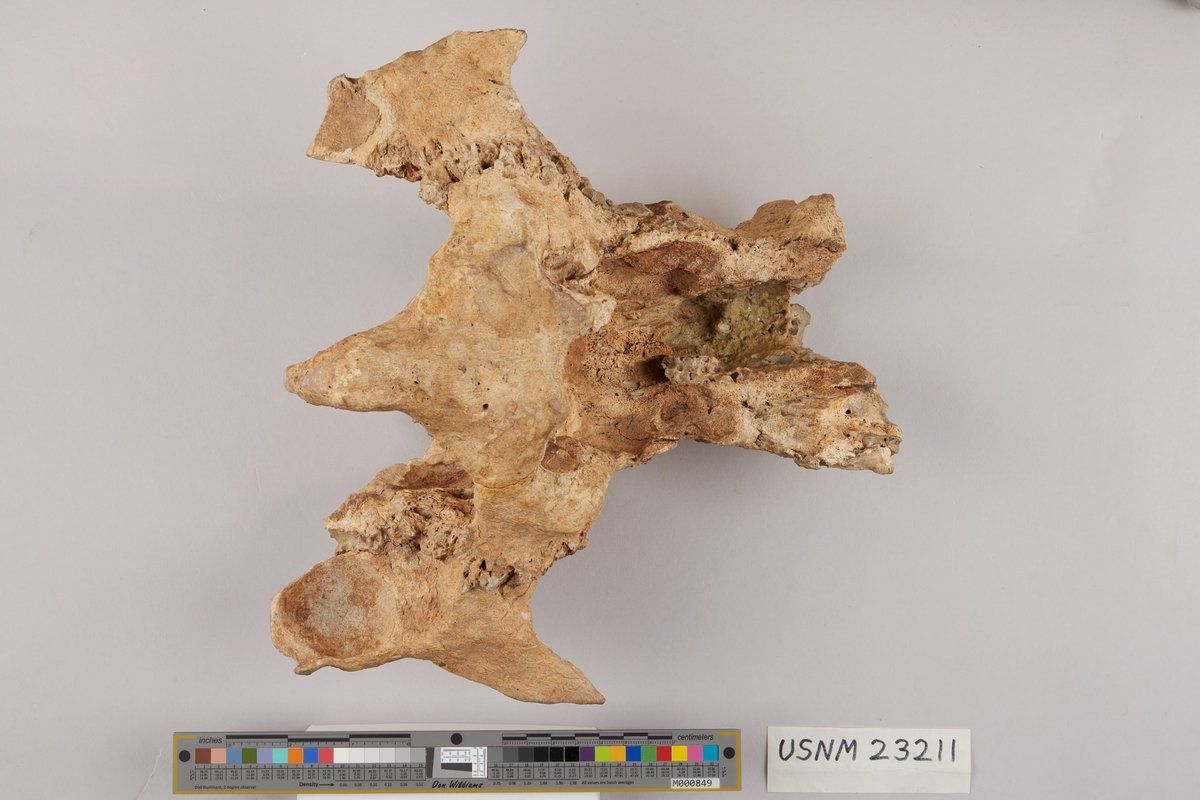
Steller's sea cow (Hydrodamalis gigas) is an extinct sirenian described by Georg Wilhelm Steller in 1741.
- Kingdom
- Animalia
- Phylum
- Chordata
- Class
- Mammalia
- Order
- Sirenia
- Family
- Dugongidae
- Genus
- Hydrodamalis
- Species
- Hydrodamalis gigas
Description
Steller's sea cow (Hydrodamalis gigas) is an extinct sirenian described by Georg Wilhelm Steller in 1741. At that time, it was found only around the Commander Islands in the Bering Sea between Alaska and Russia; its range extended across the North Pacific during the Pleistocene epoch, and likely contracted to such an extreme degree due to the glacial cycle. It is possible that indigenous populations interacted with the animal before Europeans. Steller first encountered it on Vitus Bering's Great Northern Expedition when the crew became shipwrecked on Bering Island. Much of what is known about its behavior comes from Steller's observations on the island, documented in his posthumous publication On the Beasts of the Sea. Within 27 years of its discovery by Europeans, the slow-moving and easily caught mammal was hunted into extinction for its meat, fat, and hide. Some 18th-century adults would have reached weights of 8–10 t (8.8–11.0 short tons) and lengths up to 9 m (30 ft). It was a member of the family Dugongidae, of which the 3 m (9.8 ft) long dugong (Dugong dugon) is the sole living member. It had a thicker layer of blubber than other members of the order, an adaptation to the cold waters of its environment. Its tail was forked, like that of whales or dugongs. Lacking true teeth, it had an array of white bristles on its upper lip and two keratinous plates within its mouth for chewing. It fed mainly on kelp, and communicated with sighs and snorting sounds. Steller believed it was a monogamous and social animal living in small family groups and raising its young, similar to modern sirenians.
Gallery
Ajouter des photos
Partagez vos photos de cette espèce (jusqu'à 20 à la fois) : elles sont vérifiées automatiquement, puis publiées.
Répartition
Occurrences observées (données GBIF). Les zones hors aire d'origine peuvent indiquer une présence introduite ou invasive.
Sources et crédits
Informations provenant de plusieurs sources vérifiées. Dernière mise à jour : .
Crédits photos (10)
- Photo : Matthew T. Miller · CC0 (domaine public) · via GBIF
- Photo : J. Carpenter · CC0 (domaine public) · via GBIF
- Photo : J. Carpenter · CC0 (domaine public) · via GBIF
- Photo : L. Stejneger · CC0 (domaine public) · via GBIF
- Photo : L. Stejneger · CC0 (domaine public) · via GBIF
- Photo : L. Stejneger · CC0 (domaine public) · via GBIF
- Photo : L. Stejneger · CC0 (domaine public) · via GBIF
- Photo : L. Stejneger · CC0 (domaine public) · via GBIF
- Photo : L. Stejneger · CC0 (domaine public) · via GBIF
- Photo : L. Stejneger · CC0 (domaine public) · via GBIF
Mentions de licence
Texte disponible sous licence CC BY-SA 4.0. Il adapte notamment Rhytine de Steller, Wikipedia (CC BY-SA) : Steller's sea cow (Wikipédia, auteurs dans l’historique de l’article).
- Taxonomie : GBIF Backbone Taxonomy (CC BY 4.0)
- Carte : occurrences GBIF, fond © contributeurs OpenStreetMap (ODbL)
- Statut de conservation : Liste rouge de l'UICN, via Wikidata (CC0)
Détail : Sources et licences.
Discussion (0)
Aucun message pour l’instant. Lancez la discussion sur cette fiche (sources, précisions, débats éditoriaux).
Connectez-vous pour participer à la discussion.