
Sechuran Fox
Lycalopex sechurae
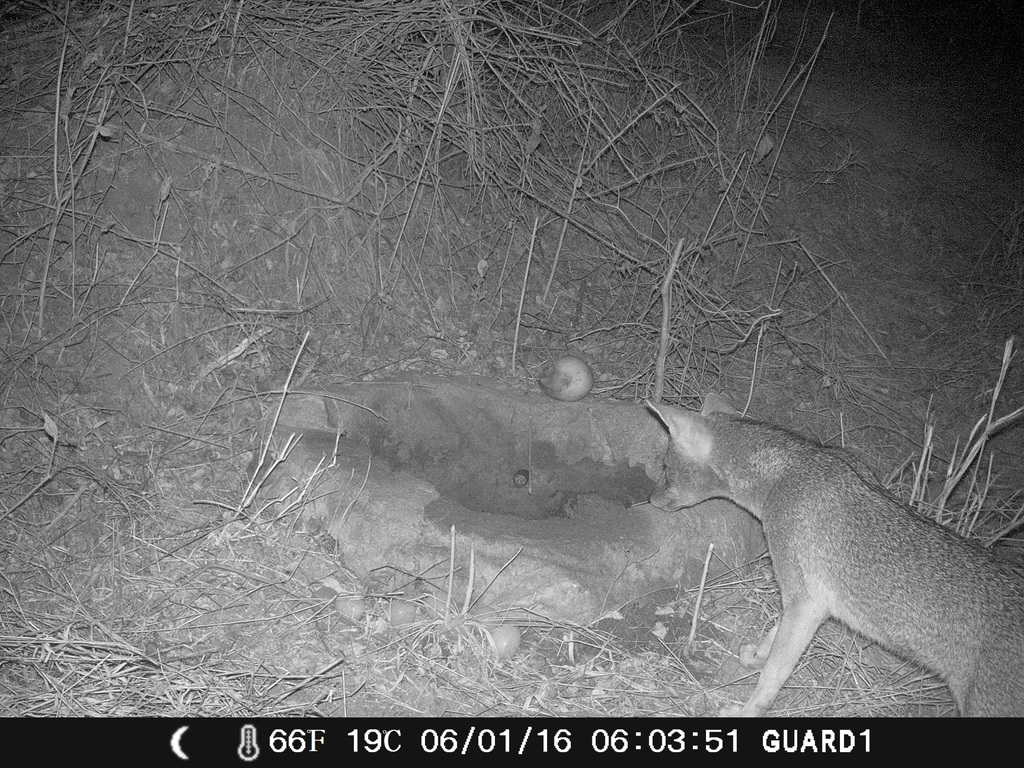
The Sechuran fox (Lycalopex sechurae), also called the Peruvian desert fox or the Sechuran zorro, is a small South American species of canid closely related to other South American "false" foxes or zorro.
- Kingdom
- Animalia
- Phylum
- Chordata
- Class
- Mammalia
- Order
- Carnivora
- Family
- Canidae
- Genus
- Lycalopex
- Species
- Lycalopex sechurae
Description
The Sechuran fox (Lycalopex sechurae), also called the Peruvian desert fox or the Sechuran zorro, is a small South American species of canid closely related to other South American "false" foxes or zorro. It gets its name for being found in the Sechura Desert in northwestern Peru. It is one of ten extant species of canid endemic to South America. This fox inhabits a narrow region west of the Andes Mountains running along the coastline of Peru and southern Ecuador. More specifically, in dry areas such as savannah-like deserts, cliff-sides, along the western side of the Andes mountains, and beaches. The Sechuran Fox is known by the common names Sechura desert fox and Peruvian desert fox. The etymology of its scientific name comes from the Greek "lycos" meaning "wolf," and "alopex" meaning "fox". Before it was classified under Lycalopex, the Sechuran fox was classed under the Dusicyon genus established by Oldfield Thomas in 1914, and was later moved to the Pseudalopex (meaning "false fox") genus by A. Langguth in 1975. The Sechuran fox is one of the many canid species that evolved from the ancestral canid(s) in the Miocene era. Through the rapid radiation of South American canids, the Sechuran fox has evolved some traits that have possibly lent themselves to the species' survival, and which aid in distinguishing them from other members of this genus. While there is not currently a thorough understanding of this species' evolution, some recent studies have produced notable contributions to this endeavor. A total population estimate is not currently specified by the International Union for the Conservation of Nature (IUCN), but one 2022 study estimates it to be around 5,000. The main threats to this species currently are anthropogenic; largely habitat destruction through deforestation, and hunting (though to a smaller extent).
Gallery
Ajouter des photos
Partagez vos photos de cette espèce (jusqu'à 20 à la fois) : elles sont vérifiées automatiquement, puis publiées.
Répartition
Occurrences observées (données GBIF). Les zones hors aire d'origine peuvent indiquer une présence introduite ou invasive.
Sources et crédits
Informations provenant de plusieurs sources vérifiées. Dernière mise à jour : .
Crédits photos (7)
- Photo : Reserva Biológica Cerro Seco (@maissenmichi) · CC BY-NC 4.0 · via iNaturalist
- Photo : Leticia (@leticialajo) · CC BY-NC 4.0 · via iNaturalist
- Photo : Diego Almendras (@diegoalmendras) · CC BY-NC 4.0 · via iNaturalist
- Photo : Leticia (@leticialajo) · CC BY-NC 4.0 · via iNaturalist
- Photo : Rodrigo de Piérola (@rdepierolac) · CC BY-NC 4.0 · via iNaturalist
- Photo : Carlos Gustavo Prado Tovar (@bongo_2024) · CC BY-NC 4.0 · via iNaturalist
- Photo : Jeremy Flanagan (@jeremy19) · CC BY-NC 4.0 · via iNaturalist
Mentions de licence
Texte disponible sous licence CC BY-SA 4.0. Il adapte notamment Renard du désert austral, Wikipedia (CC BY-SA) : Sechuran fox (Wikipédia, auteurs dans l’historique de l’article).
- Taxonomie : GBIF Backbone Taxonomy (CC BY 4.0)
- Carte : occurrences GBIF, fond © contributeurs OpenStreetMap (ODbL)
- Statut de conservation : Liste rouge de l'UICN, via Wikidata (CC0)
Détail : Sources et licences.
Discussion (0)
Aucun message pour l’instant. Lancez la discussion sur cette fiche (sources, précisions, débats éditoriaux).
Connectez-vous pour participer à la discussion.