
Naked Mole-rat
Heterocephalus glaber
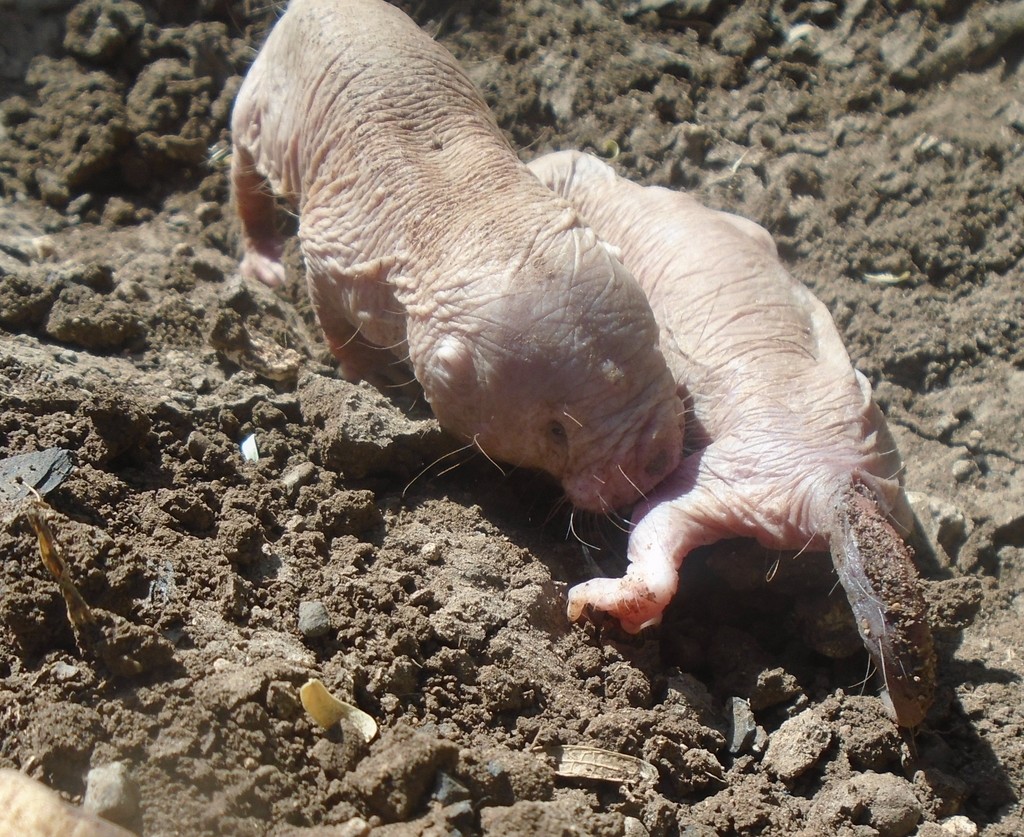
The naked mole-rat (Heterocephalus glaber), also known as the sand puppy, is a burrowing rodent native to the Horn of Africa and parts of Kenya, notably in Somali regions.
- Kingdom
- Animalia
- Phylum
- Chordata
- Class
- Mammalia
- Order
- Rodentia
- Family
- Bathyergidae
- Genus
- Heterocephalus
- Species
- Heterocephalus glaber
Description
The naked mole-rat (Heterocephalus glaber), also known as the sand puppy, is a burrowing rodent native to the Horn of Africa and parts of Kenya, notably in Somali regions. It is the only species in the genus Heterocephalus. The naked mole-rat exhibits a highly unusual set of physiological and behavioural traits that allow it to thrive in a harsh underground environment, most notably its being the only mammalian thermoconformer with an almost entirely ectothermic (cold-blooded) form of body temperature regulation, as well as exhibiting eusociality, a complex social structure including a reproductive division of labour, separation of reproductive and non-reproductive castes, and cooperative care of young. The closely related Damaraland mole-rat (Fukomys damarensis) is the only other known eusocial mammal. Naked mole-rats lack pain sensitivity in their skin, and have very low metabolic and respiratory rates. The animal is also remarkable for its longevity and resistance to cancer and oxygen deprivation. Although closely related to the blesmols, more recent investigation places it in a separate, exclusive family, Heterocephalidae, and no longer in the same family as other African mole-rats, Bathyergidae.
Gallery
Ajouter des photos
Partagez vos photos de cette espèce (jusqu'à 20 à la fois) : elles sont vérifiées automatiquement, puis publiées.
Répartition
Occurrences observées (données GBIF). Les zones hors aire d'origine peuvent indiquer une présence introduite ou invasive.
Sources et crédits
Informations provenant de plusieurs sources vérifiées. Dernière mise à jour : .
Crédits photos (7)
- Photo : Abeje Teme (@abejekassie) · CC BY-NC 4.0 · via iNaturalist
- Photo : Simon Musila (@musila-kenya) · CC BY-NC 4.0 · via iNaturalist
- Photo : @malacochersus · CC BY-NC 4.0 · via iNaturalist
- Photo : Joni Overbosch (@joni_overbosch) · CC BY-NC 4.0 · via iNaturalist
- Photo : Manuel Ruedi (@manuel_ruedi) · CC BY-NC 4.0 · via iNaturalist
- Photo : Yvonne A. de Jong (@dejong) · CC BY-NC 4.0 · via iNaturalist
- Photo : Modest Kimeu.M (@muleimodest) · CC BY-NC 4.0 · via iNaturalist
Mentions de licence
Texte disponible sous licence CC BY-SA 4.0. Il adapte notamment Rat-taupe nu, Wikipedia (CC BY-SA) : Naked mole-rat (Wikipédia, auteurs dans l’historique de l’article).
- Taxonomie : GBIF Backbone Taxonomy (CC BY 4.0)
- Carte : occurrences GBIF, fond © contributeurs OpenStreetMap (ODbL)
- Statut de conservation : Liste rouge de l'UICN, via Wikidata (CC0)
Détail : Sources et licences.
Discussion (0)
Aucun message pour l’instant. Lancez la discussion sur cette fiche (sources, précisions, débats éditoriaux).
Connectez-vous pour participer à la discussion.