
Great Flying Fox
Pteropus neohibernicus
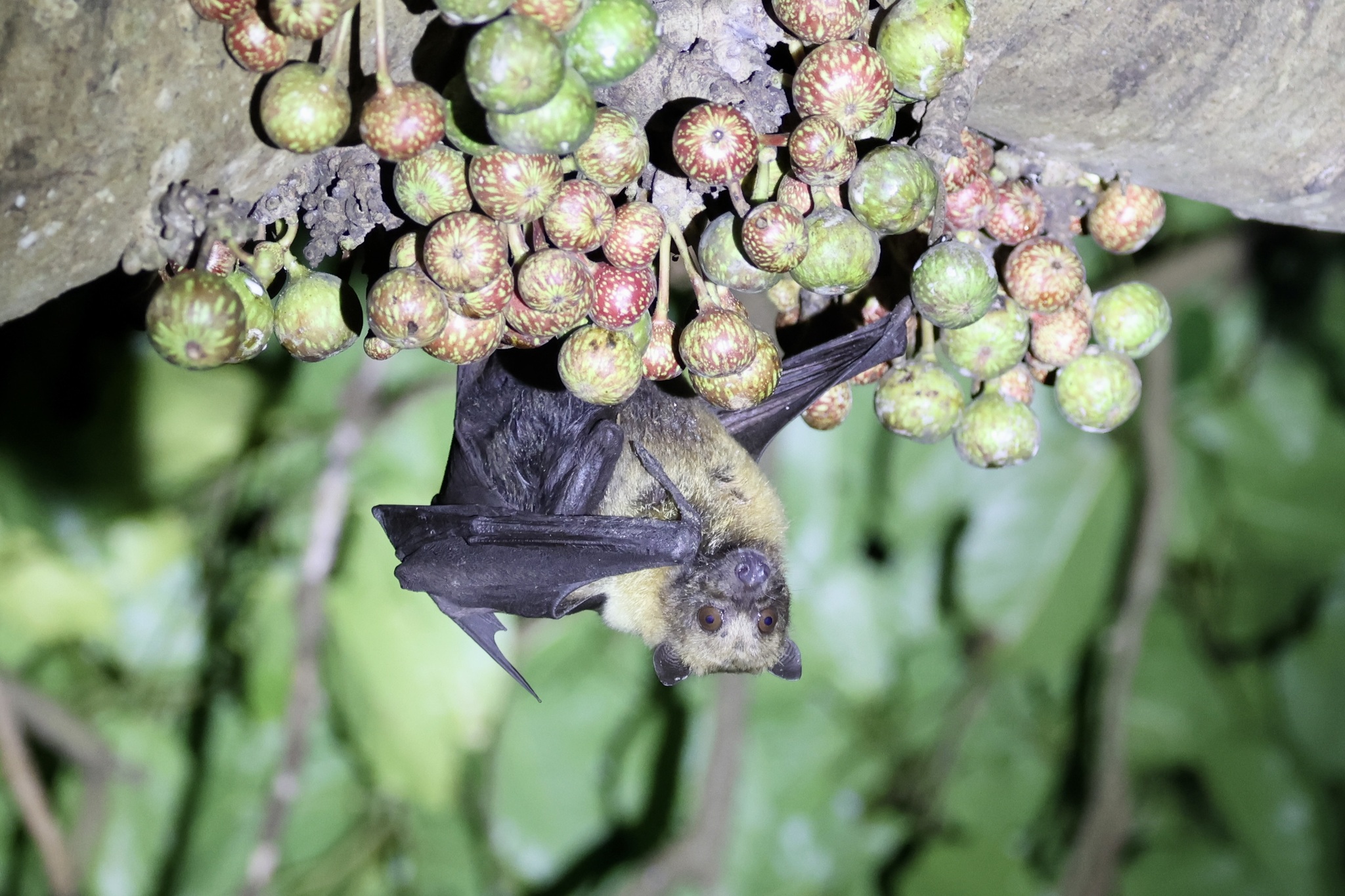
The great flying fox (Pteropus neohibernicus), also known as the greater flying fox or Bismarck flying fox, is a species of megabat in the genus Pteropus, found throughout lowland areas of New Guinea and in the Bismarck Archipelago.
- Kingdom
- Animalia
- Phylum
- Chordata
- Class
- Mammalia
- Order
- Chiroptera
- Family
- Pteropodidae
- Genus
- Pteropus
- Species
- Pteropus neohibernicus
Description
The great flying fox (Pteropus neohibernicus), also known as the greater flying fox or Bismarck flying fox, is a species of megabat in the genus Pteropus, found throughout lowland areas of New Guinea and in the Bismarck Archipelago. Conflicting evidence suggests that its closest relative is either the spectacled flying fox or, jointly, the Pelew and insular flying foxes. Two subspecies are recognized. At up to 1.6 kg (3.5 lb) in weight, it is among the heaviest bats in the world and the largest bat in Melanesia. It is a gregarious animal which roosts with hundreds or thousands of individuals. In part due to its wide variation in color, it has many taxonomic synonyms, including Pteropus degener, Pteropus papuanus, and Pteropus sepikensis. It may forage during the day or night in search of fruit, including figs or fruits from the family Sapotaceae. It is considered a least-concern species by the IUCN, though its numbers have been negatively impacted by what appeared to be a disease, as well as by hunting for bushmeat that occurs across its range.
Gallery
Ajouter des photos
Partagez vos photos de cette espèce (jusqu'à 20 à la fois) : elles sont vérifiées automatiquement, puis publiées.
Répartition
Occurrences observées (données GBIF). Les zones hors aire d'origine peuvent indiquer une présence introduite ou invasive.
Sources et crédits
Informations provenant de plusieurs sources vérifiées. Dernière mise à jour : .
Crédits photos (6)
- Photo : Bird Explorers · CC BY-NC 4.0 · via GBIF
- Photo : Farhan Adyn (@farhan_adyn) · CC BY-NC 4.0 · via iNaturalist
- Photo : Norma Malinowski (@bogwalker) · CC BY 4.0 · via iNaturalist
- Photo : Joachim Bertrands (@joachimbertrands_ornis_birding) · CC BY-NC 4.0 · via iNaturalist
- Photo : @grayhairstreak · CC BY-NC 4.0 · via iNaturalist
- Photo : @kiniroesler · CC BY-NC 4.0 · via iNaturalist
Mentions de licence
Texte disponible sous licence CC BY-SA 4.0. Il adapte notamment Wikipedia (CC BY-SA) : Great flying fox (Wikipédia, auteurs dans l’historique de l’article).
- Taxonomie : GBIF Backbone Taxonomy (CC BY 4.0)
- Carte : occurrences GBIF, fond © contributeurs OpenStreetMap (ODbL)
- Statut de conservation : Liste rouge de l'UICN, via Wikidata (CC0)
Détail : Sources et licences.
Discussion (0)
Aucun message pour l’instant. Lancez la discussion sur cette fiche (sources, précisions, débats éditoriaux).
Connectez-vous pour participer à la discussion.