
Diademed sifaka
Propithecus diadema
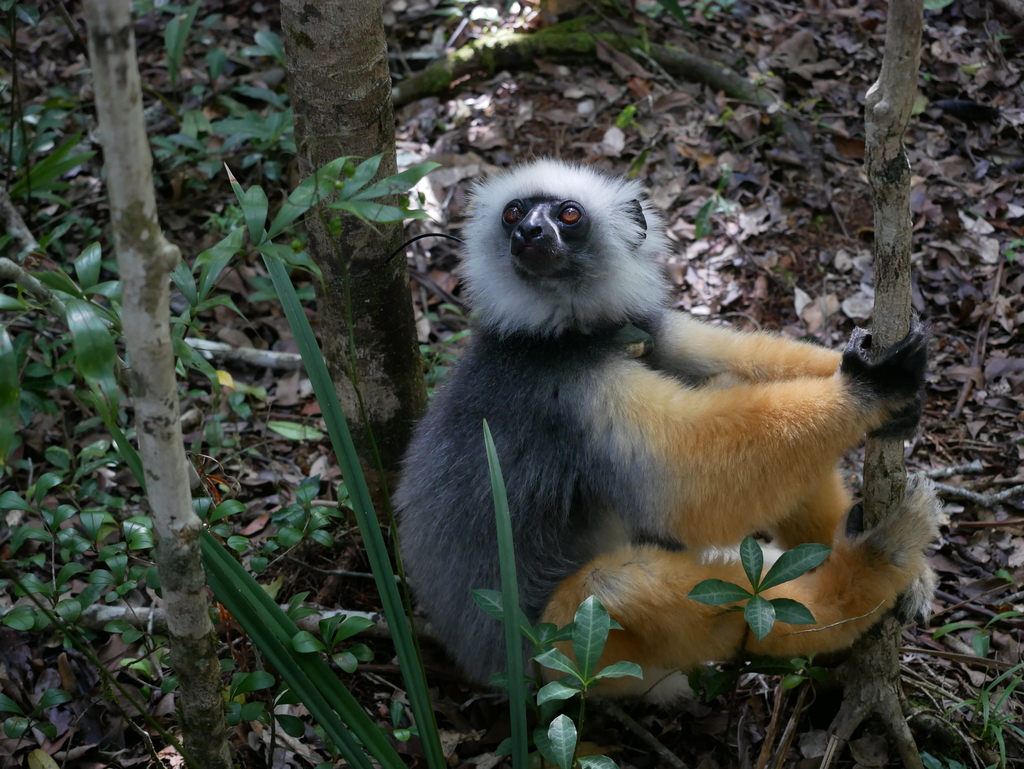
The diademed sifaka (Propithecus diadema), or diademed simpona, is a critically endangered sifaka endemic to rainforests in eastern Madagascar.
- Kingdom
- Animalia
- Phylum
- Chordata
- Class
- Mammalia
- Order
- Primates
- Family
- Indriidae
- Genus
- Propithecus
- Species
- Propithecus diadema
Description
The diademed sifaka (Propithecus diadema), or diademed simpona, is a critically endangered sifaka endemic to rainforests in eastern Madagascar. Along with the indri, it is one of the two largest living lemurs, with an average weight of 6.5 kg (14 lb) and an average length of 105 cm (41 in), half of which is its tail. It has a striking appearance that features a silky coat of brightly colored limbs that contrast with black, white, and gray shades on its torso, head, and tail. Russell Mittermeier, one of the contemporary authorities on lemurs, describes the diademed sifaka as "one of the most colorful and attractive of all the lemurs." The diademed sifaka is a diurnal, arboreal folivore that seasonally augments its diet with a variety of foods, including seeds, fruit, and flowers. It lives in small, territorial, female-dominated troops of two to nine individuals, which consist of infants, juveniles, and adults of both sexes. Every day, a diademed sifaka patrols the boundaries of its home range with its fellows, depositing scent markings at contested trees along the way. Group confrontations are rare due to its low population density and well-defined territories. Females are seasonal breeders, being receptive to mating for only a few days a year. The diademed sifaka has an abnormally slow life history for a folivorous primate of its size, as adults can live for up to 25 years in the wild, with sexual maturity typically occurring at five years of age. It was previously considered to be the titular subspecies of a broader species that included the other eastern sifakas of the Propithecus genus. As such, "Propithecus diadema" can also refer to a taxonomic group consisting of the diademed sifaka and three other species. The diademed sifaka is classified as critically endangered by the IUCN Red list and faces existential threats from habitat loss due to illegal logging and slash and burn agriculture. Poaching is another threat to the survival of the species, as many of the taboos that prohibit killing or eating other sifaka species in Malagasy culture do not apply to the diademed sifaka. It is threatened by these issues both within and outside of protected areas. Population recovery is made difficult by its slow reproductive rate, high infant mortality, and low population density, which increase its susceptibility to inbreeding depression.
Gallery
Ajouter des photos
Partagez vos photos de cette espèce (jusqu'à 20 à la fois) : elles sont vérifiées automatiquement, puis publiées.
Répartition
Occurrences observées (données GBIF). Les zones hors aire d'origine peuvent indiquer une présence introduite ou invasive.
Sources et crédits
Informations provenant de plusieurs sources vérifiées. Dernière mise à jour : .
Crédits photos (8)
- Photo : @bronyaur · CC BY-NC 4.0 · via iNaturalist
- Photo : Larry H Moore (@morehus) · CC BY-NC 4.0 · via iNaturalist
- Photo : Lionel Gobert (@lionel3) · CC BY-NC 4.0 · via iNaturalist
- Photo : Kai Squires (@squiresk) · CC BY 4.0 · via iNaturalist
- Photo : @landiretief · CC BY-NC 4.0 · via iNaturalist
- Photo : @globalherping · CC BY-NC 4.0 · via iNaturalist
- Photo : @probreviceps · CC BY-NC 4.0 · via iNaturalist
- Photo : Jordan Broadhead (@jbroadhead) · CC BY-NC 4.0 · via iNaturalist
Mentions de licence
Texte disponible sous licence CC BY-SA 4.0. Il adapte notamment Propithecus diadema, Wikipedia (CC BY-SA) : Diademed sifaka (Wikipédia, auteurs dans l’historique de l’article).
- Taxonomie : GBIF Backbone Taxonomy (CC BY 4.0)
- Carte : occurrences GBIF, fond © contributeurs OpenStreetMap (ODbL)
- Statut de conservation : Liste rouge de l'UICN, via Wikidata (CC0)
Détail : Sources et licences.
Discussion (0)
Aucun message pour l’instant. Lancez la discussion sur cette fiche (sources, précisions, débats éditoriaux).
Connectez-vous pour participer à la discussion.