
Caspian seal
Pusa caspica
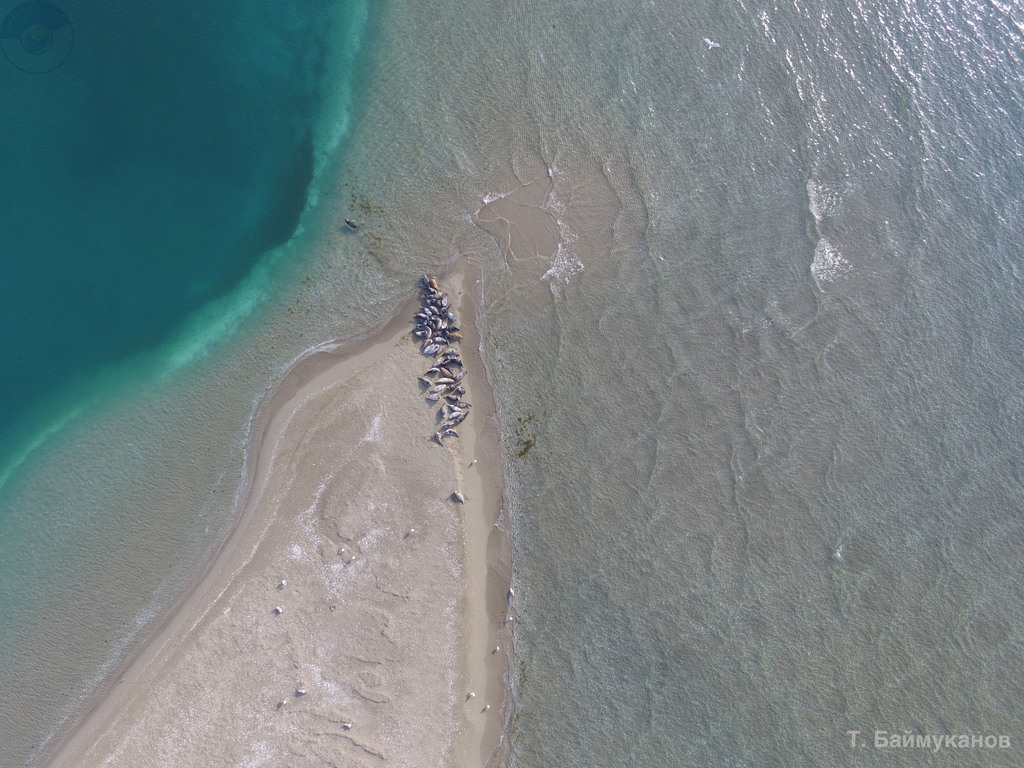
The Caspian seal (Pusa caspica, syn. Phoca caspica) is one of the smallest members of the earless seal family and unique in that it is found exclusively in the brackish Caspian Sea.
- Kingdom
- Animalia
- Phylum
- Chordata
- Class
- Mammalia
- Order
- Carnivora
- Family
- Phocidae
- Genus
- Pusa
- Species
- Pusa caspica
Description
The Caspian seal (Pusa caspica, syn. Phoca caspica) is one of the smallest members of the earless seal family and unique in that it is found exclusively in the brackish Caspian Sea. It lives along the shorelines, but also on the many rocky islands and floating blocks of ice that dot the Caspian Sea. In winter and cooler parts of the spring and autumn season, it populates the northern Caspian coastline. As the ice melts in the summer and warmer parts of the spring and autumn season, it also occurs in the deltas of the Volga and Ural Rivers, as well as the southern latitudes of the Caspian where the water is cooler due to greater depth. Evidence suggests that the colonization events of Caspian seals were probably facilitated by river connections from the Arctic that have since disappeared, land-locking the populations sometime before the major Pleistocene glaciations. Since the beginning of the 1900s, the population has dropped by over 90%. In 2022, a substantial die-off of the endangered species was reported, threatening the isolated population at an estimated number from fewer than 70,000 by the Caspian Seals Research and Rehabilitation Center to 168,000 by the Marine Mammal Protected Areas Task Force.
Ajouter des photos
Partagez vos photos de cette espèce (jusqu'à 20 à la fois) : elles sont vérifiées automatiquement, puis publiées.
Répartition
Occurrences observées (données GBIF). Les zones hors aire d'origine peuvent indiquer une présence introduite ou invasive.
Sources et crédits
Informations provenant de plusieurs sources vérifiées. Dernière mise à jour : .
Crédits photos (1)
- Photo : Institute of Hydrobiology and Ecology (@ihe) · CC BY-NC 4.0 · via iNaturalist
Mentions de licence
Texte disponible sous licence CC BY-SA 4.0. Il adapte notamment Phoque de la Caspienne, Wikipedia (CC BY-SA) : Caspian seal (Wikipédia, auteurs dans l’historique de l’article).
- Taxonomie : GBIF Backbone Taxonomy (CC BY 4.0)
- Carte : occurrences GBIF, fond © contributeurs OpenStreetMap (ODbL)
Détail : Sources et licences.
Discussion (0)
Aucun message pour l’instant. Lancez la discussion sur cette fiche (sources, précisions, débats éditoriaux).
Connectez-vous pour participer à la discussion.