
Sugar Glider
Petaurus breviceps
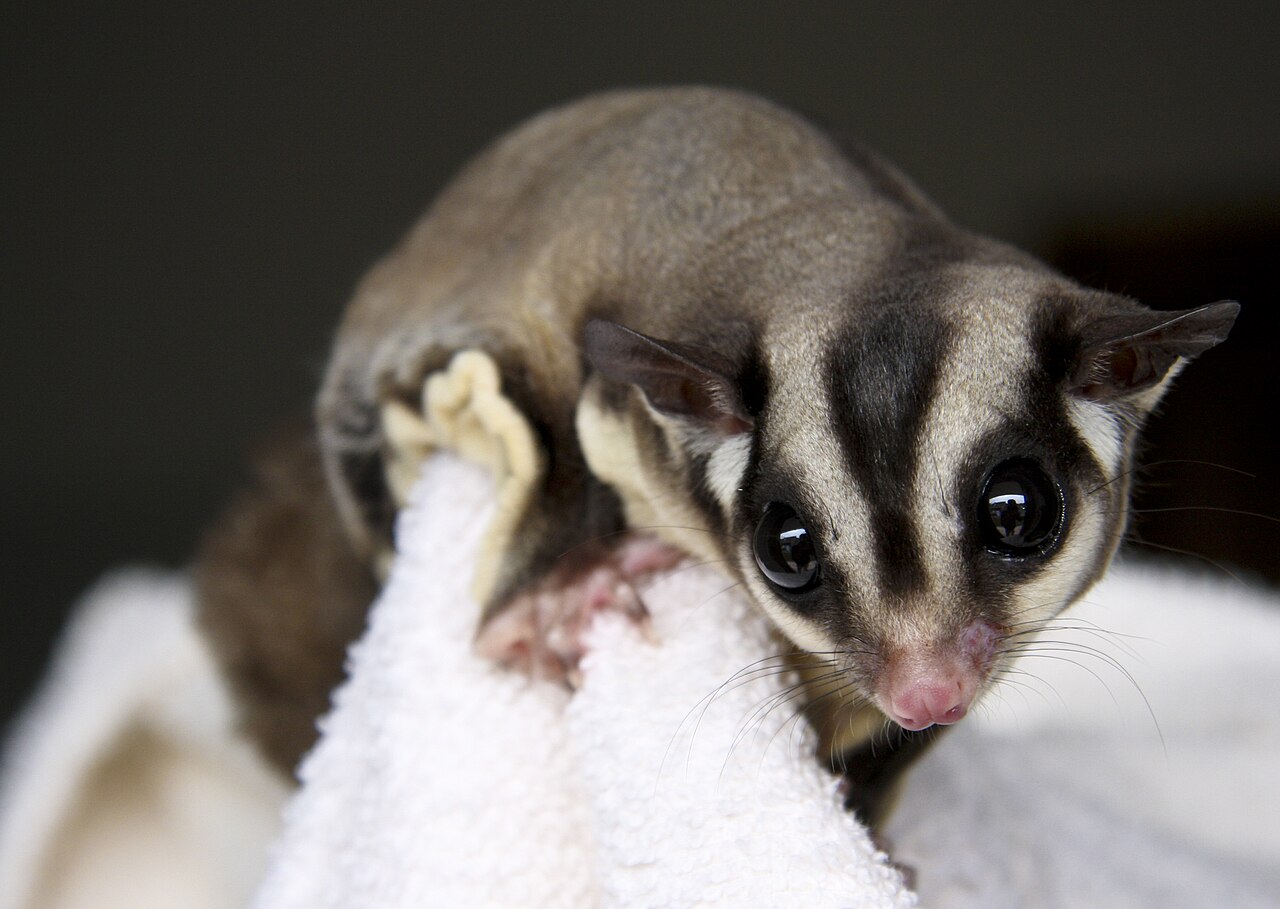
The sugar glider (Petaurus breviceps) is a small, omnivorous, arboreal, and nocturnal gliding possum.
- Kingdom
- Animalia
- Phylum
- Chordata
- Class
- Mammalia
- Order
- Diprotodontia
- Family
- Petauridae
- Genus
- Petaurus
- Species
- Petaurus breviceps
Description
The sugar glider (Petaurus breviceps) is a small, omnivorous, arboreal, and nocturnal gliding possum. The common name refers to its predilection for sugary foods such as sap and nectar and its ability to glide through the air, much like a flying squirrel. They have very similar habits and appearance to the flying squirrel, despite not being closely related-an example of convergent evolution. The scientific name, Petaurus breviceps, translates from Latin as "short-headed rope-dancer", a reference to their canopy acrobatics. The sugar glider is characterised by its pair of gliding membranes, known as patagia, which extend from its forelegs to its hindlegs. Gliding serves as an efficient means of reaching food and evading predators. The animal is covered in soft, pale grey to light brown fur which is countershaded, being lighter in colour on its underside. The sugar glider, as strictly defined in a recent analysis, is only native to a small portion of southeastern Australia, corresponding to southern Queensland and most of New South Wales east of the Great Dividing Range; the extended species group, including populations which may or may not belong to P. breviceps, occupies a larger range covering much of coastal eastern and northern Australia, New Guinea, and nearby islands. Members of Petaurus are popular exotic pets.
Gallery
Ajouter des photos
Partagez vos photos de cette espèce (jusqu'à 20 à la fois) : elles sont vérifiées automatiquement, puis publiées.
Répartition
Occurrences observées (données GBIF). Les zones hors aire d'origine peuvent indiquer une présence introduite ou invasive.
Sources et crédits
Informations provenant de plusieurs sources vérifiées. Dernière mise à jour : .
Crédits photos (2)
- Photo : Alessandro Di Grazia · CC BY-SA 4.0 · via Wikimedia Commons
- Photo : Alessandro Di Grazia · CC BY-SA 4.0 · via Wikimedia Commons
Mentions de licence
Texte disponible sous licence CC BY-SA 4.0. Il adapte notamment Wikipedia (CC BY-SA) : Sugar glider (Wikipédia, auteurs dans l’historique de l’article).
- Taxonomie : GBIF Backbone Taxonomy (CC BY 4.0)
- Carte : occurrences GBIF, fond © contributeurs OpenStreetMap (ODbL)
- Statut de conservation : Liste rouge de l'UICN, via Wikidata (CC0)
Détail : Sources et licences.
Discussion (0)
Aucun message pour l’instant. Lancez la discussion sur cette fiche (sources, précisions, débats éditoriaux).
Connectez-vous pour participer à la discussion.