
Pygmy three-toed sloth
Bradypus pygmaeus
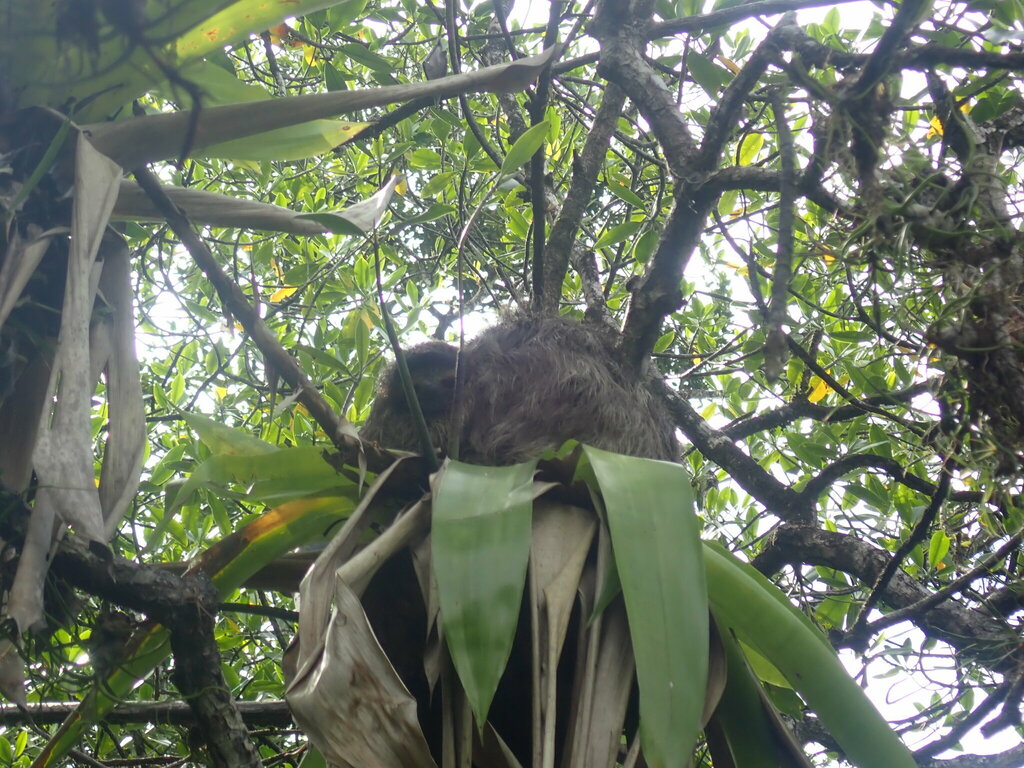
The pygmy three-toed sloth (Bradypus pygmaeus), also known as the monk sloth or dwarf sloth, is a critically endangered species of sloth in the family Bradypodidae.
- Kingdom
- Animalia
- Phylum
- Chordata
- Class
- Mammalia
- Order
- Pilosa
- Family
- Bradypodidae
- Genus
- Bradypus
- Species
- Bradypus pygmaeus
Description
The pygmy three-toed sloth (Bradypus pygmaeus), also known as the monk sloth or dwarf sloth, is a critically endangered species of sloth in the family Bradypodidae. The species is endemic to Isla Escudo de Veraguas, a small island off the Caribbean coast of Panama. The species was first described by Robert P. Anderson of the University of Kansas and Charles O. Handley Jr., of the Smithsonian Institution in 2001. The pygmy three-toed sloth is significantly smaller than the other three members of its genus, but otherwise resembles the brown-throated three-toed sloth. According to Anderson and Handley Jr., the head-and-body length is between 48 and 53 centimetres (19 and 21 in), and the body mass ranges from 2.5 to 3.5 kg (5.5 to 7.7 lb). This sloth, like other extant sloths, is arboreal (tree-living) and feeds on leaves. It has a body adapted to hang by its limbs; the large curved claws help the sloth to keep a strong grip on tree branches. It lives high in the canopy but descends once a week to defecate on the forest floor. It is symbiotically associated with green algae, that can provide it with a camouflage. Details of mating behavior and reproduction have not been documented. The pygmy three-toed sloth was once thought to be found exclusively in the red mangroves of Isla Escudo de Veraguas, restricted to an area of 4.3 square kilometres (1.7 sq mi). A 2012 census restricted to the coastal mangroves of the island initially found a population of around 79 individuals, nonetheless a 2015 study suggests this estimate fell considerably short. The actual population is estimated to be between 500 and 1500 with a high-end estimate of 3200 individuals, many of whom were found further inland. The IUCN lists the pygmy three-toed sloth as critically endangered and they are listed on the world's 100 most threatened species.
Gallery
Ajouter des photos
Partagez vos photos de cette espèce (jusqu'à 20 à la fois) : elles sont vérifiées automatiquement, puis publiées.
Répartition
Occurrences observées (données GBIF). Les zones hors aire d'origine peuvent indiquer une présence introduite ou invasive.
Sources et crédits
Informations provenant de plusieurs sources vérifiées. Dernière mise à jour : .
Crédits photos (7)
- Photo : @keesgroenendijk · CC BY 4.0 · via iNaturalist
- Photo : @heibu · CC BY-NC 4.0 · via iNaturalist
- Photo : @jules_leclair · CC BY-NC 4.0 · via iNaturalist
- Photo : @animalencounters · CC BY-NC 4.0 · via iNaturalist
- Photo : Enós Juárez (@enosjesus24) · CC BY-NC 4.0 · via iNaturalist
- Photo : @chebeluto · CC BY-NC 4.0 · via iNaturalist
- Photo : @bwhite · CC BY-NC 4.0 · via iNaturalist
Mentions de licence
Texte disponible sous licence CC BY-SA 4.0. Il adapte notamment Paresseux nain, Wikipedia (CC BY-SA) : Pygmy three-toed sloth (Wikipédia, auteurs dans l’historique de l’article).
- Taxonomie : GBIF Backbone Taxonomy (CC BY 4.0)
- Carte : occurrences GBIF, fond © contributeurs OpenStreetMap (ODbL)
- Statut de conservation : Liste rouge de l'UICN, via Wikidata (CC0)
Détail : Sources et licences.
Discussion (0)
Aucun message pour l’instant. Lancez la discussion sur cette fiche (sources, précisions, débats éditoriaux).
Connectez-vous pour participer à la discussion.