
Calaby's Pademelon
Thylogale calabyi
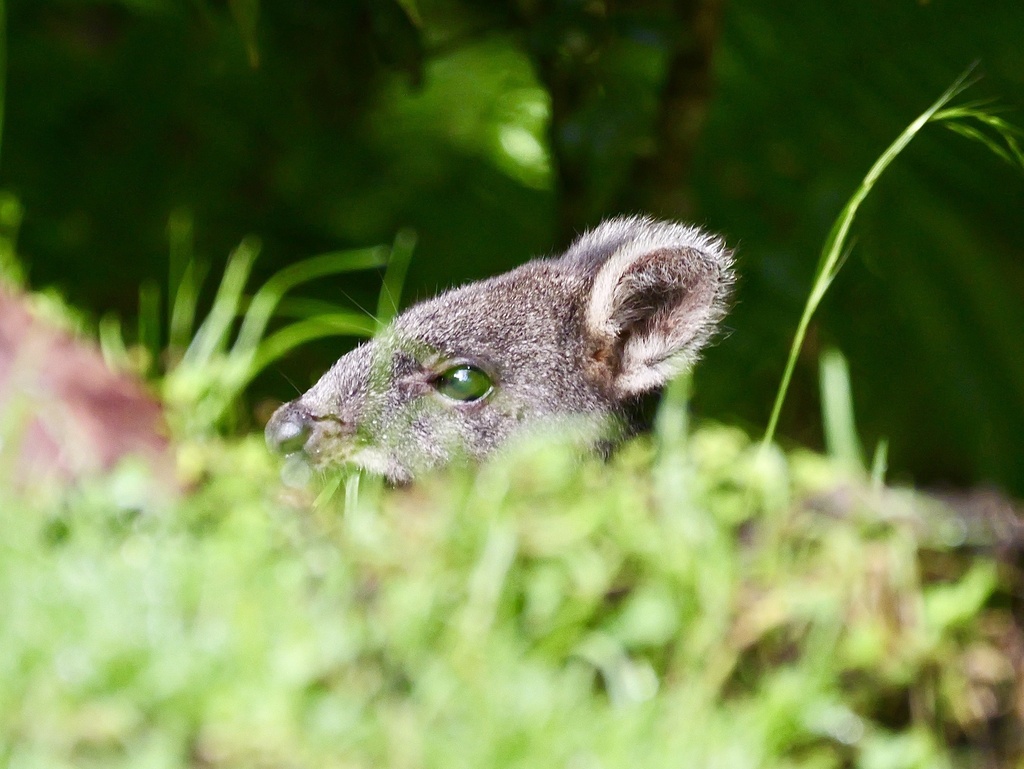
Calaby's pademelon (Thylogale calabyi), also known as the alpine wallaby, is a species of marsupial in the family Macropodidae.
- Kingdom
- Animalia
- Phylum
- Chordata
- Class
- Mammalia
- Order
- Diprotodontia
- Family
- Macropodidae
- Genus
- Thylogale
- Species
- Thylogale calabyi
Description
Calaby's pademelon (Thylogale calabyi), also known as the alpine wallaby, is a species of marsupial in the family Macropodidae. It is endemic to Papua New Guinea. It is threatened by habitat loss and hunting. Pademelons share many similarities in body structure to other marsupials through their pouch to care for their young and tail used for jumping. Calaby's Pademelon prefers to forage in dense forested overgrowth and feeds on native leaves and grasses. The life span for this animal is up to 6 years in the wild. This species is considered iteroparous with the gestation period spanning 30 days. After birth, young stay in the mothers pouch for approximately 6 months. They are considered sexually mature at 14–15 months. There are many pademelon species, but Calaby's pademelon is considered one of the most endangered due to its poorly distributed population from habitat loss. This species is classified as endangered by the IUCN. The arrival of human populations have been largely responsible for Calaby's Pademelon's dwindling population. Humans continue to be a threat to this species through hunting practices and deforestation. Conservation efforts have been created to help preserve the remaining populations left. Papua New Guinea has established the YUS Conservation Area. The reserve is an acronym named after three major rivers that run through it, the Yopno, Uruwa, and Som of the Huon Peninsula and works to conserve Calaby's Pademelon. However, more research regarding population size, distribution, and trends of this species in Papua New Guinea is needed to better understand population dynamics of Calaby's Pademelon.
Gallery
Ajouter des photos
Partagez vos photos de cette espèce (jusqu'à 20 à la fois) : elles sont vérifiées automatiquement, puis publiées.
Répartition
Occurrences observées (données GBIF). Les zones hors aire d'origine peuvent indiquer une présence introduite ou invasive.
Sources et crédits
Informations provenant de plusieurs sources vérifiées. Dernière mise à jour : .
Crédits photos (8)
- Photo : @bretthartl · CC BY-NC 4.0 · via iNaturalist
- Photo : @grayhairstreak · CC BY-NC 4.0 · via iNaturalist
- Photo : @chris_barnesoz · CC BY-NC 4.0 · via iNaturalist
- Photo : Jackson Frost (@jacksonfrost) · CC BY-NC 4.0 · via iNaturalist
- Photo : Daniel (@danboyland) · CC BY 4.0 · via iNaturalist
- Photo : Jun MATSUI (@naturalist67279) · CC0 (domaine public) · via iNaturalist
- Photo : Charley Hesse (@charleyhesse) · CC BY-NC 4.0 · via iNaturalist
- Photo : @themaskedlapwing · CC0 (domaine public) · via iNaturalist
Mentions de licence
Texte disponible sous licence CC BY-SA 4.0. Il adapte notamment Pademelon de Calaby, Wikipedia (CC BY-SA) : Calaby's pademelon (Wikipédia, auteurs dans l’historique de l’article).
- Taxonomie : GBIF Backbone Taxonomy (CC BY 4.0)
- Carte : occurrences GBIF, fond © contributeurs OpenStreetMap (ODbL)
Détail : Sources et licences.
Discussion (0)
Aucun message pour l’instant. Lancez la discussion sur cette fiche (sources, précisions, débats éditoriaux).
Connectez-vous pour participer à la discussion.