
Polar bear
Ursus maritimus
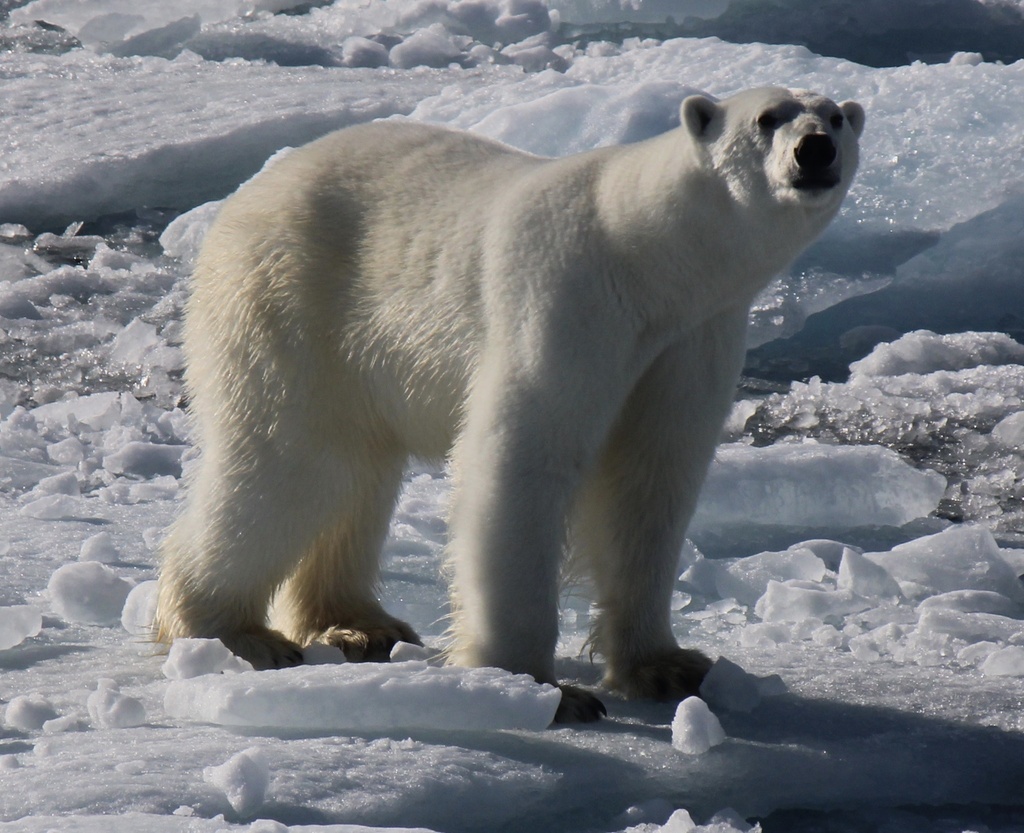
The polar bear (Ursus maritimus) is a large bear native to the Arctic and nearby areas.
- Kingdom
- Animalia
- Phylum
- Chordata
- Class
- Mammalia
- Order
- Carnivora
- Family
- Ursidae
- Genus
- Ursus
- Species
- Ursus maritimus
Description
The polar bear (Ursus maritimus) is a large bear native to the Arctic and nearby areas. It is closely related to the brown bear, and the two species can interbreed. The polar bear is the largest extant species of bear and land carnivore by body mass, with adult males weighing 300–800 kg (660–1,760 lb). The species is sexually dimorphic, as adult females are much smaller. The polar bear is white or yellowish-furred with black skin and a thick layer of fat. It is more slender than the brown bear, with a narrower skull, longer neck and lower shoulder hump. Its teeth are sharper and more adapted to cutting meat. The paws are large and allow the bear to walk on ice and paddle in the water. Polar bears are both terrestrial and pagophilic (ice-living) and are considered marine mammals because of their dependence on marine ecosystems. They prefer the annual sea ice but live on land when the ice melts in the summer. They are mostly carnivorous and specialized for preying on seals, particularly ringed seals. Such prey is typically taken by ambush; the bear may stalk its prey on the ice or in the water, but also will stay at a breathing hole or ice edge to wait for prey to swim by. The bear primarily feeds on the seal's energy-rich blubber. Other prey include walruses, beluga whales and some terrestrial animals. Polar bears are usually solitary but can be found in groups when on land. During the breeding season, male bears guard females and defend them from rivals. Mothers give birth to cubs in maternity dens during the winter. Young stay with their mother for up to two and a half years. The polar bear is considered a vulnerable species by the International Union for Conservation of Nature (IUCN) with an estimated total population of 22,000 to 31,000 individuals. Its biggest threats are climate change, pollution and energy development. Climate change has caused a decline in sea ice, giving the polar bear less access to its favoured prey and increasing the risk of malnutrition, starvation, and eventually death. Less sea ice also means that the bears must spend more time on land, increasing conflicts with humans. Polar bears have been hunted, both by native and non-native peoples, for their coats, meat and other items. They have been kept in captivity in zoos and circuses and are prevalent in art, folklore, religion and modern culture.
Gallery
Ajouter des photos
Partagez vos photos de cette espèce (jusqu'à 20 à la fois) : elles sont vérifiées automatiquement, puis publiées.
Répartition
Occurrences observées (données GBIF). Les zones hors aire d'origine peuvent indiquer une présence introduite ou invasive.
Sources et crédits
Informations provenant de plusieurs sources vérifiées. Dernière mise à jour : .
Crédits photos (5)
- Photo : @toldig · CC BY-NC 4.0 · via iNaturalist
- Photo : @marbryhopkins · CC BY-NC 4.0 · via iNaturalist
- Photo : Martyn Obbard (@ursusont) · CC BY-NC 4.0 · via iNaturalist
- Photo : @ab785 · CC BY-NC 4.0 · via iNaturalist
- Photo : Amélie Grégoire Taillefer (@ameliegt) · CC BY-NC 4.0 · via iNaturalist
Mentions de licence
Texte disponible sous licence CC BY-SA 4.0. Il adapte notamment Wikipedia (CC BY-SA) : Polar bear (Wikipédia, auteurs dans l’historique de l’article).
- Taxonomie : GBIF Backbone Taxonomy (CC BY 4.0)
- Carte : occurrences GBIF, fond © contributeurs OpenStreetMap (ODbL)
- Statut de conservation : Liste rouge de l'UICN, via Wikidata (CC0)
Détail : Sources et licences.
Discussion (0)
Aucun message pour l’instant. Lancez la discussion sur cette fiche (sources, précisions, débats éditoriaux).
Connectez-vous pour participer à la discussion.