
Madagascar Free-tailed Bat
Otomops madagascariensis
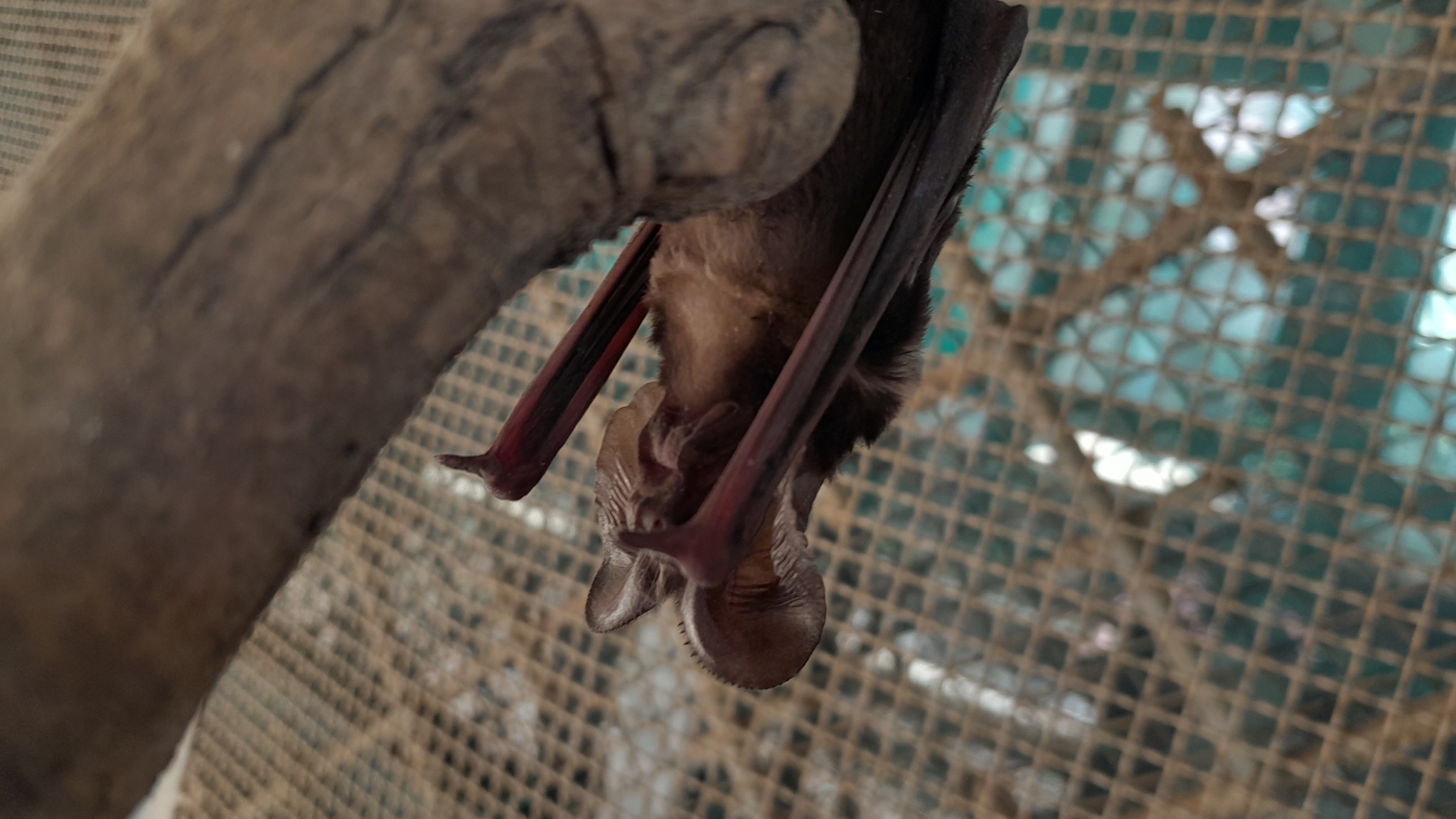
The Madagascar free-tailed bat or Malagasy giant mastiff bat (Otomops madagascariensis) is a species of free-tailed bat formerly included as a subspecies of the large-eared free-tailed bat, but that was later considered to be a…
- Kingdom
- Animalia
- Phylum
- Chordata
- Class
- Mammalia
- Order
- Chiroptera
- Family
- Molossidae
- Genus
- Otomops
- Species
- Otomops madagascariensis
Description
The Madagascar free-tailed bat or Malagasy giant mastiff bat (Otomops madagascariensis) is a species of free-tailed bat formerly included as a subspecies of the large-eared free-tailed bat, but that was later considered to be a distinct, Malagasy species. The Madagascar free-tailed bat is endemic to northern, western, and southern Madagascar. The Madagascar free-tailed bat is listed as Least Concern by the IUCN Red List due to its widespread distribution in Madagascar. Threats to it are unclear and more research is needed into the possible disturbance of its roost sites. The species roosts in one cave that is considered to be fady, or taboo, and it has been recorded in five protected areas: Parc National du Tsingy de Bemaraha, Parc National de Namoroka, Parc National d’Isalo, Réserve Spéciale d’Ankarana and Réserve Spéciale d’Analamerana. There are nine currently known roosting colonies, and all are in areas that receive some sort of protection by Madagascar. The population of the Madagascar free-tailed bat is unknown. The Madagascar free-tailed bat is supposed to be an obligate cave dweller and roosts in areas with sandstone and limestone outcrops. The caves where the species lived in Réserve Spéciale d’Ankarana were all associated with cool temperatures, high elevation, and a close proximity to water. The diet of the Madagascar free-tailed bat consists mostly of butterflies and beetles, and the foraging habitats are not believed to be associated with an intact forest.
Gallery
Ajouter des photos
Partagez vos photos de cette espèce (jusqu'à 20 à la fois) : elles sont vérifiées automatiquement, puis publiées.
Répartition
Occurrences observées (données GBIF). Les zones hors aire d'origine peuvent indiquer une présence introduite ou invasive.
Sources et crédits
Informations provenant de plusieurs sources vérifiées. Dernière mise à jour : .
Crédits photos (6)
- Photo : Andrianiaina Angelo · CC BY-NC 4.0 · via GBIF
- Photo : Royle Safaris (@roylesafaris) · CC BY-NC 4.0 · via iNaturalist
- Photo : Andrianiaina Angelo (@angelomg) · CC BY-NC 4.0 · via iNaturalist
- Photo : James Lefebvre (@chasseur_de_licorne) · CC BY-NC 4.0 · via iNaturalist
- Photo : James Lefebvre (@chasseur_de_licorne) · CC BY-NC 4.0 · via iNaturalist
- Photo : Andrianiaina Angelo (@angelomg) · CC BY-NC 4.0 · via iNaturalist
Mentions de licence
Texte disponible sous licence CC BY-SA 4.0. Il adapte notamment Wikipedia (CC BY-SA) : Madagascar free-tailed bat (Wikipédia, auteurs dans l’historique de l’article).
- Taxonomie : GBIF Backbone Taxonomy (CC BY 4.0)
- Carte : occurrences GBIF, fond © contributeurs OpenStreetMap (ODbL)
- Statut de conservation : Liste rouge de l'UICN, via Wikidata (CC0)
Détail : Sources et licences.
Discussion (0)
Aucun message pour l’instant. Lancez la discussion sur cette fiche (sources, précisions, débats éditoriaux).
Connectez-vous pour participer à la discussion.