
Marsh rice rat
Oryzomys palustris
The marsh rice rat (Oryzomys palustris) is a semiaquatic North American rodent in the family Cricetidae.
- Kingdom
- Animalia
- Phylum
- Chordata
- Class
- Mammalia
- Order
- Rodentia
- Family
- Cricetidae
- Genus
- Oryzomys
- Species
- Oryzomys palustris
Description
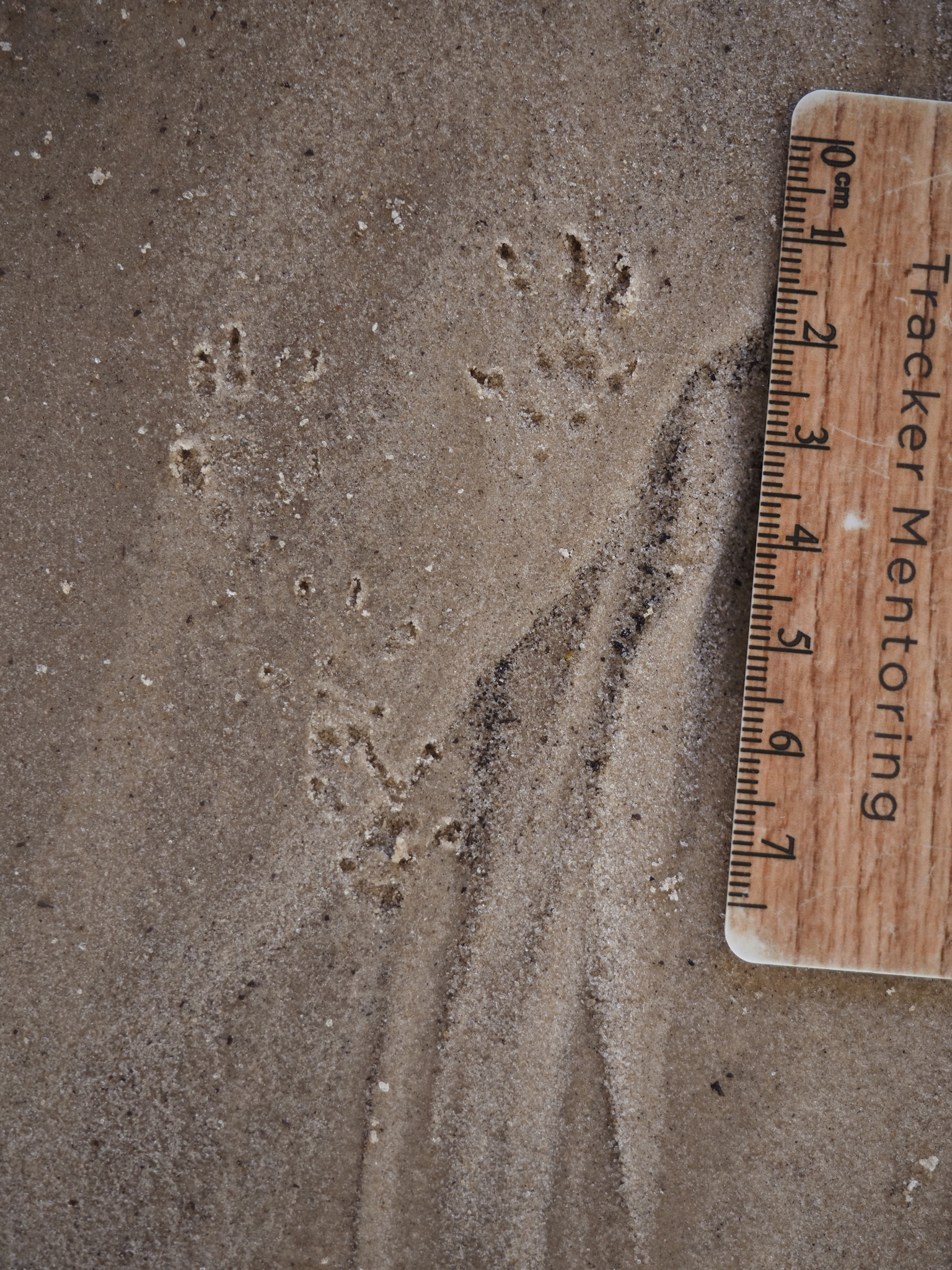
The marsh rice rat (Oryzomys palustris) is a semiaquatic North American rodent in the family Cricetidae. It usually occurs in wetland habitats, such as swamps and salt marshes. It is found mostly in the eastern and southern United States, from New Jersey and Kansas south to Florida and northeasternmost Tamaulipas, Mexico; its range previously extended further west and north, where it may have been a commensal in corn-cultivating communities. Weighing about 40 to 80 g (1.4 to 2.8 oz), the marsh rice rat is a medium-sized rodent that resembles the common black and brown rat. The upperparts are generally gray-brown, but are reddish in many Florida populations. The feet show several specializations for life in the water. The skull is large and flattened, and is short at the front. John Bachman discovered the marsh rice rat in 1816, and it was formally described in 1837. Several subspecies have been described since the 1890s, mainly from Florida, but disagreement exists over their validity. The Florida Keys population is sometimes classified as a different species, the silver rice rat (O. argentatus). Data from the mitochondrial cytochrome b gene indicate a deep divergence between populations east of Mississippi and those further west, which suggests that the western populations may be recognized as a separate species, O. texensis. The species is part of the genus Oryzomys, which also includes several others occurring further south in Mexico, Central America, and northwestern South America, some of which have previously been regarded as subspecies of the marsh rice rat. One, O. couesi, occurs with the marsh rice rat in Tamaulipas and southern Texas. The marsh rice rat is active during the night, makes nests of sedge and grass, and occasionally builds runways. Its diverse diet includes plants, fungi, and a variety of animals. Population densities are usually below 10 per ha (4 per acre) and home ranges vary from 0.23 to 0.37 ha (0.57 to 0.91 acres), depending on sex and geography. Litters of generally three to five young are born after a pregnancy around 25 days, mainly during the summer. Newborns are helpless at birth, but are weaned after a few weeks. Several animals prey on the marsh rice rat, including the barn owl, and it usually lives for less than a year in the wild. It is infected by many different parasites and harbors a hantavirus that also infects humans. The species is not of conservation concern, but some populations are threatened.
Gallery
Ajouter des photos
Partagez vos photos de cette espèce (jusqu'à 20 à la fois) : elles sont vérifiées automatiquement, puis publiées.
Répartition
Occurrences observées (données GBIF). Les zones hors aire d'origine peuvent indiquer une présence introduite ou invasive.
Sources et crédits
Informations provenant de plusieurs sources vérifiées. Dernière mise à jour : .
Crédits photos (6)
- Photo : Jonathan Poppele · CC BY-NC 4.0 · via GBIF
- Photo : HC Field Biology (@huntingdoncollegefieldbiology) · CC BY-NC 4.0 · via iNaturalist
- Photo : Tom Austin (@toxmace) · CC BY-NC 4.0 · via iNaturalist
- Photo : @jpollpeter · CC BY-NC 4.0 · via iNaturalist
- Photo : Tim Emhoff (@nanjemoycreek) · CC BY-NC 4.0 · via iNaturalist
- Photo : DT (@swampster) · CC BY-NC 4.0 · via iNaturalist
Mentions de licence
Texte disponible sous licence CC BY-SA 4.0. Il adapte notamment Oryzomys palustris, Wikipedia (CC BY-SA) : Marsh rice rat (Wikipédia, auteurs dans l’historique de l’article).
- Taxonomie : GBIF Backbone Taxonomy (CC BY 4.0)
- Carte : occurrences GBIF, fond © contributeurs OpenStreetMap (ODbL)
- Statut de conservation : Liste rouge de l'UICN, via Wikidata (CC0)
Détail : Sources et licences.
Discussion (0)
Aucun message pour l’instant. Lancez la discussion sur cette fiche (sources, précisions, débats éditoriaux).
Connectez-vous pour participer à la discussion.