
Coues's Rice Rat
Oryzomys couesi
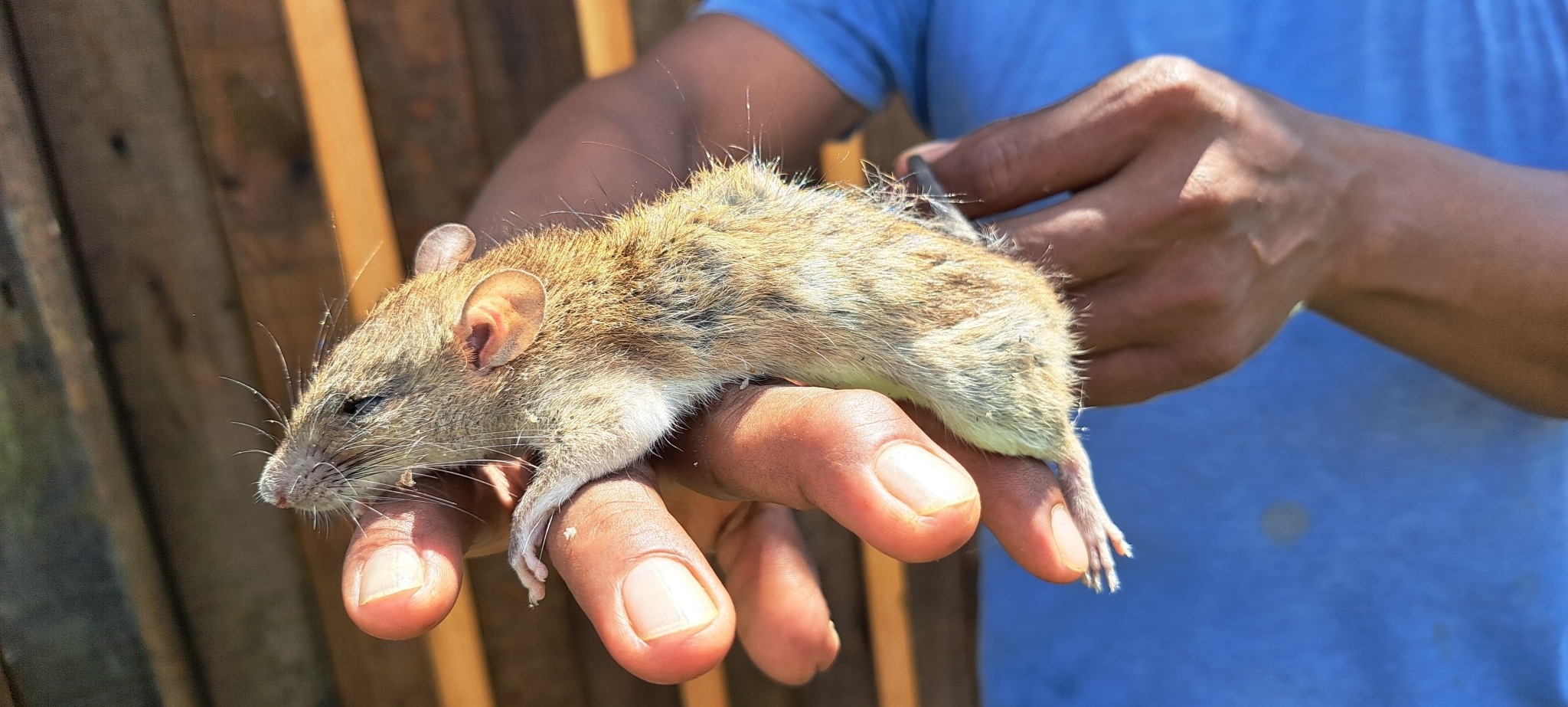
Oryzomys couesi, also known as Coues's rice rat, is a semiaquatic rodent in the family Cricetidae occurring from southernmost Texas through Mexico and Central America into northwestern Colombia.
- Kingdom
- Animalia
- Phylum
- Chordata
- Class
- Mammalia
- Order
- Rodentia
- Family
- Cricetidae
- Genus
- Oryzomys
- Species
- Oryzomys couesi
Description
Oryzomys couesi, also known as Coues's rice rat, is a semiaquatic rodent in the family Cricetidae occurring from southernmost Texas through Mexico and Central America into northwestern Colombia. It is usually found in wet habitats, such as marshes, but also lives in drier forests and shrublands. Weighing about 43 to 82 g (1.5 to 2.9 oz), O. couesi is a medium-sized to large rat. The coarse fur is buff to reddish above and white to buff below. The hindfeet show some specializations for life in the water, such as reduced ungual tufts of hair around the digits. It has 56 chromosomes. There is much geographic variation in size, proportions, color, and skull features. Oryzomys couesi is active during the night and builds nests of vegetation that are suspended among reeds about 1 m (3.3 ft) above the ground. It is an excellent swimmer and dives well, but can also climb in vegetation. An omnivore, it eats both plant and animal food, including seeds and insects. It breeds throughout the year; females give birth to about four young after a pregnancy of 21 to 28 days. The species may be infected by several different parasites and by two hantaviruses. The species was first described in 1877, the first of many related species from the region described until the 1910s. In 1918, Edward Alphonso Goldman consolidated most into the single species O. couesi and in 1960 Raymond Hall united this taxon with its United States relative, the marsh rice rat (O. palustris), into a single widespread species; subsequently, many related, localized species retained by Goldman were also included in this taxon. After studies of the contact zone in Texas, where O. couesi and the marsh rice rat meet, were published in 1979 and underscored the distinctness of the two, they were again regarded as separate. Since then, some of the peripheral forms of the group, such as O. antillarum from Jamaica and O. peninsulae from the Baja California Peninsula, have been reinstated as species. Nevertheless, O. couesi as currently constituted is likely a composite of several species; a 2010 study, using DNA sequence data, found evidence to recognize separate species from the Pacific and eastern sides of the distribution of O. couesi and two additional species from Panama and Costa Rica. Generally, O. couesi is common and of no conservation concern, and it is even considered a plague species in places, but some populations are threatened.
Gallery
Ajouter des photos
Partagez vos photos de cette espèce (jusqu'à 20 à la fois) : elles sont vérifiées automatiquement, puis publiées.
Répartition
Occurrences observées (données GBIF). Les zones hors aire d'origine peuvent indiquer une présence introduite ou invasive.
Sources et crédits
Informations provenant de plusieurs sources vérifiées. Dernière mise à jour : .
Crédits photos (6)
- Photo : Israel Alfaro Jacinto · CC BY-NC 4.0 · via GBIF
- Photo : Gerson Herrera (@gerjhe) · CC BY-NC 4.0 · via iNaturalist
- Photo : Alfredo Gutiérrez (@alfredo777) · CC BY-NC 4.0 · via iNaturalist
- Photo : Sean Werle (@axarus) · CC BY-NC 4.0 · via iNaturalist
- Photo : David Alejandro Brindis-Badillo (@david_brindis) · CC BY-NC 4.0 · via iNaturalist
- Photo : Moises Rivera Rodriguez (@moy-rie-roe) · CC BY-NC 4.0 · via iNaturalist
Mentions de licence
Texte disponible sous licence CC BY-SA 4.0. Il adapte notamment Oryzomys couesi, Wikipedia (CC BY-SA) : Oryzomys couesi (Wikipédia, auteurs dans l’historique de l’article).
- Taxonomie : GBIF Backbone Taxonomy (CC BY 4.0)
- Carte : occurrences GBIF, fond © contributeurs OpenStreetMap (ODbL)
- Statut de conservation : Liste rouge de l'UICN, via Wikidata (CC0)
Détail : Sources et licences.
Discussion (0)
Aucun message pour l’instant. Lancez la discussion sur cette fiche (sources, précisions, débats éditoriaux).
Connectez-vous pour participer à la discussion.