
Orca
Orcinus orca
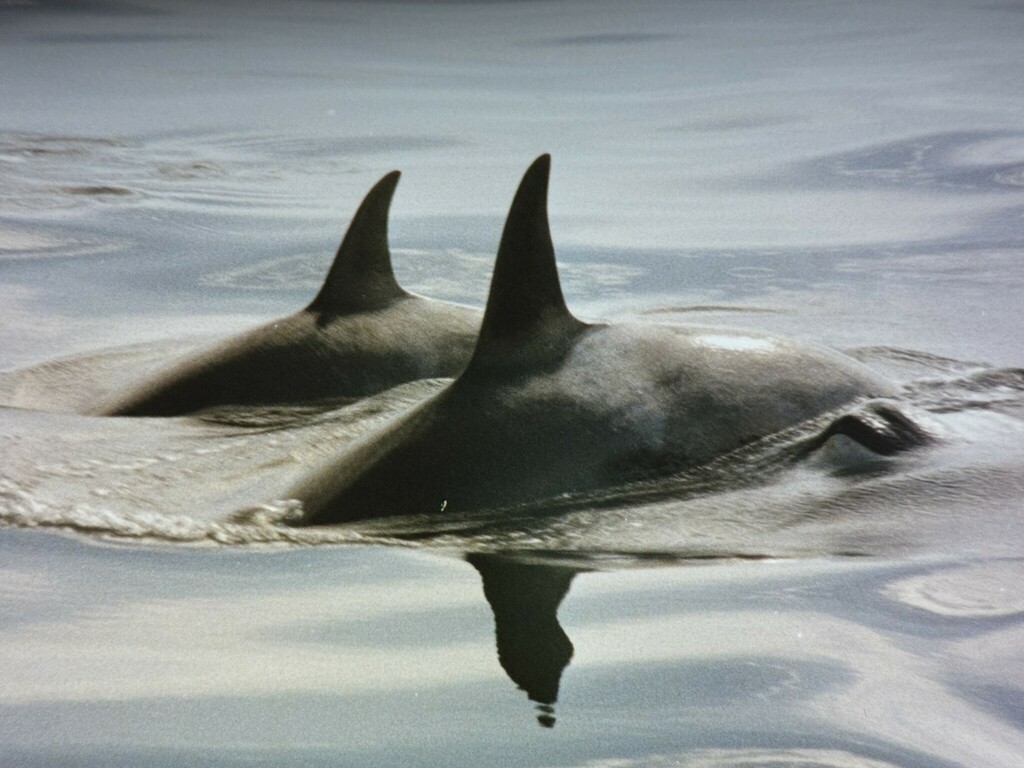
The orca (Orcinus orca), or killer whale, is a toothed whale and the largest member of the oceanic dolphin family.
- Kingdom
- Animalia
- Phylum
- Chordata
- Class
- Mammalia
- Order
- Cetacea
- Family
- Delphinidae
- Genus
- Orcinus
- Species
- Orcinus orca
Description
The orca (Orcinus orca), or killer whale, is a toothed whale and the largest member of the oceanic dolphin family. The only extant species in the genus Orcinus, it is recognizable by its distinct pigmentation; being mostly black on top, white on the bottom and having recognizable white eye patches. A cosmopolitan species, it inhabits a wide range of marine environments, from Arctic to Antarctic regions to tropical seas, but is more commonly documented in temperate or cooler coastal waters. Scientists have proposed dividing the global population into races, subspecies, or possibly even species. Orcas are apex predators with a diverse diet. Individual populations often specialize in particular types of prey, including bony fish, sharks, rays, and marine mammals such as seals, dolphins, and whales. They are highly social, with some populations forming stable matrilineal family groups (pods). Their sophisticated hunting techniques and vocal behaviours, often unique to specific groups and passed down from generation to generation, are considered to be manifestations of animal culture. The most studied populations are off the west coast of North America, which include fish-eating "residents", mammal-eating "transients", and offshores. The International Union for Conservation of Nature (IUCN) lists the orca's conservation status as data deficient as multiple orca types may represent distinct species. Some local populations are threatened or endangered due to prey depletion, habitat loss, pollution (by PCBs), captures for marine parks, and conflicts with fisheries. In late 2005, the southern resident orcas were added to the US Endangered Species list. Orcas have been revered by indigenous peoples from regions including the Pacific Northwest, Australia and Peru, while Western cultures have historically feared them. They have been taken by whalers when stocks of larger species have declined. The orca's image took a positive turn in the 1960s, due to greater public and scientific awareness and their display in captivity. Since then, orcas have been trained to perform in marine parks, a practice that has been criticized as unethical. Orcas rarely pose a threat to humans, and no fatal attack has been recorded in the wild. However, captive orcas have injured or killed their handlers in marine theme parks.
Gallery
Ajouter des photos
Partagez vos photos de cette espèce (jusqu'à 20 à la fois) : elles sont vérifiées automatiquement, puis publiées.
Répartition
Occurrences observées (données GBIF). Les zones hors aire d'origine peuvent indiquer une présence introduite ou invasive.
Sources et crédits
Informations provenant de plusieurs sources vérifiées. Dernière mise à jour : .
Crédits photos (5)
- Photo : Steve Ansell (@steveansell) · CC BY-NC 4.0 · via iNaturalist
- Photo : @vince929 · CC BY-NC 4.0 · via iNaturalist
- Photo : Patti (@pattibecker) · CC BY-NC 4.0 · via iNaturalist
- Photo : cwlonie6626 (@cwlonie) · CC BY-NC 4.0 · via iNaturalist
- Photo : Cricket Raspet (@chilipossum) · CC BY 4.0 · via iNaturalist
Mentions de licence
Texte disponible sous licence CC BY-SA 4.0. Il adapte notamment Wikipedia (CC BY-SA) : Orca (Wikipédia, auteurs dans l’historique de l’article).
- Taxonomie : GBIF Backbone Taxonomy (CC BY 4.0)
- Carte : occurrences GBIF, fond © contributeurs OpenStreetMap (ODbL)
- Statut de conservation : Liste rouge de l'UICN, via Wikidata (CC0)
Détail : Sources et licences.
Discussion (0)
Aucun message pour l’instant. Lancez la discussion sur cette fiche (sources, précisions, débats éditoriaux).
Connectez-vous pour participer à la discussion.