
Turuchan Pika
Ochotona turuchanensis
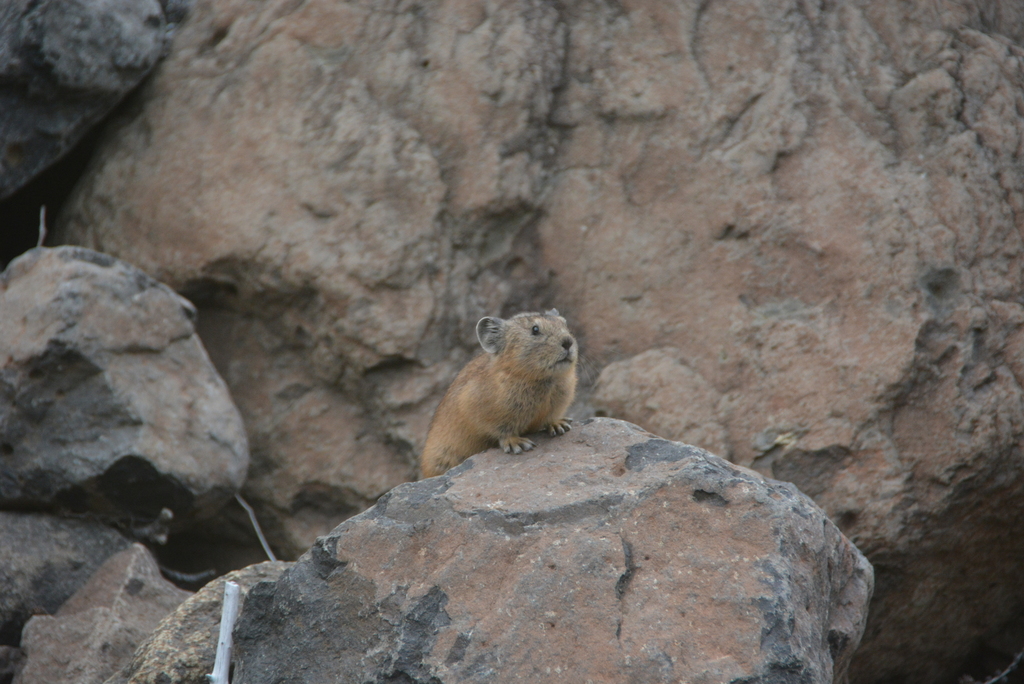
The Turuchan pika (Ochotona turuchanensis) (Russian: Туруханская пищуха, romanized: Turuhanskaya pischuha) is a species of pika found on the Central Siberian Plateau in Russia.
- Kingdom
- Animalia
- Phylum
- Chordata
- Class
- Mammalia
- Order
- Lagomorpha
- Family
- Ochotonidae
- Genus
- Ochotona
- Species
- Ochotona turuchanensis
Description
The Turuchan pika (Ochotona turuchanensis) (Russian: Туруханская пищуха, romanized: Turuhanskaya pischuha) is a species of pika found on the Central Siberian Plateau in Russia. It is a small, rock-dwelling pika measuring 15.8 to 22 centimeters (6.2 to 8.7 inches) long and weighing 113 to 171 grams (4.0 to 6.0 ounces). Its fur coat varies in color with the seasons, changing from mostly red in summer to gray in winter. The pika is active during the day and avoids both high and low temperatures. It also tends to stay out of strong winds. Like most pikas, the Turuchan pika uses alert calls to communicate. Adult pikas have been seen playing alone or socially with other adults. Turuchan pikas have a varied diet of plants, and follow a habit of gathering food to store it for winter in haypiles that is common among pikas. Their diet varies with the season, but one of their most preferred plant species is the common nettle. Mating takes place from June to August. The species was previously thought to be a subspecies of the northern pika, which it is very similar to in appearance, though it is more closely related to the alpine pika. Because it is widespread throughout its range and reportedly abundant, the Turuchan pika is considered a least-concern species by the International Union for Conservation of Nature. It is a poorly researched species largely due to the remoteness of its habitat.
Gallery
Ajouter des photos
Partagez vos photos de cette espèce (jusqu'à 20 à la fois) : elles sont vérifiées automatiquement, puis publiées.
Répartition
Occurrences observées (données GBIF). Les zones hors aire d'origine peuvent indiquer une présence introduite ou invasive.
Sources et crédits
Informations provenant de plusieurs sources vérifiées. Dernière mise à jour : .
Crédits photos (8)
- Photo : Игорь Поспелов (@taimyr) · CC BY-NC 4.0 · via iNaturalist
- Photo : @xenya13 · CC BY-NC 4.0 · via iNaturalist
- Photo : Daba (@daba) · CC BY-NC 4.0 · via iNaturalist
- Photo : Игорь Поспелов (@taimyr) · CC BY-NC 4.0 · via iNaturalist
- Photo : Игорь Поспелов (@taimyr) · CC BY-NC 4.0 · via iNaturalist
- Photo : Игорь Поспелов (@taimyr) · CC BY-NC 4.0 · via iNaturalist
- Photo : Игорь Поспелов (@taimyr) · CC BY-NC 4.0 · via iNaturalist
- Photo : Игорь Поспелов (@taimyr) · CC BY-NC 4.0 · via iNaturalist
Mentions de licence
Texte disponible sous licence CC BY-SA 4.0. Il adapte notamment Ochotona turuchanensis, Wikipedia (CC BY-SA) : Turuchan pika (Wikipédia, auteurs dans l’historique de l’article).
- Taxonomie : GBIF Backbone Taxonomy (CC BY 4.0)
- Carte : occurrences GBIF, fond © contributeurs OpenStreetMap (ODbL)
- Statut de conservation : Liste rouge de l'UICN, via Wikidata (CC0)
Détail : Sources et licences.
Discussion (0)
Aucun message pour l’instant. Lancez la discussion sur cette fiche (sources, précisions, débats éditoriaux).
Connectez-vous pour participer à la discussion.