
Nubra Pika
Ochotona nubrica
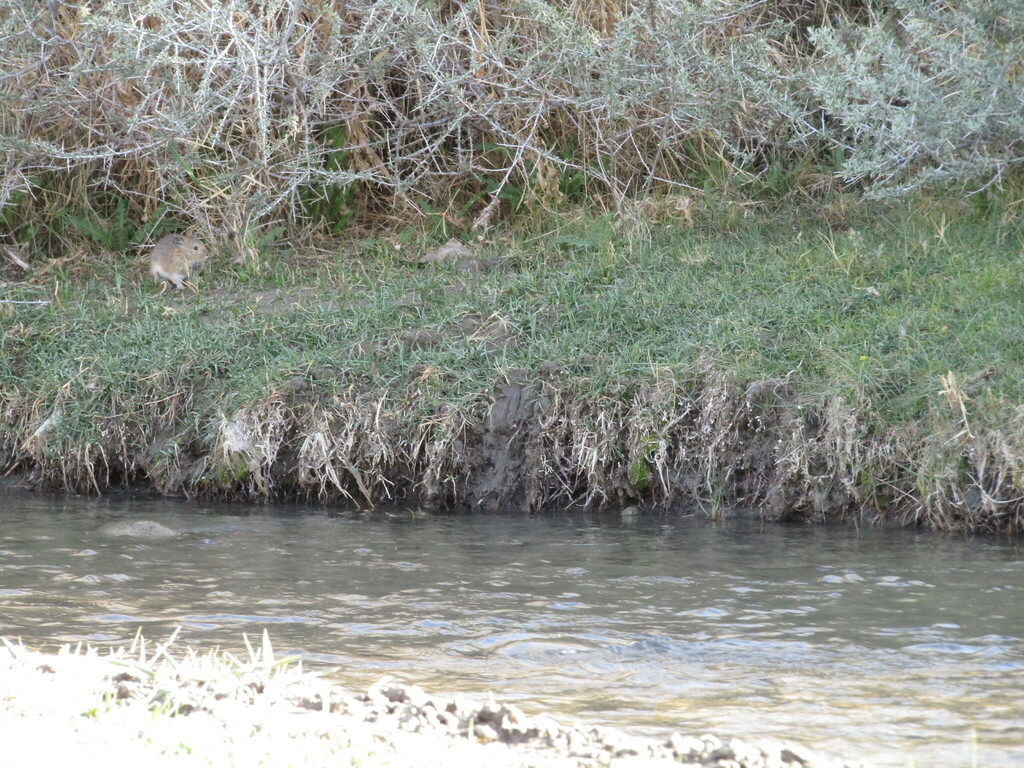
The Nubra pika (Ochotona nubrica) (Chinese: 奴布拉鼠兔; pinyin: Núbùlā shǔtù) is a species of pika found in Bhutan, China, India, Nepal, and Pakistan.
- Kingdom
- Animalia
- Phylum
- Chordata
- Class
- Mammalia
- Order
- Lagomorpha
- Family
- Ochotonidae
- Genus
- Ochotona
- Species
- Ochotona nubrica
Description
The Nubra pika (Ochotona nubrica) (Chinese: 奴布拉鼠兔; pinyin: Núbùlā shǔtù) is a species of pika found in Bhutan, China, India, Nepal, and Pakistan. It is a small diurnal mammal with a fur coat that changes color across seasons and regions, ranging from gray to brownish red. It has blackish ears with a distinctive pale patch on the back, a very small tail, and a flat, narrow skull. It is closely related to the plateau pika and Sikkim pika, and is widely distributed across the Himalayas. It is among the burrowing species of pika, and eats a variety of plants. This pika's range overlaps with that of the Sikkim pika, one subspecies of Moupin pika, and the large-eared pika. One subspecies of the Nubra pika is restricted to part of the southeastern Tibet Autonomous Region. The Nubra pika's taxonomy has changed several times over the period from its first description in 1922 up until 1992. It is named for the Nubra valley in Ladakh, India where it was first found. The International Union for Conservation of Nature (IUCN) and Chinese authorities list it as a least-concern species; its remoteness makes it hard to study and assess, but also makes it less likely to be threatened by human activity.
Gallery
Ajouter des photos
Partagez vos photos de cette espèce (jusqu'à 20 à la fois) : elles sont vérifiées automatiquement, puis publiées.
Répartition
Occurrences observées (données GBIF). Les zones hors aire d'origine peuvent indiquer une présence introduite ou invasive.
Sources et crédits
Informations provenant de plusieurs sources vérifiées. Dernière mise à jour : .
Crédits photos (8)
- Photo : P Jeganathan (@pjeganathan) · CC BY 4.0 · via iNaturalist
- Photo : Kishore (@pkishore) · CC BY 4.0 · via iNaturalist
- Photo : Adit Jeyan (@adit) · CC BY-NC 4.0 · via iNaturalist
- Photo : Manuel Ruedi (@manuel_ruedi) · CC BY-NC 4.0 · via iNaturalist
- Photo : Johannes S. (@jo-s) · CC BY 4.0 · via iNaturalist
- Photo : Benoît Segerer (@benoit_segerer) · CC BY-NC 4.0 · via iNaturalist
- Photo : Adit Jeyan (@adit) · CC BY-NC 4.0 · via iNaturalist
- Photo : Johannes S. (@jo-s) · CC BY 4.0 · via iNaturalist
Mentions de licence
Texte disponible sous licence CC BY-SA 4.0. Il adapte notamment Ochotona nubrica, Wikipedia (CC BY-SA) : Nubra pika (Wikipédia, auteurs dans l’historique de l’article).
- Taxonomie : GBIF Backbone Taxonomy (CC BY 4.0)
- Carte : occurrences GBIF, fond © contributeurs OpenStreetMap (ODbL)
- Statut de conservation : Liste rouge de l'UICN, via Wikidata (CC0)
Détail : Sources et licences.
Discussion (0)
Aucun message pour l’instant. Lancez la discussion sur cette fiche (sources, précisions, débats éditoriaux).
Connectez-vous pour participer à la discussion.