
Nycticebus kayan
Nycticebus kayan
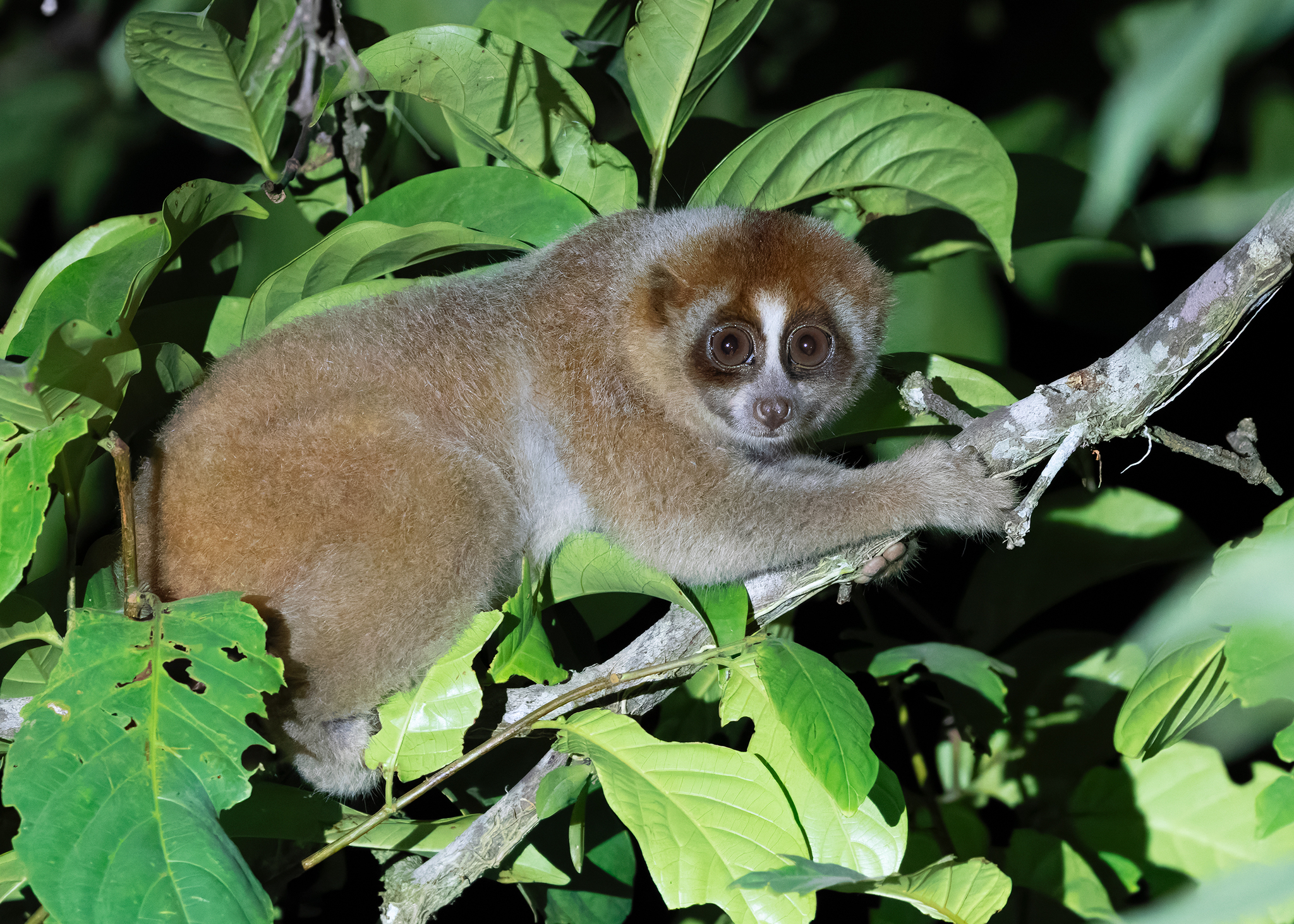
The Kayan River slow loris (Nycticebus kayan) is a strepsirrhine primate and a species of slow loris that is native to the northern and central highland region of the island of Borneo.
- Kingdom
- Animalia
- Phylum
- Chordata
- Class
- Mammalia
- Order
- Primates
- Family
- Lorisidae
- Genus
- Nycticebus
- Species
- Nycticebus kayan
Description
The Kayan River slow loris (Nycticebus kayan) is a strepsirrhine primate and a species of slow loris that is native to the northern and central highland region of the island of Borneo. The species was originally thought to be a part of the Bornean slow loris (N. menagensis) population until 2013, when a study of museum specimens and photographs identified distinct facial markings, which helped to differentiate it. It is distinguished by the high contrast of its black and white facial features, as well as the shape and width of the stripes of its facial markings. The species is named after the Kayan River, which runs through its native habitat. As with other slow lorises, this arboreal and nocturnal species primarily eats insects, tree gum, nectar, and fruit and has a toxic bite, a unique feature among primates. N. kayan has been assessed by the International Union for Conservation of Nature (IUCN) as "Vulnerable". They estimate that this species has experienced a 30% reduction in population over the past three generations (approximately 21-24 years), and project a further reduction by another 30% over the next three generations. It is primarily threatened by habitat loss and the illegal wildlife trade.
Gallery
Ajouter des photos
Partagez vos photos de cette espèce (jusqu'à 20 à la fois) : elles sont vérifiées automatiquement, puis publiées.
Répartition
Occurrences observées (données GBIF). Les zones hors aire d'origine peuvent indiquer une présence introduite ou invasive.
Sources et crédits
Informations provenant de plusieurs sources vérifiées. Dernière mise à jour : .
Crédits photos (6)
- Photo : ayuwat · CC BY-NC 4.0 · via GBIF
- Photo : @ayuwat · CC BY-NC 4.0 · via iNaturalist
- Photo : Jeremy Loh (@rimbawan_37) · CC BY-NC 4.0 · via iNaturalist
- Photo : Royle Safaris (@roylesafaris) · CC BY-NC 4.0 · via iNaturalist
- Photo : Charley Hesse (@charleyhesse) · CC BY-NC 4.0 · via iNaturalist
- Photo : @mike_hoit · CC BY-NC 4.0 · via iNaturalist
Mentions de licence
Texte disponible sous licence CC BY-SA 4.0. Il adapte notamment Wikipedia (CC BY-SA) : Nycticebus kayan (Wikipédia, auteurs dans l’historique de l’article).
- Taxonomie : GBIF Backbone Taxonomy (CC BY 4.0)
- Carte : occurrences GBIF, fond © contributeurs OpenStreetMap (ODbL)
- Statut de conservation : Liste rouge de l'UICN, via Wikidata (CC0)
Détail : Sources et licences.
Discussion (0)
Aucun message pour l’instant. Lancez la discussion sur cette fiche (sources, précisions, débats éditoriaux).
Connectez-vous pour participer à la discussion.