
Sunda Slow Loris
Nycticebus coucang
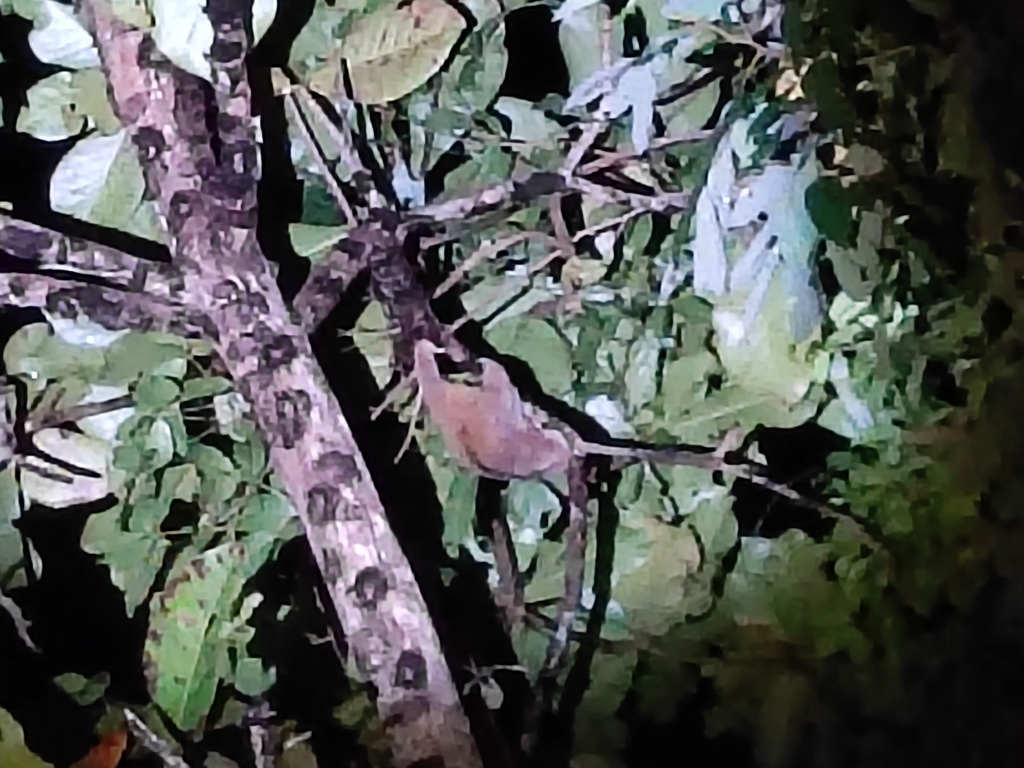
The Sunda slow loris (Nycticebus coucang), or greater slow loris, is a strepsirrhine primate and a species of slow loris native to Indonesia, West Malaysia, southern Thailand and Singapore.
- Kingdom
- Animalia
- Phylum
- Chordata
- Class
- Mammalia
- Order
- Primates
- Family
- Lorisidae
- Genus
- Nycticebus
- Species
- Nycticebus coucang
Description
The Sunda slow loris (Nycticebus coucang), or greater slow loris, is a strepsirrhine primate and a species of slow loris native to Indonesia, West Malaysia, southern Thailand and Singapore. It measures 27 to 38 cm (11 to 15 in) from head to tail and weighs between 599 and 685 g (21.1 and 24.2 oz). Like other slow lorises, it has a wet nose (rhinarium), a round head, small ears hidden in thick fur, a flat face, large eyes and a vestigial tail. The Sunda slow loris is nocturnal and arboreal, typically occurring in evergreen forests. It prefers rainforests with continuous dense canopies and has an extremely low metabolic rate compared to other mammals of its size. Its diet consists of sap, floral nectar, fruit and arthropods, and will feed on exudates such as gum and sap by licking wounds in trees. Individuals are generally solitary, with one study showing only 8% of its active time was spent near other individuals. It has a monogamous mating system with the offspring living with the parents. It sleeps during the day, rolled up in a ball in hidden parts of trees above the ground, often on branches, twigs, palm fronds, or lianas. The species is polyoestrous, usually giving birth to a single offspring after a gestation period of 192 days. The young disperses between 16 and 27 months, generally when it is sexually mature. The species is listed as endangered on the IUCN Red List. It is threatened with extinction due to a growing demand in the exotic pet trade, and has become one of the most abundant primate species on sale at Indonesian pet markets. Its teeth are often pulled out before being sold as pets which can result in infection and/or death. Lack of teeth makes reintroduction to the wild impossible. It also suffers from habitat loss, which has been severe in the areas in which it is found.
Gallery
Ajouter des photos
Partagez vos photos de cette espèce (jusqu'à 20 à la fois) : elles sont vérifiées automatiquement, puis publiées.
Répartition
Occurrences observées (données GBIF). Les zones hors aire d'origine peuvent indiquer une présence introduite ou invasive.
Sources et crédits
Informations provenant de plusieurs sources vérifiées. Dernière mise à jour : .
Crédits photos (8)
- Photo : Korakoch Pobprasert (@mong_korakoch) · CC BY-NC 4.0 · via iNaturalist
- Photo : Naufal Urfi Dhiya'ulhaq (@naufalurfi) · CC BY-NC 4.0 · via iNaturalist
- Photo : Cheongweei Gan (@gancw1) · CC BY 4.0 · via iNaturalist
- Photo : Wich’yanan (Jay) Limparungpatthanakij (@plains-wanderer) · CC BY-NC 4.0 · via iNaturalist
- Photo : @mark_spence · CC BY-NC 4.0 · via iNaturalist
- Photo : Vatcharavee Sriprasertsil (@vatcharavee) · CC BY-NC 4.0 · via iNaturalist
- Photo : @ellarbrown · CC BY-NC 4.0 · via iNaturalist
- Photo : momo shou (@momoshou) · CC BY-NC 4.0 · via iNaturalist
Mentions de licence
Texte disponible sous licence CC BY-SA 4.0. Il adapte notamment Nycticebus coucang, Wikipedia (CC BY-SA) : Sunda slow loris (Wikipédia, auteurs dans l’historique de l’article).
- Taxonomie : GBIF Backbone Taxonomy (CC BY 4.0)
- Carte : occurrences GBIF, fond © contributeurs OpenStreetMap (ODbL)
Détail : Sources et licences.
Discussion (0)
Aucun message pour l’instant. Lancez la discussion sur cette fiche (sources, précisions, débats éditoriaux).
Connectez-vous pour participer à la discussion.