
Royal Antelope
Neotragus pygmaeus
The royal antelope (Neotragus pygmaeus) is a West African antelope recognized as the world's smallest.
- Kingdom
- Animalia
- Phylum
- Chordata
- Class
- Mammalia
- Order
- Artiodactyla
- Family
- Bovidae
- Genus
- Neotragus
- Species
- Neotragus pygmaeus
Description
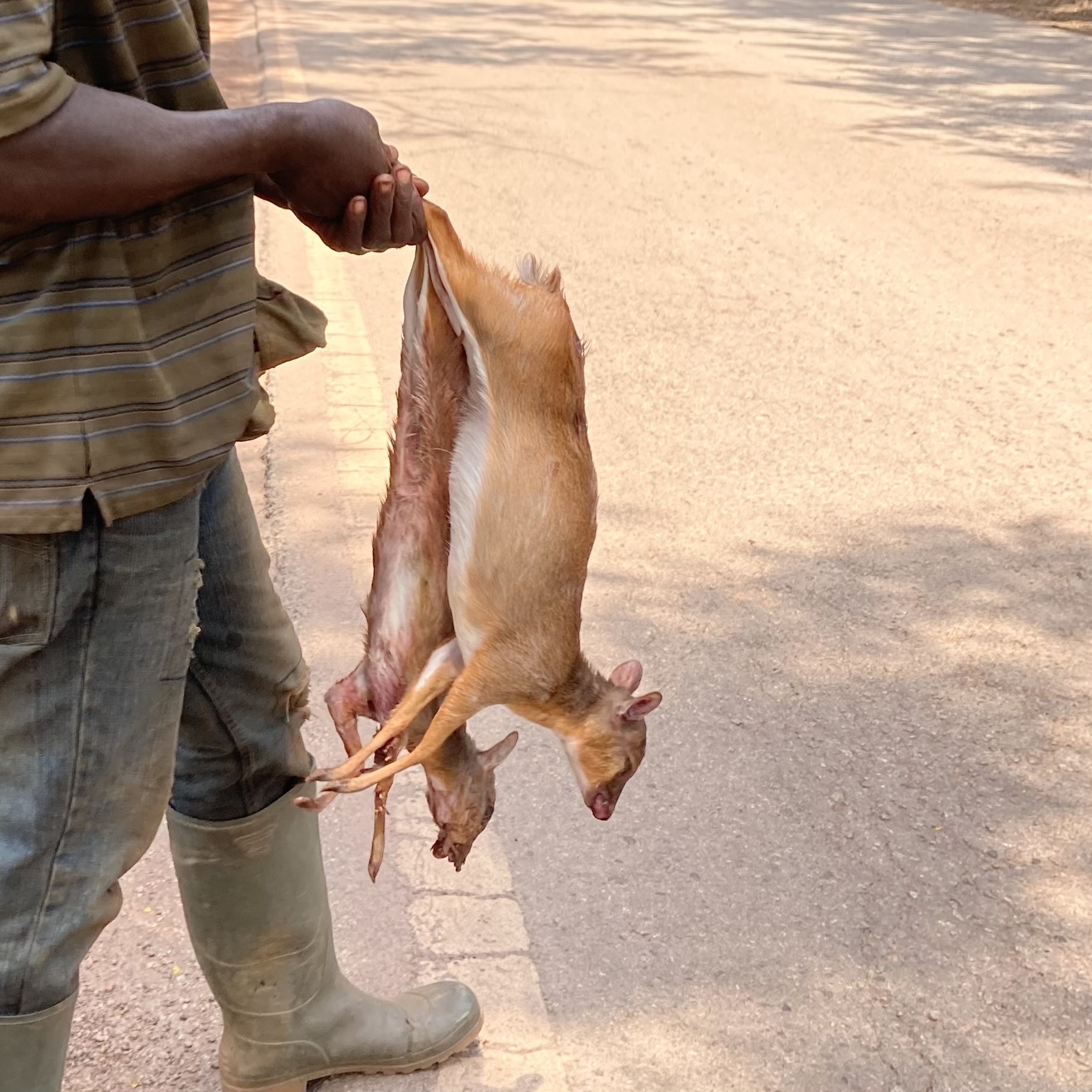
The royal antelope (Neotragus pygmaeus) is a West African antelope recognized as the world's smallest. It was first described by Swedish zoologist Carl Linnaeus in 1758. It stands up to merely 25 cm (10 in) at the shoulder and weighs 2.5–3 kg (5.5–6.6 lb). A characteristic feature is the long and slender legs, with the hindlegs twice as long as the forelegs. Horns are possessed only by males; the short, smooth, spiky horns measure 2.5–3 cm (0.98–1.18 in) and bend backward. The soft coat is reddish to golden brown, in sharp contrast with the white ventral parts. In comparison to Bates's pygmy antelope, the royal antelope has a longer muzzle, broader lips, a smaller mouth and smaller cheek muscles. Typically nocturnal (active at night), the royal antelope exhibits remarkable alertness. Territories are marked with dung. An herbivore, the royal antelope prefers small quantities of fresh foliage and shoots; fruits and fungi may be taken occasionally. Like other neotragines, the royal antelope is monogamous. Both sexes can become sexually mature by as early as six months. Births have been reported in November and December. A single, delicate young is born after an unknown gestational period. The royal antelope prefers areas with fresh and dense growth of shrubs and other plants. It inhabits the warm, moist lowland forests prevalent in western African countries such as Côte d'Ivoire, Ghana, Guinea, Liberia and Sierra Leone. The royal antelope has been categorized as Least Concern by the International Union for the Conservation of Nature and Natural Resources (IUCN). The population is feared to be declining due to habitat deterioration and expanding human settlement. A significant threat to the survival of this antelope is hunting for bushmeat.
Gallery
Ajouter des photos
Partagez vos photos de cette espèce (jusqu'à 20 à la fois) : elles sont vérifiées automatiquement, puis publiées.
Répartition
Occurrences observées (données GBIF). Les zones hors aire d'origine peuvent indiquer une présence introduite ou invasive.
Sources et crédits
Informations provenant de plusieurs sources vérifiées. Dernière mise à jour : .
Crédits photos (3)
- Photo : Adam Welz · CC BY-NC-ND 4.0 · via GBIF
- Photo : ChimpAndSee (@chimpandsee) · CC BY-NC 4.0 · via iNaturalist
- Photo : ChimpAndSee (@chimpandsee) · CC BY-NC 4.0 · via iNaturalist
Mentions de licence
Texte disponible sous licence CC BY-SA 4.0. Il adapte notamment Wikipedia (CC BY-SA) : Royal antelope (Wikipédia, auteurs dans l’historique de l’article).
- Taxonomie : GBIF Backbone Taxonomy (CC BY 4.0)
- Carte : occurrences GBIF, fond © contributeurs OpenStreetMap (ODbL)
- Statut de conservation : Liste rouge de l'UICN, via Wikidata (CC0)
Détail : Sources et licences.
Discussion (0)
Aucun message pour l’instant. Lancez la discussion sur cette fiche (sources, précisions, débats éditoriaux).
Connectez-vous pour participer à la discussion.