
Dusky-footed Woodrat
Neotoma fuscipes
The dusky-footed woodrat (Neotoma fuscipes) is a species of nocturnal rodent in the family Cricetidae.
- Kingdom
- Animalia
- Phylum
- Chordata
- Class
- Mammalia
- Order
- Rodentia
- Family
- Cricetidae
- Genus
- Neotoma
- Species
- Neotoma fuscipes
Description
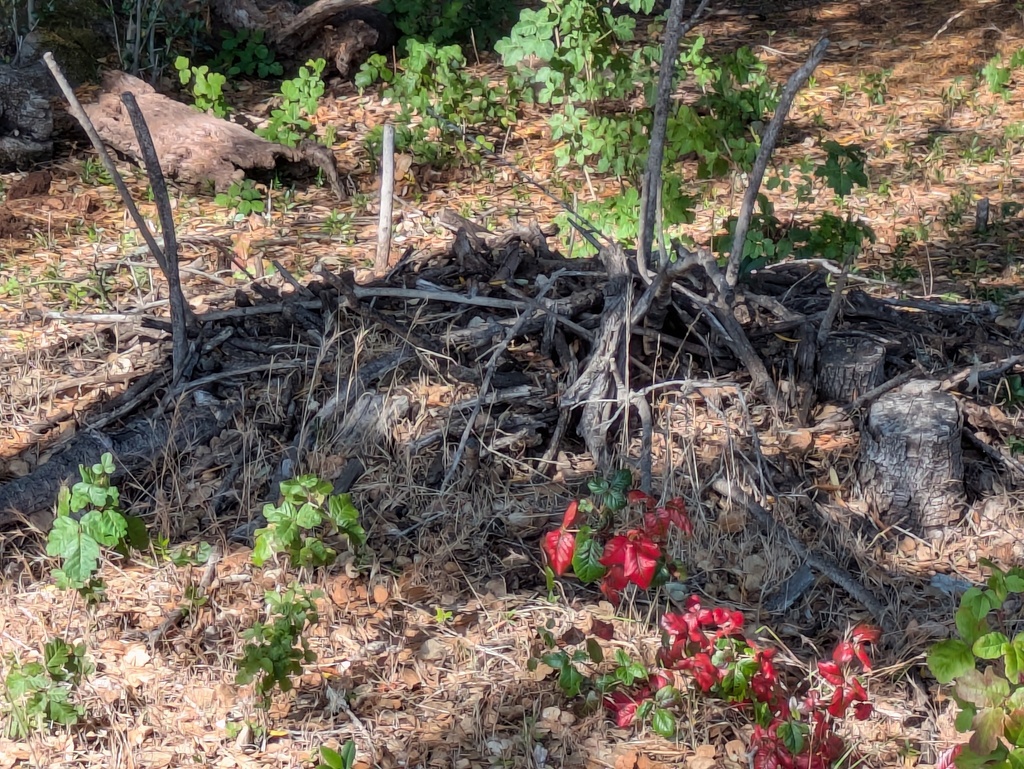
The dusky-footed woodrat (Neotoma fuscipes) is a species of nocturnal rodent in the family Cricetidae. Nicknames include "packrats" or "trade rats" because of their tendency to hoard things, build large domed dens, and "trade" by dropping then picking up another object for it. Coyotes and other predators will attempt to prey on these rodents by laying waste to the dens, but the sheer volume of material is usually dissuasive. Occasionally, dusky-footed woodrats will build satellite dens in trees. Although these animals are solitary, except in the mating season (when they are most vulnerable to predation), dens are frequently found in clusters of up to several dozen, forming rough "communities". The mating system in this species appears to be variable, with promiscuity most generally at high population densities and monogamy at lower densities. They are similar in appearance to the common rat species Rattus rattus and Rattus norvegicus, but with larger ears and eyes, softer coats, and furred tails. The California mouse, Peromyscus californicus, which has similar distribution, is sometimes found living in woodrat dens. Dens contain a nest and one or more "pantry" chambers which are used to store leaves and nuts for future consumption. The dental formula of Neotoma fuscipes is 1.0.0.31.0.0.3 × 2 = 16.
Gallery
Ajouter des photos
Partagez vos photos de cette espèce (jusqu'à 20 à la fois) : elles sont vérifiées automatiquement, puis publiées.
Répartition
Occurrences observées (données GBIF). Les zones hors aire d'origine peuvent indiquer une présence introduite ou invasive.
Sources et crédits
Informations provenant de plusieurs sources vérifiées. Dernière mise à jour : .
Crédits photos (8)
- Photo : Eric Knight (@knightericm) · CC BY 4.0 · via iNaturalist
- Photo : Gay Knight (@gknight) · CC BY-NC 4.0 · via iNaturalist
- Photo : Max Roberts (@tothemax) · CC BY-NC 4.0 · via iNaturalist
- Photo : Wyatt (@wyattd) · CC BY-NC 4.0 · via iNaturalist
- Photo : Lena Zentall (@lenaz) · CC BY-NC 4.0 · via iNaturalist
- Photo : Clint Kellner (@clintkellner) · CC BY-NC 4.0 · via iNaturalist
- Photo : Krissa Klein (@graysquirrel) · CC BY-NC 4.0 · via iNaturalist
- Photo : Anne Parsons (@truthseqr) · CC0 (domaine public) · via iNaturalist
Mentions de licence
Texte disponible sous licence CC BY-SA 4.0. Il adapte notamment Neotoma fuscipes, Wikipedia (CC BY-SA) : Dusky-footed woodrat (Wikipédia, auteurs dans l’historique de l’article).
- Taxonomie : GBIF Backbone Taxonomy (CC BY 4.0)
- Carte : occurrences GBIF, fond © contributeurs OpenStreetMap (ODbL)
- Statut de conservation : Liste rouge de l'UICN, via Wikidata (CC0)
Détail : Sources et licences.
Discussion (0)
Aucun message pour l’instant. Lancez la discussion sur cette fiche (sources, précisions, débats éditoriaux).
Connectez-vous pour participer à la discussion.