
Brazilian funnel-eared bat
Natalus macrourus
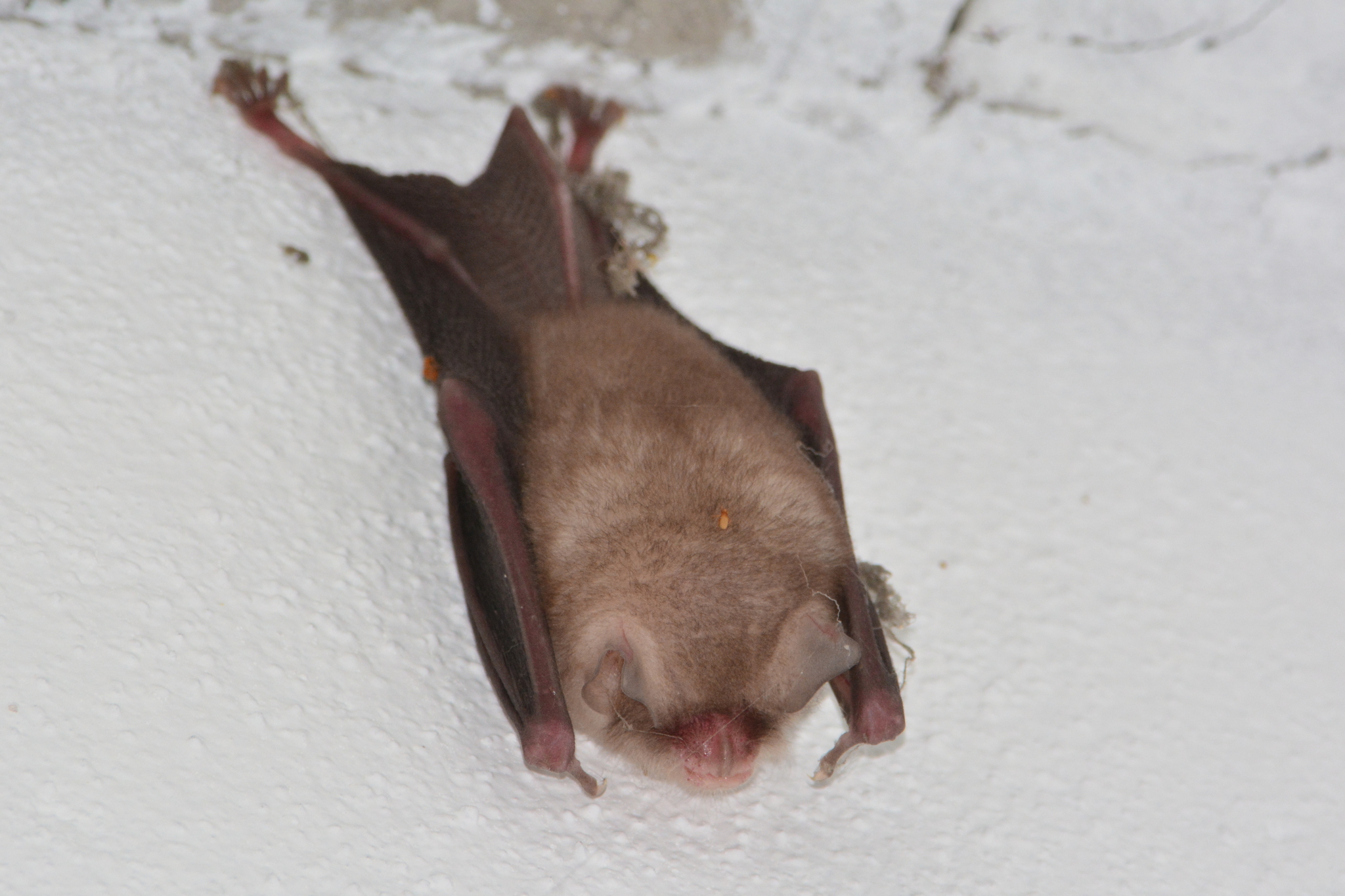
The Brazilian funnel-eared bat (Natalus macrourus) is a bat species found in eastern Brazil and Paraguay.
- Kingdom
- Animalia
- Phylum
- Chordata
- Class
- Mammalia
- Order
- Chiroptera
- Family
- Natalidae
- Genus
- Natalus
- Species
- Natalus macrourus
Description
The Brazilian funnel-eared bat (Natalus macrourus) is a bat species found in eastern Brazil and Paraguay. It roosts in caves, which makes it vulnerable to disturbance of these scarce sites, and in particular, to extermination campaigns against cave-roosting bats carried out in Brazil to combat rabies. Currently the Natalus macrourus is classified as being near threatened due to human disturbance which causes habitat loss. Since the bats live in warm forests and roosts in caves, it is vulnerable to habitat destruction. Although, recent studies have revealed new populations of the species in northeastern Brazil, highlight the fact that these bats are more widespread than has been known. Since the Natalus macrourus is known to be threatened conservation efforts are trying to be made. A way to make these conservation efforts better, scientists have discovered a genetic feature on these bats that helps in identifying the species which helps them understand how it has evolved. It was formerly considered a subspecies of N. stramineus. Abiotic factors such as temperature and annual rainfall can affect the distribution of this species. Physical characteristics include short maxillary toothrow length, deeply concave and deeply notched auricular pinna, small oval nostrils open ventrolaterally, unicolored abdominal fur, and bicolored fur with lighter bases on the back and sides. The Brazilian funnel-eared bat is categorized as near threatened on the IUCN Red List due to factors such as habitat loss and degradation.
Gallery
Ajouter des photos
Partagez vos photos de cette espèce (jusqu'à 20 à la fois) : elles sont vérifiées automatiquement, puis publiées.
Répartition
Occurrences observées (données GBIF). Les zones hors aire d'origine peuvent indiquer une présence introduite ou invasive.
Sources et crédits
Informations provenant de plusieurs sources vérifiées. Dernière mise à jour : .
Crédits photos (6)
- Photo : Frederico Acaz Sonntag · CC BY-NC 4.0 · via GBIF
- Photo : Frederico Acaz Sonntag (@fredericosonntag) · CC BY-NC 4.0 · via iNaturalist
- Photo : João Abraão (@joaoabraao) · CC BY-NC 4.0 · via iNaturalist
- Photo : Nádia Cavalcante (@nadiacavalcant) · CC BY-NC 4.0 · via iNaturalist
- Photo : Kathrin (@batikat) · CC BY-NC 4.0 · via iNaturalist
- Photo : @sidelima · CC BY-NC 4.0 · via iNaturalist
Mentions de licence
Texte disponible sous licence CC BY-SA 4.0. Il adapte notamment Wikipedia (CC BY-SA) : Brazilian funnel-eared bat (Wikipédia, auteurs dans l’historique de l’article).
- Taxonomie : GBIF Backbone Taxonomy (CC BY 4.0)
- Carte : occurrences GBIF, fond © contributeurs OpenStreetMap (ODbL)
Détail : Sources et licences.
Discussion (0)
Aucun message pour l’instant. Lancez la discussion sur cette fiche (sources, précisions, débats éditoriaux).
Connectez-vous pour participer à la discussion.