
Madagascar Sucker-footed Bat
Myzopoda aurita
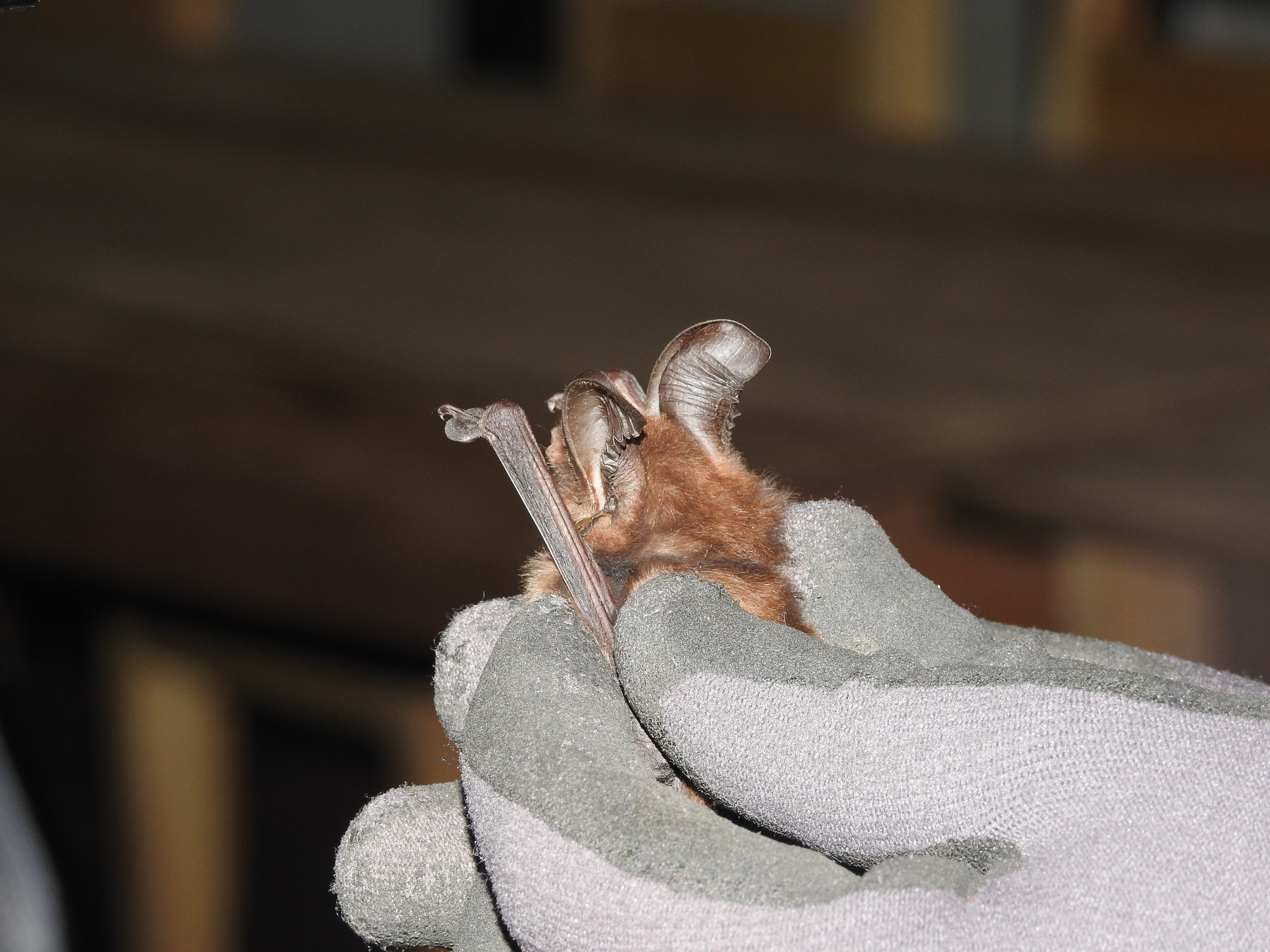
The Madagascar sucker-footed bat, Old World sucker-footed bat, or simply sucker-footed bat (Myzopoda aurita) is a species of bat in the family Myzopodidae endemic to Madagascar, especially in the eastern part of the forests.
- Kingdom
- Animalia
- Phylum
- Chordata
- Class
- Mammalia
- Order
- Chiroptera
- Family
- Myzopodidae
- Genus
- Myzopoda
- Species
- Myzopoda aurita
Description
The Madagascar sucker-footed bat, Old World sucker-footed bat, or simply sucker-footed bat (Myzopoda aurita) is a species of bat in the family Myzopodidae endemic to Madagascar, especially in the eastern part of the forests. The genus was thought to be monospecific until a second species, Myzopoda schliemanni, was discovered in the central western lowlands. It was classified as Vulnerable in the 1996 IUCN Red List of Threatened Species but is now known to be more abundant and was reclassified in 2008 as of "Least Concern". The bat is named for the presence of small cups on its wrists and ankles. They roost inside the rolled leaves of the traveller's tree, using their suckers to attach themselves to the smooth surface. Despite the name, it is now known that the bats do not use suction to attach themselves to roost sites, but instead use a form of wet adhesion by secreting a body fluid at their pads. The ankle and wrist pads of the bat are controlled by muscle contraction and allow the bat to separate the pads to reduce the adhesive effect. This allows the bats to climb with ease and to remove themselves from surfaces after sticking. Due to this property the Madagascar sucker-footed bat is one of the few bat species that roosts with its head up rather than upside down. This is so the bat does not accidentally lose control of the adhesive pads while it is sleeping due to the muscle tension associated with roosting upside down. Because of their unique habitat, sucker-footed bats don't carry ectoparasites, due to the smooth surface of the Ravenala leaves being inhospitable to small arthropods The majority of sucker-footed bats caught in eastern Madagascar were within or close to stands of traveller's trees, and according to research, the maximum distance they will travel while foraging is about 1.8 km (1.1 mi). Sucker-footed bats feed largely on beetles and small moths.
Gallery
Ajouter des photos
Partagez vos photos de cette espèce (jusqu'à 20 à la fois) : elles sont vérifiées automatiquement, puis publiées.
Répartition
Occurrences observées (données GBIF). Les zones hors aire d'origine peuvent indiquer une présence introduite ou invasive.
Sources et crédits
Informations provenant de plusieurs sources vérifiées. Dernière mise à jour : .
Crédits photos (6)
- Photo : Andrianiaina Angelo · CC BY-NC 4.0 · via GBIF
- Photo : Andrianiaina Angelo (@angelomg) · CC BY-NC 4.0 · via iNaturalist
- Photo : Justin Philbois (@jujuwild) · CC0 (domaine public) · via iNaturalist
- Photo : Manuel Ruedi (@manuel_ruedi) · CC BY-NC 4.0 · via iNaturalist
- Photo : @gauvain_saucy · CC BY-NC 4.0 · via iNaturalist
- Photo : @mikee84 · CC BY-NC 4.0 · via iNaturalist
Mentions de licence
Texte disponible sous licence CC BY-SA 4.0. Il adapte notamment Myzopoda aurita, Wikipedia (CC BY-SA) : Madagascar sucker-footed bat (Wikipédia, auteurs dans l’historique de l’article).
- Taxonomie : GBIF Backbone Taxonomy (CC BY 4.0)
- Carte : occurrences GBIF, fond © contributeurs OpenStreetMap (ODbL)
- Statut de conservation : Liste rouge de l'UICN, via Wikidata (CC0)
Détail : Sources et licences.
Discussion (0)
Aucun message pour l’instant. Lancez la discussion sur cette fiche (sources, précisions, débats éditoriaux).
Connectez-vous pour participer à la discussion.