
Indiana bat
Myotis sodalis
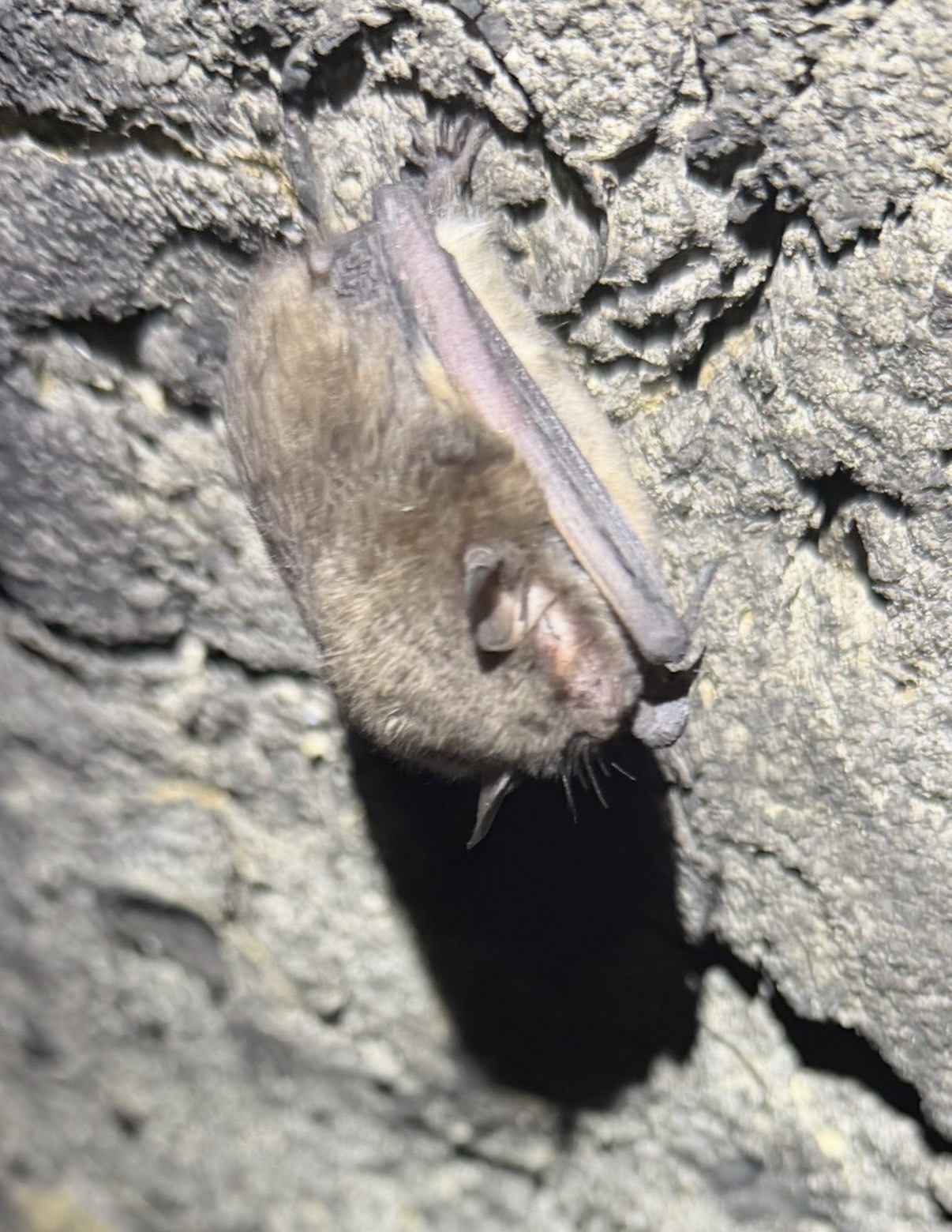
The Indiana bat (Myotis sodalis) is a medium-sized mouse-eared bat native to North America.
- Kingdom
- Animalia
- Phylum
- Chordata
- Class
- Mammalia
- Order
- Chiroptera
- Family
- Vespertilionidae
- Genus
- Myotis
- Species
- Myotis sodalis
Description
The Indiana bat (Myotis sodalis) is a medium-sized mouse-eared bat native to North America. It lives primarily in Southern and Midwestern U.S. states and is listed as an endangered species. The Indiana bat is grey, black, or chestnut in color and is 1.2–2.0 in long and weighs 4.5–9.5 g (0.16–0.34 oz). It is similar in appearance to the more common little brown bat, but is distinguished by its feet size, toe hair length, pink lips, and a keel on the calcar. Indiana bats live in hardwood and hardwood-pine forests. It is common in old-growth forest and in agricultural land, mainly in forest, crop fields, and grasslands. As an insectivore, the bat eats both terrestrial and aquatic flying insects, such as moths, beetles, mosquitoes, and midges. The Indiana bat is listed as an endangered species by the U.S. Fish and Wildlife Service. It has had serious population decline, estimated to be more than 50% over the past 10 years, based on direct observation and a decline on its extent of occurrence.
Gallery
Ajouter des photos
Partagez vos photos de cette espèce (jusqu'à 20 à la fois) : elles sont vérifiées automatiquement, puis publiées.
Répartition
Occurrences observées (données GBIF). Les zones hors aire d'origine peuvent indiquer une présence introduite ou invasive.
Sources et crédits
Informations provenant de plusieurs sources vérifiées. Dernière mise à jour : .
Crédits photos (6)
- Photo : Adit Nehra · CC BY-NC 4.0 · via GBIF
- Photo : @keith_lott · CC BY-NC 4.0 · via iNaturalist
- Photo : Steve Pelikan (@spelikan) · CC BY-NC 4.0 · via iNaturalist
- Photo : Marlo Perdicas (@mperdicas) · CC BY 4.0 · via iNaturalist
- Photo : Craig Biegler (@craigbiegler) · CC BY-NC 4.0 · via iNaturalist
- Photo : Diane Bricmont (@steelbirder) · CC BY-NC 4.0 · via iNaturalist
Mentions de licence
Texte disponible sous licence CC BY-SA 4.0. Il adapte notamment Myotis sodalis, Wikipedia (CC BY-SA) : Indiana bat (Wikipédia, auteurs dans l’historique de l’article).
- Taxonomie : GBIF Backbone Taxonomy (CC BY 4.0)
- Carte : occurrences GBIF, fond © contributeurs OpenStreetMap (ODbL)
- Statut de conservation : Liste rouge de l'UICN, via Wikidata (CC0)
Détail : Sources et licences.
Discussion (0)
Aucun message pour l’instant. Lancez la discussion sur cette fiche (sources, précisions, débats éditoriaux).
Connectez-vous pour participer à la discussion.