
Alcathoe Myotis
Myotis alcathoe
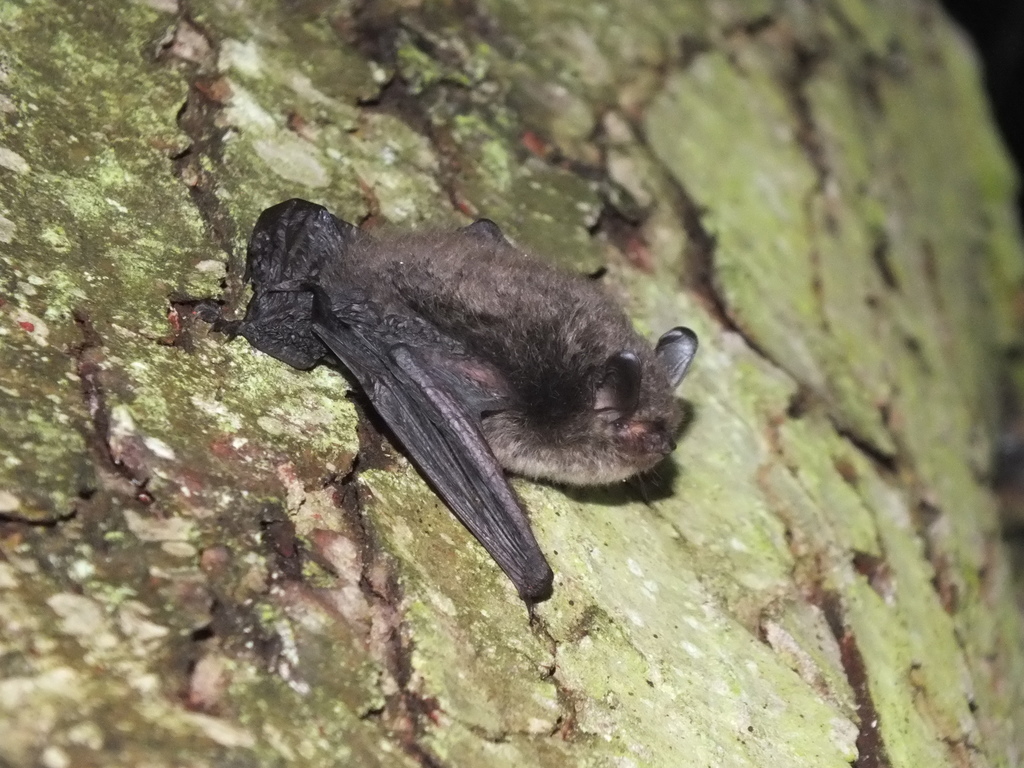
The Alcathoe bat (Myotis alcathoe) is a European bat in the genus Myotis.
- Kingdom
- Animalia
- Phylum
- Chordata
- Class
- Mammalia
- Order
- Chiroptera
- Family
- Vespertilionidae
- Genus
- Myotis
- Species
- Myotis alcathoe
Description
The Alcathoe bat (Myotis alcathoe) is a European bat in the genus Myotis. Known only from Greece and Hungary when it was first described in 2001, its known distribution has since expanded as far as Portugal, England, Sweden, and Russia. It is similar to the whiskered bat (Myotis mystacinus) and other species and is difficult to distinguish from them. However, its brown fur is distinctive and it is clearly different in characters of its karyotype and DNA sequences. It is most closely related to Myotis hyrcanicus from Iran, but otherwise has no close relatives. With a forearm length of 30.8 to 34.6 mm (1.21 to 1.36 in) and body weight of 3.5 to 5.5 g (0.12 to 0.19 oz), Myotis alcathoe is a small bat. The fur is usually reddish-brown on the upperparts and brown below, but more greyish in juveniles. The tragus (a projection on the inner side of the ear) is short, as is the ear itself, and the inner side of the ear is pale at the base. The wings are brown and the baculum (penis bone) is short and broad. M. alcathoe has a very high-pitched echolocation call, with a frequency that falls from 120 kHz at the beginning of the call to about 43 kHz at the end. Usually found in old-growth deciduous forest near water, Myotis alcathoe forages high in the canopy and above water and mostly eats flies. The animal roosts in cavities high in trees. Although there are some winter records from caves, it may also spend the winter in tree cavities. Several parasites have been recorded on M. alcathoe. The IUCN Red List assesses Myotis alcathoe as "data deficient", but it is considered threatened in several areas because of its rarity and vulnerability to habitat loss.
Gallery
Ajouter des photos
Partagez vos photos de cette espèce (jusqu'à 20 à la fois) : elles sont vérifiées automatiquement, puis publiées.
Répartition
Occurrences observées (données GBIF). Les zones hors aire d'origine peuvent indiquer une présence introduite ou invasive.
Sources et crédits
Informations provenant de plusieurs sources vérifiées. Dernière mise à jour : .
Crédits photos (8)
- Photo : Markus Milchram (@markusm) · CC BY-NC 4.0 · via iNaturalist
- Photo : Tommy Andriollo (@tommy_andriollo) · CC BY 4.0 · via iNaturalist
- Photo : Anna Rutana (@annarutana) · CC BY-NC 4.0 · via iNaturalist
- Photo : Břeněk Michálek (@brenek) · CC BY-NC 4.0 · via iNaturalist
- Photo : Maksymilian Wojtkiewicz (@maximion) · CC BY-NC 4.0 · via iNaturalist
- Photo : Cathy Pasterczyk (@cathyp) · CC BY-NC 4.0 · via iNaturalist
- Photo : Manuel Ruedi (@manuel_ruedi) · CC BY-NC 4.0 · via iNaturalist
- Photo : @mathieu_fr · CC BY-NC 4.0 · via iNaturalist
Mentions de licence
Texte disponible sous licence CC BY-SA 4.0. Il adapte notamment Myotis alcathoe, Wikipedia (CC BY-SA) : Alcathoe bat (Wikipédia, auteurs dans l’historique de l’article).
- Taxonomie : GBIF Backbone Taxonomy (CC BY 4.0)
- Carte : occurrences GBIF, fond © contributeurs OpenStreetMap (ODbL)
- Statut de conservation : Liste rouge de l'UICN, via Wikidata (CC0)
Détail : Sources et licences.
Discussion (0)
Aucun message pour l’instant. Lancez la discussion sur cette fiche (sources, précisions, débats éditoriaux).
Connectez-vous pour participer à la discussion.