
Pygmy Mouse
Mus minutoides
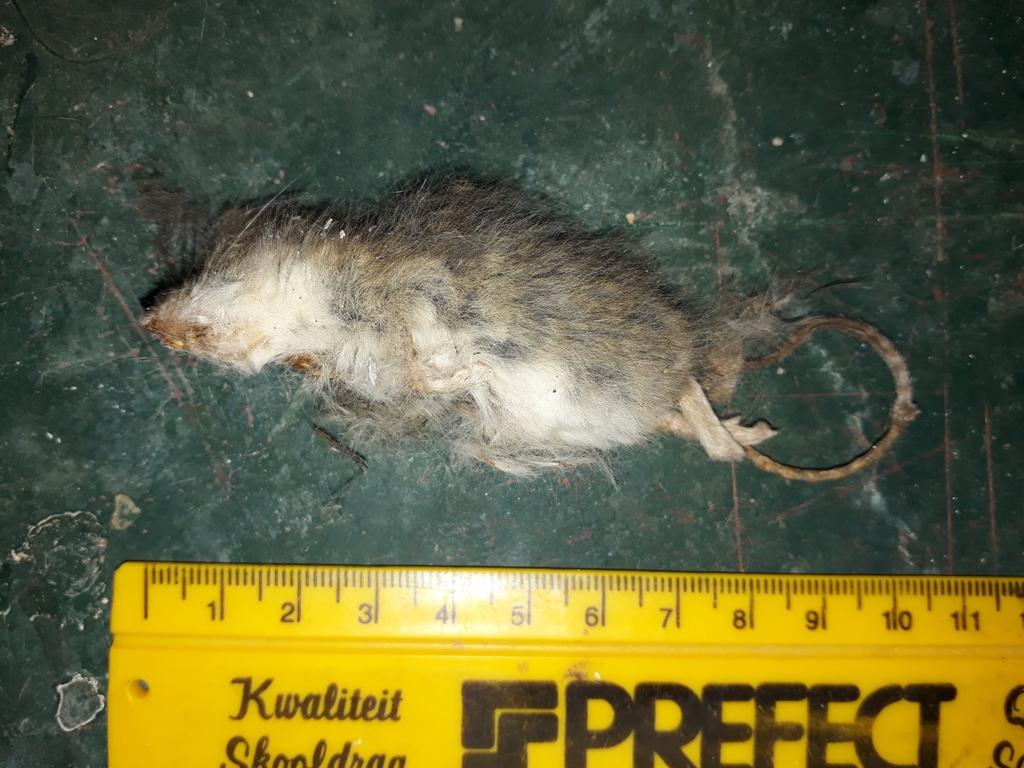
The African pygmy mouse (Mus minutoides) is one of the smallest rodents.
- Kingdom
- Animalia
- Phylum
- Chordata
- Class
- Mammalia
- Order
- Rodentia
- Family
- Muridae
- Genus
- Mus
- Species
- Mus minutoides
Description
The African pygmy mouse (Mus minutoides) is one of the smallest rodents. It is widespread within sub-Saharan Africa, and is kept as a pet in other parts of the world. Like the common and widely introduced European house mouse, it is a member of the enormous superfamily Muroidea, which includes over 1000 different species. It forms a super- species complex with Mus musculoides. Grey to brick-red overall, it is pale on the underside and has small but prominent triangular ears. Adult body length averages 50 mm (2.0 in) long, with a 40 mm (1.6 in) tail. Average adults body weight is 5 g (0.18 oz). The African pygmy mouse reaches breeding age at about 6 to 8 weeks. Pregnancy lasts for around 20 days and the litter of about three young is born blind and hairless. Average weight of puppies at birth is 0.8 g (0.028 oz) Their eyes open after 2 weeks, and weaning is complete after 3 weeks. The lifespan is about 2 years, although individual specimens have been reported to live over 4 years in captivity. The African pygmy mouse has a number of unique traits. It stacks pebbles in front of its burrow. Overnight, the pebbles gather dew and in the morning, the pygmy mouse drinks the dew on the pebbles. After that, it retires to its den. Its method of sex determination has also been found to differ from most mammals in that rearrangements of the X chromosome have led to many XY individuals actually being female. The species lives in colonies or in pairs in grass close to water and is an excellent climber.
Gallery
Ajouter des photos
Partagez vos photos de cette espèce (jusqu'à 20 à la fois) : elles sont vérifiées automatiquement, puis publiées.
Répartition
Occurrences observées (données GBIF). Les zones hors aire d'origine peuvent indiquer une présence introduite ou invasive.
Sources et crédits
Informations provenant de plusieurs sources vérifiées. Dernière mise à jour : .
Crédits photos (7)
- Photo : Dewald du Plessis (@dewald2) · CC BY-NC 4.0 · via iNaturalist
- Photo : @glorysummay · CC BY-NC 4.0 · via iNaturalist
- Photo : Mahomed Desai (@m_d) · CC BY 4.0 · via iNaturalist
- Photo : @amberj · CC BY-NC 4.0 · via iNaturalist
- Photo : Moira FitzPatrick (@moira_fitzpatrick) · CC BY-NC 4.0 · via iNaturalist
- Photo : @le0p0ld_d · CC BY 4.0 · via iNaturalist
- Photo : @david_taylor · CC BY-NC 4.0 · via iNaturalist
Mentions de licence
Texte disponible sous licence CC BY-SA 4.0. Il adapte notamment Mus minutoides, Wikipedia (CC BY-SA) : African pygmy mouse (Wikipédia, auteurs dans l’historique de l’article).
- Taxonomie : GBIF Backbone Taxonomy (CC BY 4.0)
- Carte : occurrences GBIF, fond © contributeurs OpenStreetMap (ODbL)
- Statut de conservation : Liste rouge de l'UICN, via Wikidata (CC0)
Détail : Sources et licences.
Discussion (0)
Aucun message pour l’instant. Lancez la discussion sur cette fiche (sources, précisions, débats éditoriaux).
Connectez-vous pour participer à la discussion.