
Walrus
Odobenus rosmarus
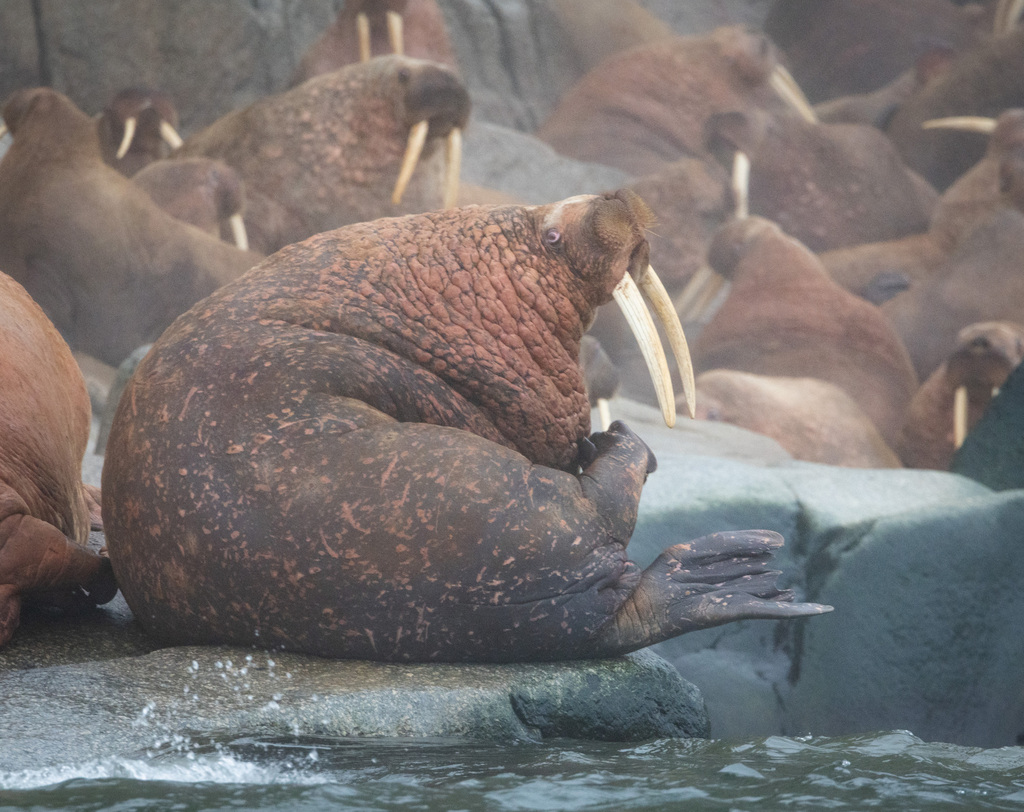
The walrus (Odobenus rosmarus; plural walrus or walruses) is a large pinniped marine mammal with discontinuous distribution about the North Pole in the Arctic Ocean and subarctic seas of the Northern Hemisphere.
- Kingdom
- Animalia
- Phylum
- Chordata
- Class
- Mammalia
- Order
- Carnivora
- Family
- Odobenidae
- Genus
- Odobenus
- Species
- Odobenus rosmarus
Description
The walrus (Odobenus rosmarus; plural walrus or walruses) is a large pinniped marine mammal with discontinuous distribution about the North Pole in the Arctic Ocean and subarctic seas of the Northern Hemisphere. It is the only extant species in the family Odobenidae and genus Odobenus. This species is subdivided into two subspecies: the Atlantic walrus (O. r. rosmarus), which lives in the Atlantic Ocean, and the Pacific walrus (O. r. divergens), which lives in the Pacific Ocean. Adult walrus are characterised by prominent tusks and whiskers, and considerable bulk; adult males in the Pacific can weigh more than 2,000 kilograms (4,400 pounds) and, among pinnipeds, are exceeded in size only by the two species of elephant seals. Walrus live mostly in shallow waters above the continental shelves, spending significant amounts of their lives on the sea ice looking for benthic bivalve molluscs. Walruses are relatively long-lived, social and intelligent animals, and are considered a keystone species of the Arctic marine region. The walrus has played a prominent role in the cultures of many indigenous Arctic peoples, who have hunted it for meat, fat, skin, tusks, and bone. During the 19th century and the early 20th century, walrus were widely hunted for their blubber, walrus ivory, leather, and meat; in this period, the walrus population dropped rapidly all around the Arctic region. It has rebounded somewhat since, though the populations of Atlantic and Laptev walruses remain fragmented and at low levels compared with the time before human interference.
Gallery
Ajouter des photos
Partagez vos photos de cette espèce (jusqu'à 20 à la fois) : elles sont vérifiées automatiquement, puis publiées.
Répartition
Occurrences observées (données GBIF). Les zones hors aire d'origine peuvent indiquer une présence introduite ou invasive.
Sources et crédits
Informations provenant de plusieurs sources vérifiées. Dernière mise à jour : .
Crédits photos (4)
- Photo : Сергей (@sergcat) · CC BY-NC 4.0 · via iNaturalist
- Photo : Elisabeth (@pande) · CC BY-NC 4.0 · via iNaturalist
- Photo : Valentin Moser (@vmoser) · CC BY 4.0 · via iNaturalist
- Photo : RockChick70 (@rockchick70) · CC BY-NC 4.0 · via iNaturalist
Mentions de licence
Texte disponible sous licence CC BY-SA 4.0. Il adapte notamment Wikipedia (CC BY-SA) : Walrus (Wikipédia, auteurs dans l’historique de l’article).
- Taxonomie : GBIF Backbone Taxonomy (CC BY 4.0)
- Carte : occurrences GBIF, fond © contributeurs OpenStreetMap (ODbL)
- Statut de conservation : Liste rouge de l'UICN, via Wikidata (CC0)
Détail : Sources et licences.
Discussion (0)
Aucun message pour l’instant. Lancez la discussion sur cette fiche (sources, précisions, débats éditoriaux).
Connectez-vous pour participer à la discussion.