
Northern Rufous Mouse Lemur
Microcebus tavaratra
The northern rufous mouse lemur (Microcebus tavaratra), northern brown mouse lemur, or Tavaratra mouse lemur is found in northern Madagascar from the Ankarana Special Reserve in the west to the Manambato River in the northeast, and up…
- Kingdom
- Animalia
- Phylum
- Chordata
- Class
- Mammalia
- Order
- Primates
- Family
- Cheirogaleidae
- Genus
- Microcebus
- Species
- Microcebus tavaratra
Description
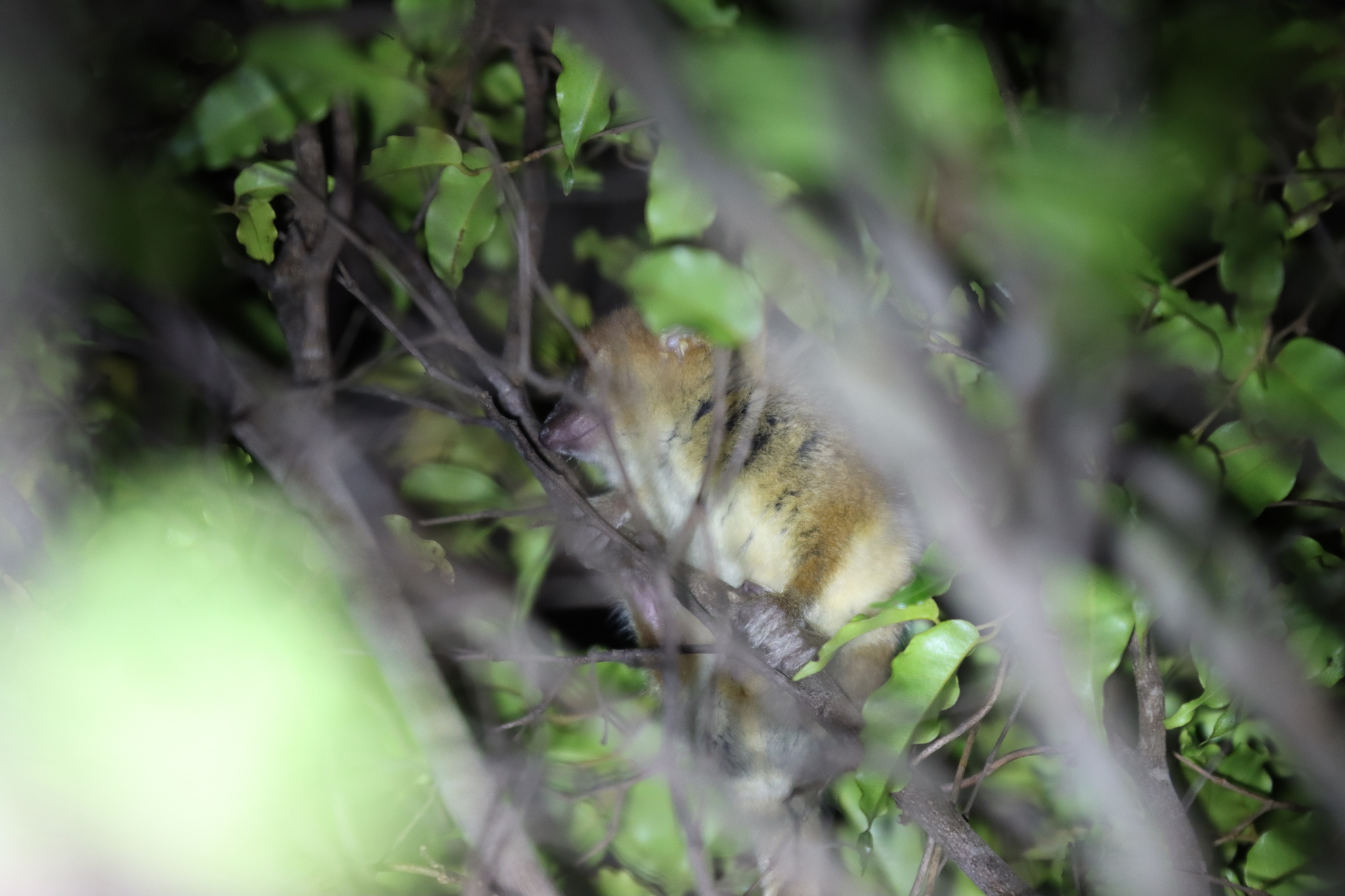
The northern rufous mouse lemur (Microcebus tavaratra), northern brown mouse lemur, or Tavaratra mouse lemur is found in northern Madagascar from the Ankarana Special Reserve in the west to the Manambato River in the northeast, and up to the Irodo River in the north of the Analamerana Special Reserve. The complete distribution range of M. tavaratra is still to be defined as some areas surrounding the described distribution have not been visited yet. For example, M. tavaratra has been reported to possibly occur from the Irodo up to the Montagne des Français. Its known distribution cover four protected areas – the Ankarana Special Reserve, and the Analamerana Special Reserve both managed by Madagascar National Parks, the Loky-Manambato protected area (Daraina), and the Andavakoeira-Andrafiamena protected area, both Managed by the NGO Fanamby Microcebus tavaratra has long, dense pelage that is bicolored to tricolored, raw umber, clay color, and yellow ochre, dorsally and a whitish-beige color ventrally. The mid-dorsal stripe varies in color from raw umber to verona brown. The crown and ears of this species are a reddish shade and the area between the eyes is grayish-white. The orbital area is raw umber and cinnamon and around the anterior portion of the eyes there are black markings. The proximal part of the tail is bicolored raw umber and cinnamon, and the distal portion of the tail is cinnamon brown and raw umber. The pelage of the hands and feet of the northern rufous mouse lemur is whitish-gray in color. This species has vibrissae that are dark in color. Microcebus tavaratra is rather small, standing at roughly 12–14 cm (4.7–5.5 in) tall. It is also a nocturnal and omnivorous species.
Gallery
Ajouter des photos
Partagez vos photos de cette espèce (jusqu'à 20 à la fois) : elles sont vérifiées automatiquement, puis publiées.
Répartition
Occurrences observées (données GBIF). Les zones hors aire d'origine peuvent indiquer une présence introduite ou invasive.
Sources et crédits
Informations provenant de plusieurs sources vérifiées. Dernière mise à jour : .
Crédits photos (6)
- Photo : bnchapple · CC BY-NC 4.0 · via GBIF
- Photo : Manuel Ruedi (@manuel_ruedi) · CC BY-NC 4.0 · via iNaturalist
- Photo : Max S (@maxs88) · CC BY-NC 4.0 · via iNaturalist
- Photo : 昆虫学liuye (@liuye) · CC BY-NC 4.0 · via iNaturalist
- Photo : @bnchapple · CC BY-NC 4.0 · via iNaturalist
- Photo : Andrianiaina Angelo (@angelomg) · CC BY-NC 4.0 · via iNaturalist
Mentions de licence
Texte disponible sous licence CC BY-SA 4.0. Il adapte notamment Wikipedia (CC BY-SA) : Northern rufous mouse lemur (Wikipédia, auteurs dans l’historique de l’article).
- Taxonomie : GBIF Backbone Taxonomy (CC BY 4.0)
- Carte : occurrences GBIF, fond © contributeurs OpenStreetMap (ODbL)
- Statut de conservation : Liste rouge de l'UICN, via Wikidata (CC0)
Détail : Sources et licences.
Discussion (0)
Aucun message pour l’instant. Lancez la discussion sur cette fiche (sources, précisions, débats éditoriaux).
Connectez-vous pour participer à la discussion.