
Fawn-footed Mosaic-tailed Rat
Melomys cervinipes
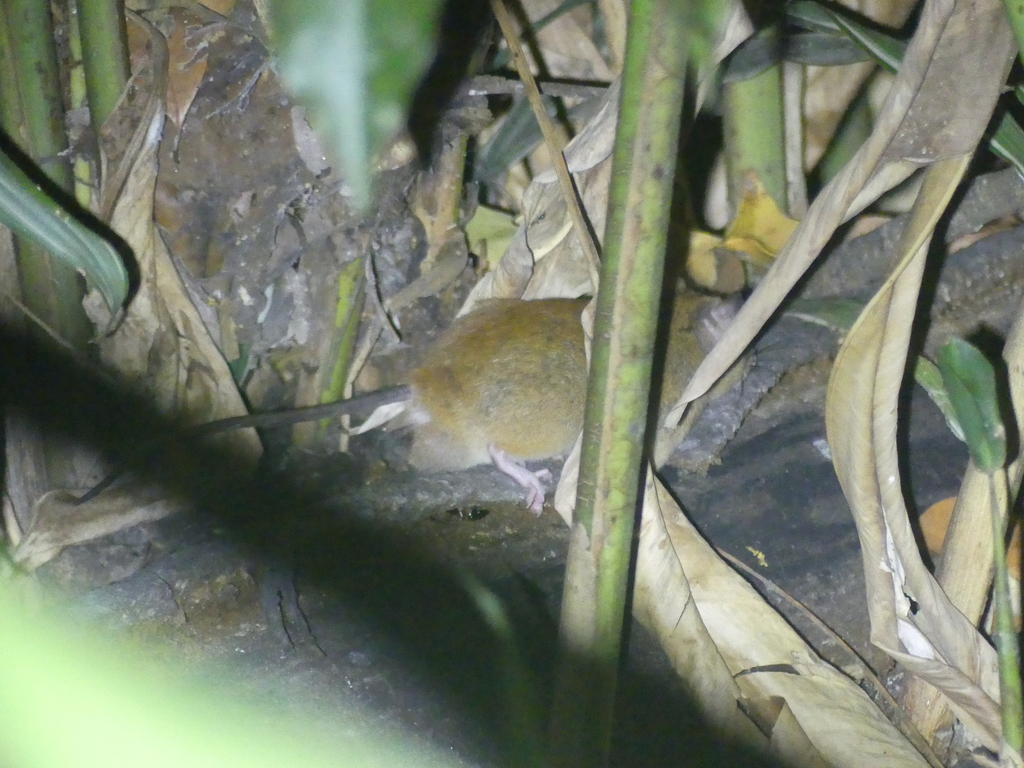
The fawn-footed mosaic-tailed rat, or fawn-footed melomys (Melomys cervinipes) is a species of rodent in the family Muridae.
- Kingdom
- Animalia
- Phylum
- Chordata
- Class
- Mammalia
- Order
- Rodentia
- Family
- Muridae
- Genus
- Melomys
- Species
- Melomys cervinipes
Description
The fawn-footed mosaic-tailed rat, or fawn-footed melomys (Melomys cervinipes) is a species of rodent in the family Muridae. It is found along eastern coastal regions of Australia. The upper parts of this species are a sandy-brown colour, the mottling at the lower parts is grey and whitish. The tail is hairless, the skin of which has a purplish tone. The superficial distinguishing characteristics include soft and short fur, lacking the long guard hairs of other species and adpressed against the body. John Gould proposed the epithet cervinipes for the "fawn-like colouring" of the feet and tarsi, assigning it to the genus Mus and giving an English name of "Buff-footed Rat". Gould received his specimens from the early natural history collector Frederick Strange, who labelled the collections as being "Stradbrook Island, Moreton Bay, where it is called Corrill by the natives,-Richmond River, where the Aborigines term it Cunduoo,-and the plains bordering the upper parts of the River Brisbane." This species is commonly known by the descriptive English common name fawn-footed melomys, but during the 1990s proposals emerged to restore indigenous Australian names. Accordingly, in 1995, the Australian Nature Conservation Agency published recommendations for the common names of rodents. They compiled two indigenous Australian names for this species: corrill, recorded from Stradbroke Island; and cunduoo, recorded from the vicinity of the Richmond River. They recommended the adoption of the former of these names, but with the orthography korril. However, this recommendation was not prescriptive, and to what extent it will be adopted remains to be seen.
Gallery
Ajouter des photos
Partagez vos photos de cette espèce (jusqu'à 20 à la fois) : elles sont vérifiées automatiquement, puis publiées.
Répartition
Occurrences observées (données GBIF). Les zones hors aire d'origine peuvent indiquer une présence introduite ou invasive.
Sources et crédits
Informations provenant de plusieurs sources vérifiées. Dernière mise à jour : .
Crédits photos (8)
- Photo : Valentin Moser (@vmoser) · CC BY 4.0 · via iNaturalist
- Photo : Jacinda (@archgully) · CC BY-NC 4.0 · via iNaturalist
- Photo : Andrew Hall (@dark_morelia) · CC BY-NC 4.0 · via iNaturalist
- Photo : @jamieo53 · CC BY-NC 4.0 · via iNaturalist
- Photo : Tom Field (@tomfeild) · CC BY 4.0 · via iNaturalist
- Photo : Guillaume Thomas Doerig (@g-thomas-doerig) · CC BY-NC 4.0 · via iNaturalist
- Photo : ISTARI (@istari) · CC BY-NC 4.0 · via iNaturalist
- Photo : Matthew Campbell (@mjordan03) · CC BY-NC 4.0 · via iNaturalist
Mentions de licence
Texte disponible sous licence CC BY-SA 4.0. Il adapte notamment Melomys cervinipes, Wikipedia (CC BY-SA) : Fawn-footed mosaic-tailed rat (Wikipédia, auteurs dans l’historique de l’article).
- Taxonomie : GBIF Backbone Taxonomy (CC BY 4.0)
- Carte : occurrences GBIF, fond © contributeurs OpenStreetMap (ODbL)
- Statut de conservation : Liste rouge de l'UICN, via Wikidata (CC0)
Détail : Sources et licences.
Discussion (0)
Aucun message pour l’instant. Lancez la discussion sur cette fiche (sources, précisions, débats éditoriaux).
Connectez-vous pour participer à la discussion.