
Karoo Round-eared Sengi
Macroscelides proboscideus
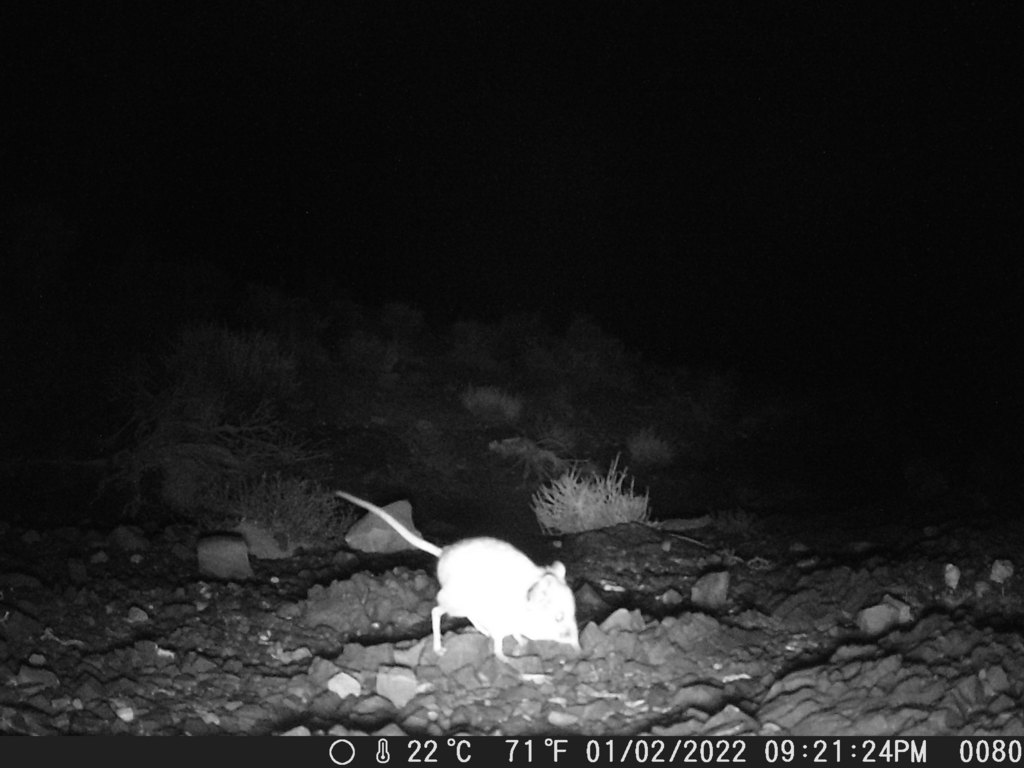
The round-eared sengi or round-eared elephant shrew (Macroscelides proboscideus), also called the Karoo round-eared sengi or Karoo round-eared sengi to distinguish it from its sister species), is a species of small mammal belonging to…
- Kingdom
- Animalia
- Phylum
- Chordata
- Class
- Mammalia
- Order
- Macroscelidea
- Family
- Macroscelididae
- Genus
- Macroscelides
- Species
- Macroscelides proboscideus
Description
The round-eared sengi or round-eared elephant shrew (Macroscelides proboscideus), also called the Karoo round-eared sengi or Karoo round-eared sengi to distinguish it from its sister species), is a species of small mammal belonging to the sengi family (Macroscelididae). It is found in Botswana, Namibia, and South Africa. Its natural habitats are subtropical or tropical dry shrubland, and grassland, and hot deserts. They eat insects, shoots, and roots. Their gestation period is 56 days. The species was formerly misleadingly called the short-eared sengi or short-eared elephant shrew. Sengis are among only a handful of monogamous mammals, making them a model group for the study of monogamy. They have been studied for their mate guarding behavior. Mate guarding is considered a predominant male trait in round-eared sengis. This strategy is used to guard the female before and after heat to eliminate male competition, which makes male round-eared sengis monogamous and more vulnerable to their surroundings as they spent a majority of their time dedicated to this tactic. Research was recently conducted to determine that sengis are thought to have dichromatic color vision due to their ability to differentiate between blue/green colors and grey. However, there is no evidence to prove that the species can see red colors.
Gallery
Ajouter des photos
Partagez vos photos de cette espèce (jusqu'à 20 à la fois) : elles sont vérifiées automatiquement, puis publiées.
Répartition
Occurrences observées (données GBIF). Les zones hors aire d'origine peuvent indiquer une présence introduite ou invasive.
Sources et crédits
Informations provenant de plusieurs sources vérifiées. Dernière mise à jour : .
Crédits photos (8)
- Photo : Mahomed Desai (@m_d) · CC BY 4.0 · via iNaturalist
- Photo : Sue Milton-Dean (@suemilton-dean) · CC BY-NC 4.0 · via iNaturalist
- Photo : @patonm · CC BY-NC 4.0 · via iNaturalist
- Photo : Quentin Brunelle (@quentinbrunelle) · CC BY-NC 4.0 · via iNaturalist
- Photo : Corné Rautenbach (@cornerautenbach) · CC BY-NC 4.0 · via iNaturalist
- Photo : Charles Hopkins (@field_notes) · CC BY-NC 4.0 · via iNaturalist
- Photo : Sue Milton-Dean (@suemilton-dean) · CC BY-NC 4.0 · via iNaturalist
- Photo : Sue Milton-Dean (@suemilton-dean) · CC BY-NC 4.0 · via iNaturalist
Mentions de licence
Texte disponible sous licence CC BY-SA 4.0. Il adapte notamment Macroscelides proboscideus, Wikipedia (CC BY-SA) : Karoo round-eared sengi (Wikipédia, auteurs dans l’historique de l’article).
- Taxonomie : GBIF Backbone Taxonomy (CC BY 4.0)
- Carte : occurrences GBIF, fond © contributeurs OpenStreetMap (ODbL)
- Statut de conservation : Liste rouge de l'UICN, via Wikidata (CC0)
Détail : Sources et licences.
Discussion (0)
Aucun message pour l’instant. Lancez la discussion sur cette fiche (sources, précisions, débats éditoriaux).
Connectez-vous pour participer à la discussion.