
African Wild Dog
Lycaon pictus
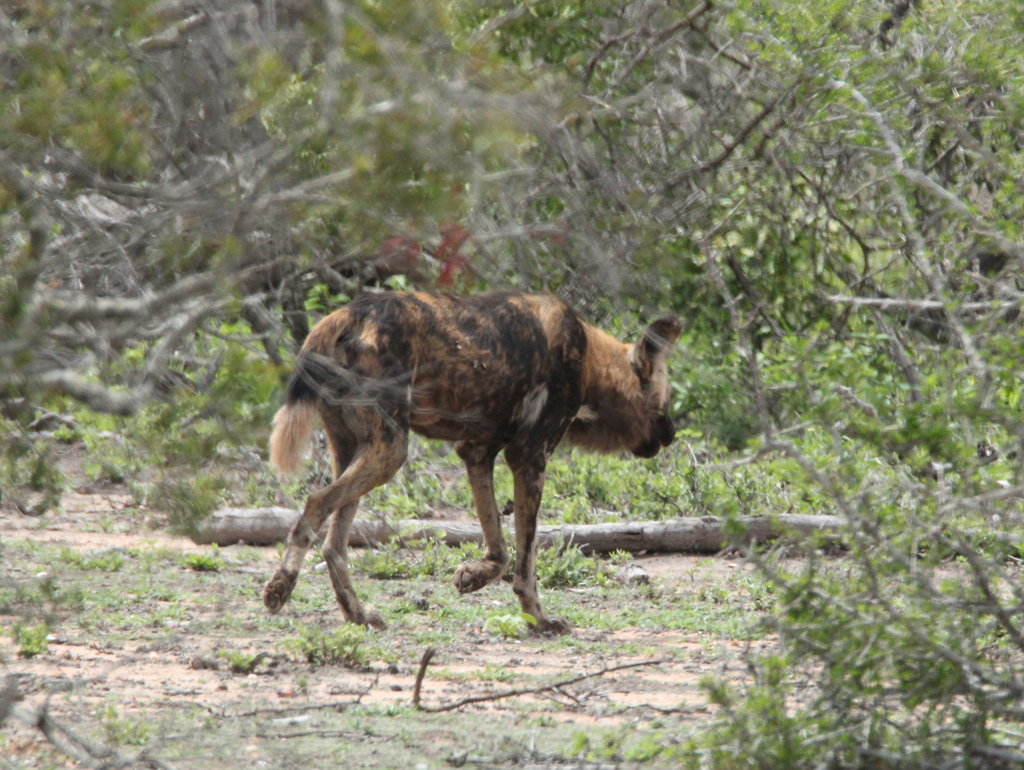
The African wild dog (Lycaon pictus), also called painted dog and Cape hunting dog, is a wild canine native to sub-Saharan Africa.
- Kingdom
- Animalia
- Phylum
- Chordata
- Class
- Mammalia
- Order
- Carnivora
- Family
- Canidae
- Genus
- Lycaon
- Species
- Lycaon pictus
Description
The African wild dog (Lycaon pictus), also called painted dog and Cape hunting dog, is a wild canine native to sub-Saharan Africa. It is the largest wild canine in Africa and the only extant member of the genus Lycaon, which is distinguished from Canis by dentition highly specialised for a hypercarnivorous diet and by a lack of dewclaws. An estimated 6,600 adults (including 1,400 mature individuals) live in 39 subpopulations, all threatened by habitat fragmentation, human persecution, and outbreaks of disease. As the largest subpopulation probably consists of fewer than 250 individuals, the African wild dog has been listed as endangered on the IUCN Red List since 1990. The African wild dog is a specialized hunter of terrestrial ungulates, mostly hunting at dawn and dusk, but it also displays diurnal activity. It captures its prey by using stamina and cooperative hunting to exhaust them. Its natural competitors are lions and spotted hyenas; the former kill the dogs where possible, whilst the latter are frequent kleptoparasites. Like other canids, the African wild dog regurgitates food for its young, but also extends this action to adults as a central part of the pack's social unit. The young have the privilege of feeding first on carcasses. The African wild dog has been revered in several hunter-gatherer societies, particularly those of the San people and prehistoric Egypt.
Gallery
Ajouter des photos
Partagez vos photos de cette espèce (jusqu'à 20 à la fois) : elles sont vérifiées automatiquement, puis publiées.
Répartition
Occurrences observées (données GBIF). Les zones hors aire d'origine peuvent indiquer une présence introduite ou invasive.
Sources et crédits
Informations provenant de plusieurs sources vérifiées. Dernière mise à jour : .
Crédits photos (4)
- Photo : Reşit Akçakaya (@resit_a) · CC BY-NC 4.0 · via iNaturalist
- Photo : Emily (@wild_e_coyote) · CC BY-NC 4.0 · via iNaturalist
- Photo : Peter Archdale (@pma) · CC BY 4.0 · via iNaturalist
- Photo : CHRIS FICHTEL (@cfichtel) · CC BY-NC 4.0 · via iNaturalist
Mentions de licence
Texte disponible sous licence CC BY-SA 4.0. Il adapte notamment Wikipedia (CC BY-SA) : African wild dog (Wikipédia, auteurs dans l’historique de l’article).
- Taxonomie : GBIF Backbone Taxonomy (CC BY 4.0)
- Carte : occurrences GBIF, fond © contributeurs OpenStreetMap (ODbL)
Détail : Sources et licences.
Discussion (0)
Aucun message pour l’instant. Lancez la discussion sur cette fiche (sources, précisions, débats éditoriaux).
Connectez-vous pour participer à la discussion.