
Neotropical otter
Lontra longicaudis
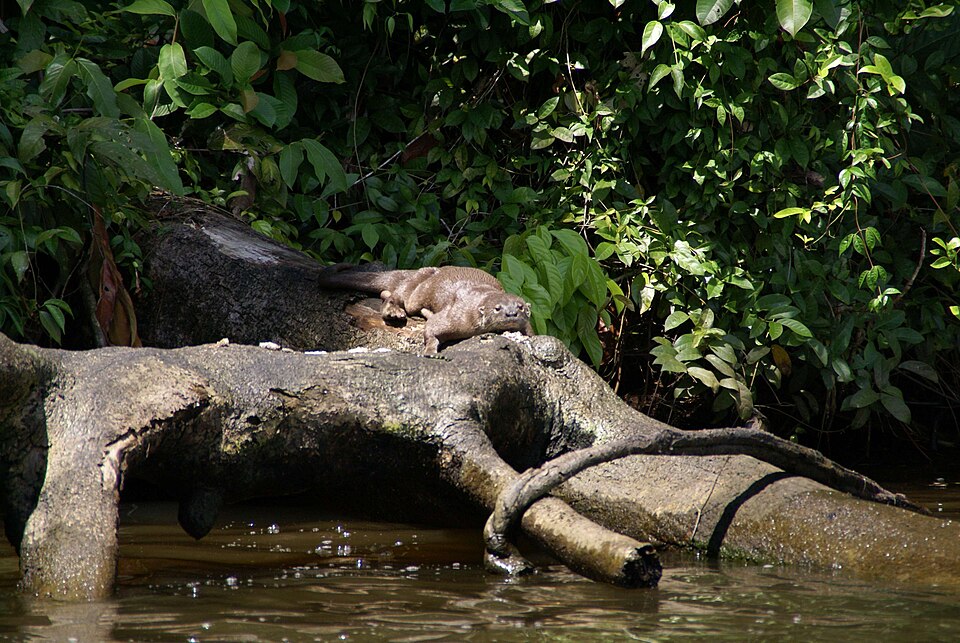
The neotropical otter or neotropical river otter (Lontra longicaudis) is a near-threatened (per the IUCN) otter species found in freshwater systems from Mexico and Central America through mainland South America, as well as the island of…
- Kingdom
- Animalia
- Phylum
- Chordata
- Class
- Mammalia
- Order
- Carnivora
- Family
- Mustelidae
- Genus
- Lontra
- Species
- Lontra longicaudis
Description
The neotropical otter or neotropical river otter (Lontra longicaudis) is a near-threatened (per the IUCN) otter species found in freshwater systems from Mexico and Central America through mainland South America, as well as the island of Trinidad. It is physically similar to the northern (L. canadensis) and southern river otter (L. provocax), which occur directly north and south of this species' range, respectively. Its head-to-body length can range from 36–66 centimetres (14–26 in), plus a tail of 37–84 centimetres (15–33 in). Body weight ranges from 5–15 kilograms (11–33 lb). The neotropical otter is found in many different riverine habitats and riparian zones, including those in tropical and temperate deciduous to evergreen forests, savannas, llanos (of Colombia and Venezuela) and the pantanal (in Bolivia, Brazil and Paraguay). It prefers to live in clear, fast-flowing rivers and streams, preferably away from competition with the more boisterous giant otter (Pteronura brasiliensis). Unlike other otters (including the aforementioned giant species), which live in large and cohesive socio-familial units, the neotropical otter is a relatively solitary animal, feeding mostly on fish and crustaceans.
Gallery
Ajouter des photos
Partagez vos photos de cette espèce (jusqu'à 20 à la fois) : elles sont vérifiées automatiquement, puis publiées.
Répartition
Occurrences observées (données GBIF). Les zones hors aire d'origine peuvent indiquer une présence introduite ou invasive.
Sources et crédits
Informations provenant de plusieurs sources vérifiées. Dernière mise à jour : .
Crédits photos (6)
- Photo : Capber fabrice · CC BY-SA 3.0
- Photo : @javierluque89 · CC BY-NC 4.0 · via iNaturalist
- Photo : @ivanfedericoebrecht · CC BY-NC 4.0 · via iNaturalist
- Photo : @marcelobirder · CC BY-NC 4.0 · via iNaturalist
- Photo : Wildlife Tours Peru, Christoph Meyer (@wildlifetoursperu) · CC BY-NC 4.0 · via iNaturalist
- Photo : @javierluque89 · CC BY-NC 4.0 · via iNaturalist
Mentions de licence
Texte disponible sous licence CC BY-SA 4.0. Il adapte notamment Wikipedia (CC BY-SA) : Neotropical otter (Wikipédia, auteurs dans l’historique de l’article).
- Taxonomie : GBIF Backbone Taxonomy (CC BY 4.0)
- Carte : occurrences GBIF, fond © contributeurs OpenStreetMap (ODbL)
- Statut de conservation : Liste rouge de l'UICN, via Wikidata (CC0)
Détail : Sources et licences.
Discussion (0)
Aucun message pour l’instant. Lancez la discussion sur cette fiche (sources, précisions, débats éditoriaux).
Connectez-vous pour participer à la discussion.