
Steller Sea Lion
Eumetopias jubatus
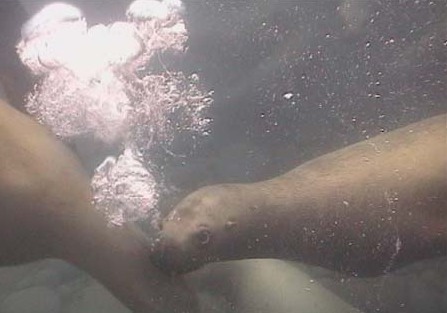
The Steller sea lion (Eumetopias jubatus), also known as Steller's sea lion or the northern sea lion, is a large, near-threatened species of sea lion, predominantly found in the coastal marine habitats of the northeast Pacific Ocean and…
- Kingdom
- Animalia
- Phylum
- Chordata
- Class
- Mammalia
- Order
- Carnivora
- Family
- Otariidae
- Genus
- Eumetopias
- Species
- Eumetopias jubatus
Description
The Steller sea lion (Eumetopias jubatus), also known as Steller's sea lion or the northern sea lion, is a large, near-threatened species of sea lion, predominantly found in the coastal marine habitats of the northeast Pacific Ocean and the Pacific Northwest regions of North America, from north-central California to Oregon, Washington and British Columbia to Alaska. Its range continues across the Northern Pacific and the Aleutian Islands, all the way to Kamchatka, Magadan Oblast, and the Sea of Okhotsk, south to Honshu's northern coastline. It is the sole member of the genus Eumetopias, and the largest of the so-called eared seals (Otariidae). Among pinnipeds, only the walrus and the two species of elephant seal are bigger. The species is named for the naturalist and explorer Georg Wilhelm Steller, who first described them in 1741. Steller sea lions have attracted considerable attention in recent decades, both from scientists and the general public, due to significant (and largely unexplained) declines in their numbers over an extensive portion of their northern range, notably in Alaska.
Gallery
Ajouter des photos
Partagez vos photos de cette espèce (jusqu'à 20 à la fois) : elles sont vérifiées automatiquement, puis publiées.
Répartition
Occurrences observées (données GBIF). Les zones hors aire d'origine peuvent indiquer une présence introduite ou invasive.
Sources et crédits
Informations provenant de plusieurs sources vérifiées. Dernière mise à jour : .
Crédits photos (6)
- Photo : National Marine Mammal Laboratory photograph taken by Rolf Ream. · Domaine public
- Photo : Jody Shugart (@terrapinjoe) · CC BY 4.0 · via iNaturalist
- Photo : Cameron Eckert (@camerondeckert) · CC BY-NC 4.0 · via iNaturalist
- Photo : Jessica Light (@jlight2) · CC BY-NC 4.0 · via iNaturalist
- Photo : @hmcook · CC BY-NC 4.0 · via iNaturalist
- Photo : Kate Turner (@kathawk) · CC BY-NC 4.0 · via iNaturalist
Mentions de licence
Texte disponible sous licence CC BY-SA 4.0. Il adapte notamment Wikipedia (CC BY-SA) : Steller sea lion (Wikipédia, auteurs dans l’historique de l’article).
- Taxonomie : GBIF Backbone Taxonomy (CC BY 4.0)
- Carte : occurrences GBIF, fond © contributeurs OpenStreetMap (ODbL)
- Statut de conservation : Liste rouge de l'UICN, via Wikidata (CC0)
Détail : Sources et licences.
Discussion (0)
Aucun message pour l’instant. Lancez la discussion sur cette fiche (sources, précisions, débats éditoriaux).
Connectez-vous pour participer à la discussion.