
Tolai Hare
Lepus tolai
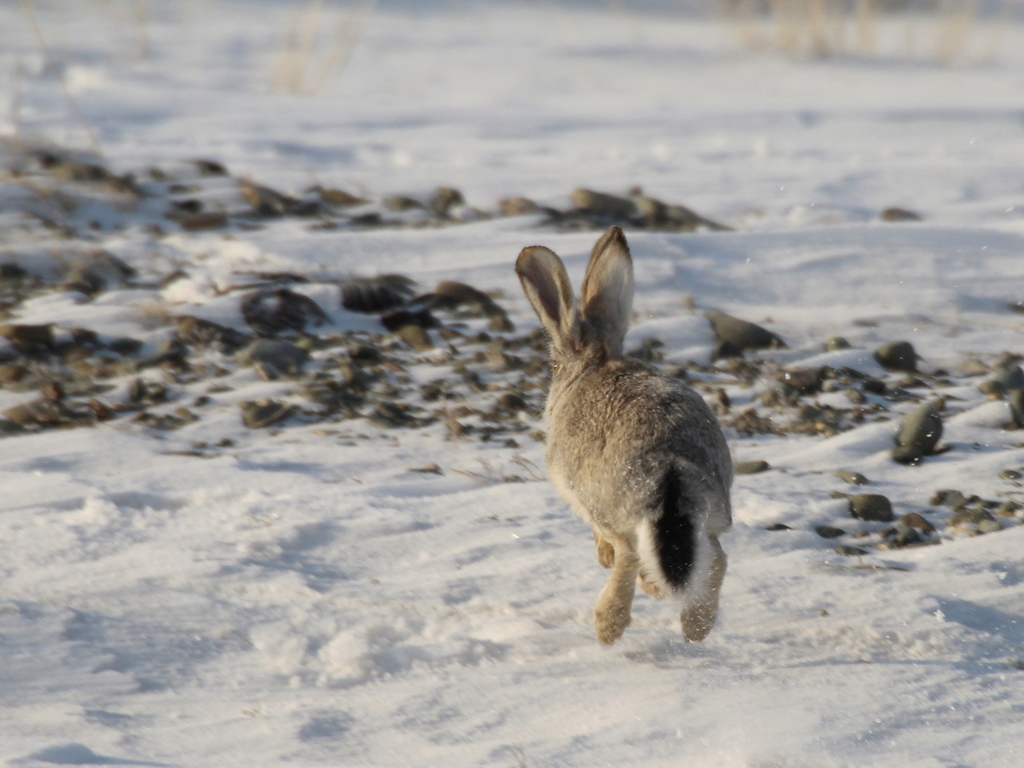
The tolai hare (Lepus tolai) is a species of hare native to Central Asia, including much of Mongolia, eastern Iran, Afghanistan, southern Kazakhstan, Turkmenistan, Uzbekistan, Kyrgyzstan, and North and Central China.
- Kingdom
- Animalia
- Phylum
- Chordata
- Class
- Mammalia
- Order
- Lagomorpha
- Family
- Leporidae
- Genus
- Lepus
- Species
- Lepus tolai
Description
The tolai hare (Lepus tolai) is a species of hare native to Central Asia, including much of Mongolia, eastern Iran, Afghanistan, southern Kazakhstan, Turkmenistan, Uzbekistan, Kyrgyzstan, and North and Central China. It inhabits semi-desert, steppes, rocky habitats, grasslands, and river valleys. A yellow, brown or grey-furred hare with long, black tipped ears, the adult tolai hare weighs between 1.7 and 2.7 kilograms (3.7 and 6.0 pounds) and measures between 40 and 59 centimetres (16 and 23 inches). It is mainly active at dusk and night but is occasionally active during the day to forage for seeds, roots, and other plant matter. Young hares are often more active in daylight hours. A widespread, fairly common species, the tolai hare has a stable population. It breeds often, two to three times per year, and is hunted for its meat, fur, and for use in traditional medicine. Hustai National Park is one of several protected areas where the hare can be found. Authorities in China and Mongolia, as well as the International Union for Conservation of Nature, consider it a least-concern species.
Gallery
Ajouter des photos
Partagez vos photos de cette espèce (jusqu'à 20 à la fois) : elles sont vérifiées automatiquement, puis publiées.
Répartition
Occurrences observées (données GBIF). Les zones hors aire d'origine peuvent indiquer une présence introduite ou invasive.
Sources et crédits
Informations provenant de plusieurs sources vérifiées. Dernière mise à jour : .
Crédits photos (8)
- Photo : Andrew Bazdyrev (@andrewbazdyrev) · CC BY 4.0 · via iNaturalist
- Photo : Юлия Мацанке (@yuliya37) · CC BY-NC 4.0 · via iNaturalist
- Photo : Anastasia Stepanishcheva (@nastasya40) · CC BY-NC 4.0 · via iNaturalist
- Photo : Stanislav Cherepushkin (@s_chere) · CC BY-NC 4.0 · via iNaturalist
- Photo : Carlo (@jeanlouiscarlo) · CC BY-NC 4.0 · via iNaturalist
- Photo : Courage (@nbystndr) · CC BY-NC 4.0 · via iNaturalist
- Photo : Oliver Barker (@oebarker) · CC BY-NC 4.0 · via iNaturalist
- Photo : @cheavy · CC BY-NC 4.0 · via iNaturalist
Mentions de licence
Texte disponible sous licence CC BY-SA 4.0. Il adapte notamment Lièvre de Tolai, Wikipedia (CC BY-SA) : Tolai hare (Wikipédia, auteurs dans l’historique de l’article).
- Taxonomie : GBIF Backbone Taxonomy (CC BY 4.0)
- Carte : occurrences GBIF, fond © contributeurs OpenStreetMap (ODbL)
- Statut de conservation : Liste rouge de l'UICN, via Wikidata (CC0)
Détail : Sources et licences.
Discussion (0)
Aucun message pour l’instant. Lancez la discussion sur cette fiche (sources, précisions, débats éditoriaux).
Connectez-vous pour participer à la discussion.