
Tehuantepec jackrabbit
Lepus flavigularis
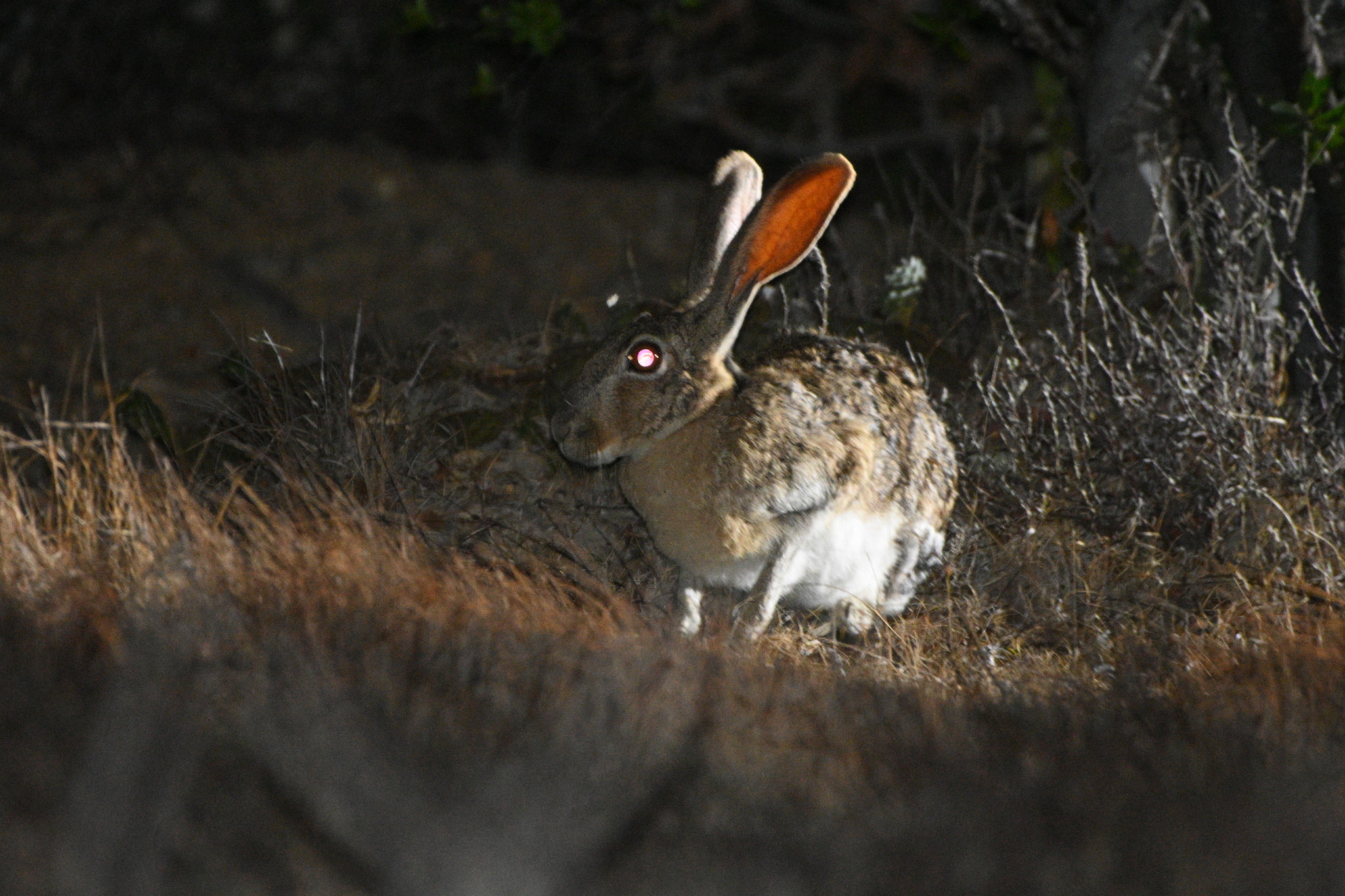
The Tehuantepec jackrabbit (Lepus flavigularis) (Spanish: liebre de Tehuantepec) is a medium-sized species of hare in the family Leporidae that is endemic to eastern Oaxaca, Mexico.
- Kingdom
- Animalia
- Phylum
- Chordata
- Class
- Mammalia
- Order
- Lagomorpha
- Family
- Leporidae
- Genus
- Lepus
- Species
- Lepus flavigularis
Description
The Tehuantepec jackrabbit (Lepus flavigularis) (Spanish: liebre de Tehuantepec) is a medium-sized species of hare in the family Leporidae that is endemic to eastern Oaxaca, Mexico. It exists in three separated populations, living on grassy dunes and savannas, and is herbivorous, mainly eating grasses. It is not territorial. Most active at night, it will feed for most of the time and occasionally groom or socialize with other hares, spending the daytime resting on beds of grass or shrubs, or under nopales. They are polygynous and breed for most of the year, from February to December, producing one to four young per breeding season. Predators include snakes, dogs, cats, coyotes, and gray foxes. The Tehuantepec jackrabbit is the most endangered of the hares, with less than 300 mature individuals estimated as of 2019, and is threatened by various factors in its small distribution, including poaching, habitat loss and fragmentation, a small population size, and genetic isolation. Changing agricultural practices, loss of diversity in flora, and competition for food are also factors in the species' decline. It is recognized as endangered both by the International Union for the Conservation of Nature (IUCN) and local authorities in Mexico through the Official Journal of the Federation, and efforts to monitor and implement conservation actions have been ongoing.
Gallery
Ajouter des photos
Partagez vos photos de cette espèce (jusqu'à 20 à la fois) : elles sont vérifiées automatiquement, puis publiées.
Répartition
Occurrences observées (données GBIF). Les zones hors aire d'origine peuvent indiquer une présence introduite ou invasive.
Sources et crédits
Informations provenant de plusieurs sources vérifiées. Dernière mise à jour : .
Crédits photos (5)
- Photo : Juan Cruzado Cortés · CC BY 4.0 · via GBIF
- Photo : Tereso Hernández Morales (@tereso_hernandez) · CC BY 4.0 · via iNaturalist
- Photo : Juan Cruzado Cortés (@juancruzado) · CC BY 4.0 · via iNaturalist
- Photo : Juan Cruzado Cortés (@juancruzado) · CC BY 4.0 · via iNaturalist
- Photo : Juan Cruzado Cortés (@juancruzado) · CC BY 4.0 · via iNaturalist
Mentions de licence
Texte disponible sous licence CC BY-SA 4.0. Il adapte notamment Wikipedia (CC BY-SA) : Tehuantepec jackrabbit (Wikipédia, auteurs dans l’historique de l’article).
- Taxonomie : GBIF Backbone Taxonomy (CC BY 4.0)
- Carte : occurrences GBIF, fond © contributeurs OpenStreetMap (ODbL)
Détail : Sources et licences.
Discussion (0)
Aucun message pour l’instant. Lancez la discussion sur cette fiche (sources, précisions, débats éditoriaux).
Connectez-vous pour participer à la discussion.