
Leopardus pajeros
Leopardus pajeros
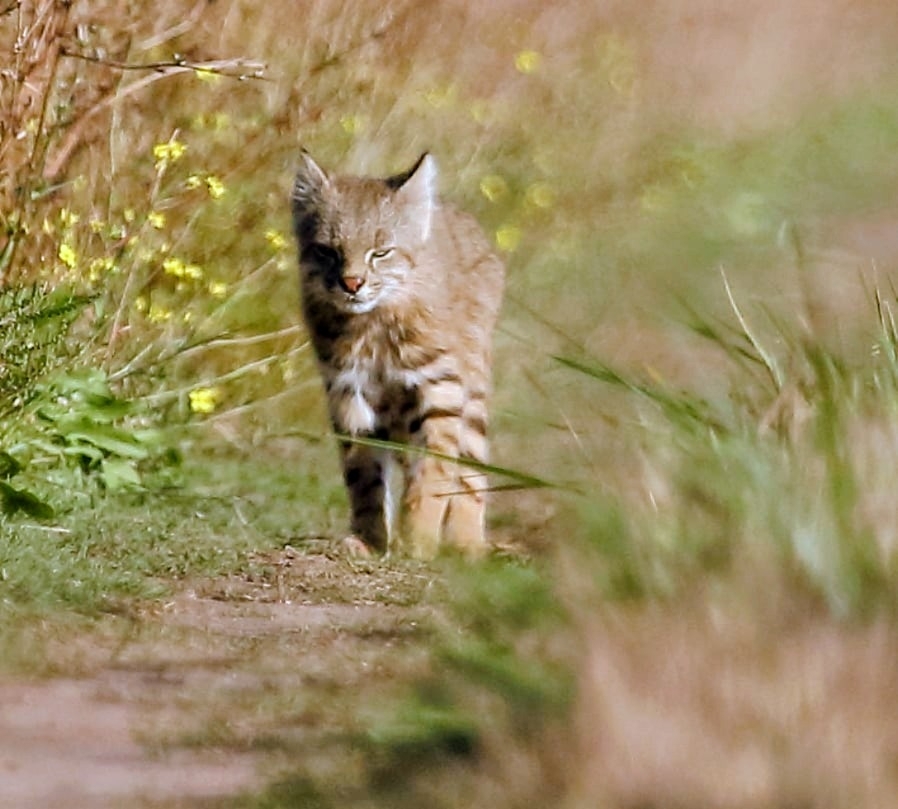
The Pampas cat (Leopardus colocola) is a small wild cat native to South America.
- Kingdom
- Animalia
- Phylum
- Chordata
- Class
- Mammalia
- Order
- Carnivora
- Family
- Felidae
- Genus
- Leopardus
- Species
- Leopardus pajeros
Description
The Pampas cat (Leopardus colocola) is a small wild cat native to South America. It is listed as Near Threatened on the IUCN Red List as habitat conversion and destruction may cause the population to decline in the future. It is named after the Pampas, but occurs in grassland, shrubland, and dry forest at elevations up to 5,000 m (16,000 ft). There was a proposal to divide the Pampas cat into three distinct species, based primarily on differences in pelage colour/pattern and cranial measurements. Accordingly, three species were recognised in the 2005 edition of Mammal Species of the World: the colocolo (L. colocolo), the Pantanal cat (L. braccatus), and the Pampas cat (L. pajeros) with a more restricted definition. This split at species level was not supported by subsequent phylogeographic analysis, although some geographical substructure was recognised, and some authorities continue to recognise the Pampas cat as a single species. In the 2017 revision of felid taxonomy by the Cat Specialist Group, the Pampas cat is recognized as a single species with seven subspecies. An analysis of 142 skins collected across South America revealed morphological differences between these museum specimens. It was therefore proposed to recognize five distinct species within the Pampas cat complex.
Gallery
Ajouter des photos
Partagez vos photos de cette espèce (jusqu'à 20 à la fois) : elles sont vérifiées automatiquement, puis publiées.
Répartition
Occurrences observées (données GBIF). Les zones hors aire d'origine peuvent indiquer une présence introduite ou invasive.
Sources et crédits
Informations provenant de plusieurs sources vérifiées. Dernière mise à jour : .
Crédits photos (5)
- Photo : Daniel Chiesa · CC BY-NC 4.0 · via GBIF
- Photo : DANIEL OSCAR MOLINA (@danieloscarmolina) · CC BY-NC 4.0 · via iNaturalist
- Photo : Agustín Gabriel Álvarez (@agusalvarez97) · CC BY-NC 4.0 · via iNaturalist
- Photo : Alicia (@aliciamayor) · CC BY-NC 4.0 · via iNaturalist
- Photo : Hugo Hulsberg (@hhulsberg) · CC0 (domaine public) · via iNaturalist
Mentions de licence
Texte disponible sous licence CC BY-SA 4.0. Il adapte notamment Leopardus pajeros, Wikipedia (CC BY-SA) : Leopardus pajeros (Wikipédia, auteurs dans l’historique de l’article).
- Taxonomie : GBIF Backbone Taxonomy (CC BY 4.0)
- Carte : occurrences GBIF, fond © contributeurs OpenStreetMap (ODbL)
Détail : Sources et licences.
Discussion (0)
Aucun message pour l’instant. Lancez la discussion sur cette fiche (sources, précisions, débats éditoriaux).
Connectez-vous pour participer à la discussion.