
Indian Roundleaf Bat
Hipposideros lankadiva
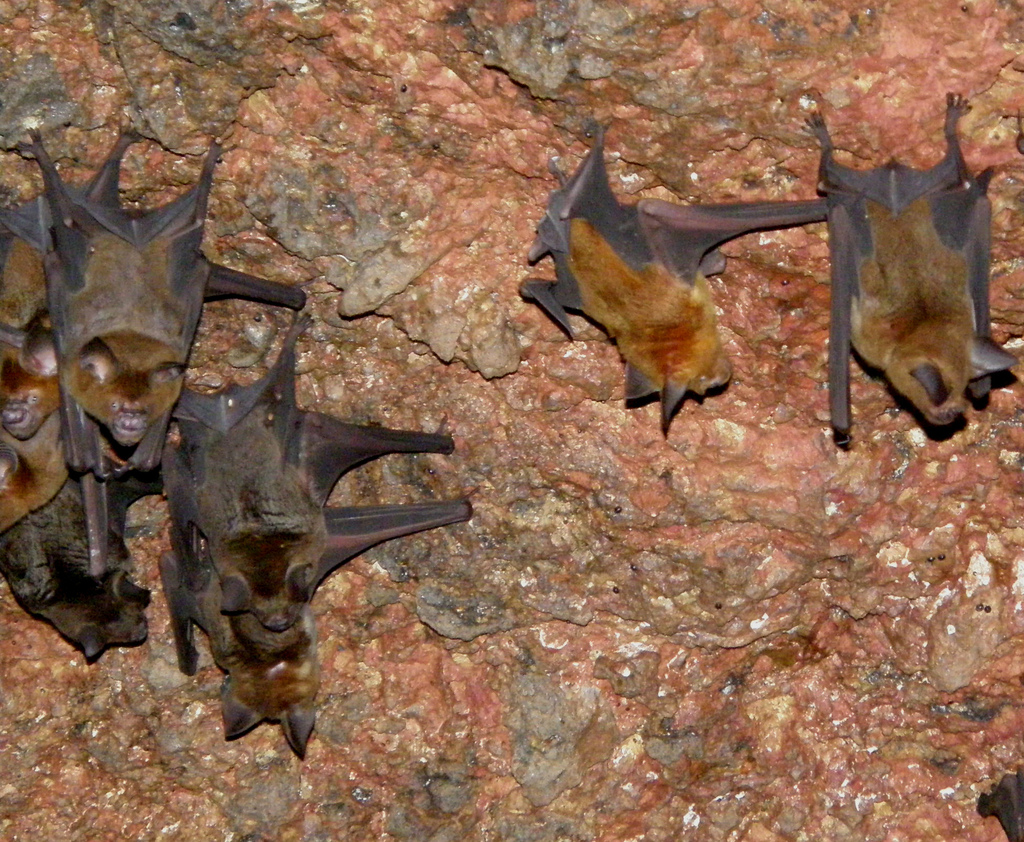
The Indian roundleaf bat (Hipposideros lankadiva), also known as the large Ceylon leaf-nosed bat or Kelaart's leaf-nosed bat, is a species of bat in the family Hipposideridae.
- Kingdom
- Animalia
- Phylum
- Chordata
- Class
- Mammalia
- Order
- Chiroptera
- Family
- Hipposideridae
- Genus
- Hipposideros
- Species
- Hipposideros lankadiva
Description
The Indian roundleaf bat (Hipposideros lankadiva), also known as the large Ceylon leaf-nosed bat or Kelaart's leaf-nosed bat, is a species of bat in the family Hipposideridae. It is endemic to the Indian subcontinent, with marginal populations also detected in Southeast Asia. Its natural habitats are subtropical or tropical dry forests and caves. The bat has three subspecies that occur in India, Sri Lanka, and Myanmar. The Indian subspecies, H. l. indus, is smaller than the ones found in Sri Lanka and Myanmar, although there are no other characteristics that differentiate the subspecies. H. lankadiva is a large leaf-nosed bat and is yellowish-brown in color. A key trait of the bats is the reduced fourth supplementary leaflet on the noseleaf, along with a lack of a fleshy elevation behind the posterior nose-leaf and the absence of white patches on the shoulders, which helps differentiate from similar species such as H. armiger and H. diadema. The bat has been assessed by the IUCN as least concern, although the species is threatened in parts of its range by roost disturbance and collection for consumption and medicinal use.
Gallery
Ajouter des photos
Partagez vos photos de cette espèce (jusqu'à 20 à la fois) : elles sont vérifiées automatiquement, puis publiées.
Répartition
Occurrences observées (données GBIF). Les zones hors aire d'origine peuvent indiquer une présence introduite ou invasive.
Sources et crédits
Informations provenant de plusieurs sources vérifiées. Dernière mise à jour : .
Crédits photos (8)
- Photo : @kulkajan · CC BY-NC 4.0 · via iNaturalist
- Photo : Sanjaya Kanishka (@sanjaya_kanishka) · CC BY-NC 4.0 · via iNaturalist
- Photo : Ashwin Viswanathan (@ashwinv) · CC BY 4.0 · via iNaturalist
- Photo : Avishkar Munje (@avishkar) · CC BY-NC 4.0 · via iNaturalist
- Photo : @gdevender · CC BY-NC 4.0 · via iNaturalist
- Photo : Manuel Ruedi (@manuel_ruedi) · CC BY-NC 4.0 · via iNaturalist
- Photo : Jaya Rakesh (@jayarakesh) · CC0 (domaine public) · via iNaturalist
- Photo : Rowan Howe (@rowanhowe) · CC BY-NC 4.0 · via iNaturalist
Mentions de licence
Texte disponible sous licence CC BY-SA 4.0. Il adapte notamment Wikipedia (CC BY-SA) : Indian roundleaf bat (Wikipédia, auteurs dans l’historique de l’article).
- Taxonomie : GBIF Backbone Taxonomy (CC BY 4.0)
- Carte : occurrences GBIF, fond © contributeurs OpenStreetMap (ODbL)
- Statut de conservation : Liste rouge de l'UICN, via Wikidata (CC0)
Détail : Sources et licences.
Discussion (0)
Aucun message pour l’instant. Lancez la discussion sur cette fiche (sources, précisions, débats éditoriaux).
Connectez-vous pour participer à la discussion.