
Hippo
Hippopotamus amphibius
The hippopotamus (Hippopotamus amphibius; ; pl.: hippopotamuses or hippopotami), often shortened to hippo (pl.: hippos), further qualified as the common hippopotamus, Nile hippopotamus and river hippopotamus, is a large semiaquatic…
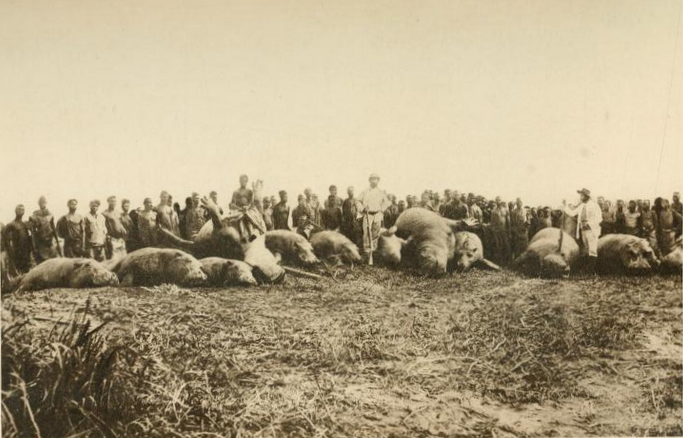
- Kingdom
- Animalia
- Phylum
- Chordata
- Class
- Mammalia
- Order
- Artiodactyla
- Family
- Hippopotamidae
- Genus
- Hippopotamus
- Species
- Hippopotamus amphibius
Description
The hippopotamus (Hippopotamus amphibius; ; pl.: hippopotamuses or hippopotami), often shortened to hippo (pl.: hippos), further qualified as the common hippopotamus, Nile hippopotamus and river hippopotamus, is a large semiaquatic mammal native to sub-Saharan Africa. It is one of only two extant species in the family Hippopotamidae, the other being the pygmy hippopotamus (Choeropsis liberiensis or Hexaprotodon liberiensis). Its name comes from the Ancient Greek for "river horse" (ἱπποπόταμος). After elephants and rhinoceroses, the hippopotamus is the next largest land mammal. It is also the largest extant land artiodactyl. Despite their physical resemblance to pigs and other terrestrial even-toed ungulates, the closest living relatives of the hippopotamids are cetaceans (whales, dolphins, porpoises, etc.), from which they diverged about 55 million years ago. Hippos are recognisable for their barrel-shaped torsos, wide-opening mouths with large canine tusks, nearly hairless bodies, short legs, and large size: adults average 1.5 t (1.7 short tons) for bulls (males) and 1.3 t (1.4 short tons) for cows (females). Hippos inhabit rivers, lakes, and mangrove swamps. Territorial bulls each preside over a stretch of water and a group of five to thirty cows and calves. Mating and birth both occur in the water. During the day, hippos remain cool by staying in water or mud, emerging at dusk to graze on grasses. While hippos rest near each other in the water, grazing is a solitary activity and hippos typically do not display territorial behaviour on land. Hippos are among the most dangerous animals in the world due to their aggressive and unpredictable nature. They are threatened by habitat loss and poaching for their meat and ivory (canine teeth).
Gallery
Ajouter des photos
Partagez vos photos de cette espèce (jusqu'à 20 à la fois) : elles sont vérifiées automatiquement, puis publiées.
Répartition
Occurrences observées (données GBIF). Les zones hors aire d'origine peuvent indiquer une présence introduite ou invasive.
Sources et crédits
Informations provenant de plusieurs sources vérifiées. Dernière mise à jour : .
Crédits photos (6)
- Photo : AnonymousUnknown author · Domaine public
- Photo : @sowadart · CC BY-NC 4.0 · via iNaturalist
- Photo : HeatherB (@hbean01) · CC BY-NC 4.0 · via iNaturalist
- Photo : @congonaturalist · CC BY-NC 4.0 · via iNaturalist
- Photo : Clément Aubert (@clementaubert) · CC BY-NC 4.0 · via iNaturalist
- Photo : @joysglobal · CC BY-NC 4.0 · via iNaturalist
Mentions de licence
Texte disponible sous licence CC BY-SA 4.0. Il adapte notamment Wikipedia (CC BY-SA) : Hippopotamus (Wikipédia, auteurs dans l’historique de l’article).
- Taxonomie : GBIF Backbone Taxonomy (CC BY 4.0)
- Carte : occurrences GBIF, fond © contributeurs OpenStreetMap (ODbL)
- Statut de conservation : Liste rouge de l'UICN, via Wikidata (CC0)
Détail : Sources et licences.
Discussion (0)
Aucun message pour l’instant. Lancez la discussion sur cette fiche (sources, précisions, débats éditoriaux).
Connectez-vous pour participer à la discussion.