
Dzhungarian Hamster
Phodopus sungorus
The winter white dwarf hamster (Phodopus sungorus), also known as the Russian dwarf hamster, Djungarian hamster, Dzungarian hamster, striped dwarf hamster, Siberian hamster, or Siberian dwarf hamster, is one of three species of hamster…
- Kingdom
- Animalia
- Phylum
- Chordata
- Class
- Mammalia
- Order
- Rodentia
- Family
- Cricetidae
- Genus
- Phodopus
- Species
- Phodopus sungorus
Description
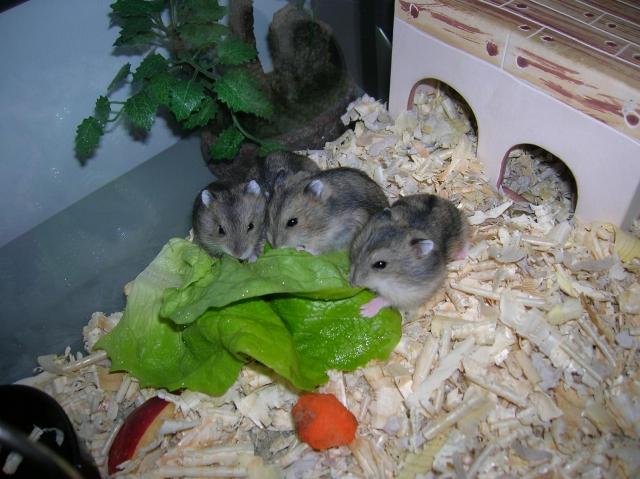
The winter white dwarf hamster (Phodopus sungorus), also known as the Russian dwarf hamster, Djungarian hamster, Dzungarian hamster, striped dwarf hamster, Siberian hamster, or Siberian dwarf hamster, is one of three species of hamster in the genus Phodopus. Its body is ball-shaped and typically half the size of the golden hamster, so is called a dwarf hamster along with all Phodopus species. Features of the winter white hamster include a typically thick, dark grey dorsal stripe and furry feet. As winter approaches and the days shorten, the winter white dwarf hamster's dark fur is almost entirely replaced with white fur. In captivity, this does not usually happen as animals maintained as pets are generally housed indoors and exposed to artificial light that prevents the recognition of short winter daylengths. In the wild, they originate from the wheat fields of Kazakhstan, the meadows of Mongolia and Siberia, and the birch stands of Manchuria. Winter white dwarf hamsters are common pets in Europe and North America, and exhibit greater variance in their coats than those found in the wild. They reproduce often-more so than golden hamsters, and as they have no fixed breeding season, can continue to produce some numbers of offspring all year round. Breeding females may show aggression to males. The winter white is known to be one of the most tamable types of hamsters.
Gallery
Ajouter des photos
Partagez vos photos de cette espèce (jusqu'à 20 à la fois) : elles sont vérifiées automatiquement, puis publiées.
Répartition
Occurrences observées (données GBIF). Les zones hors aire d'origine peuvent indiquer une présence introduite ou invasive.
Sources et crédits
Informations provenant de plusieurs sources vérifiées. Dernière mise à jour : .
Crédits photos (5)
- Photo : Original uploader was User:Alensha at hu.wikipedia · Domaine public · via Wikimedia Commons
- Photo : Prvok · CC BY-SA 3.0
- Photo : Vera Buhl · CC BY-SA 3.0
- Photo : F. · CC0 (domaine public)
- Photo : Dirk Goldhahn · CC BY-SA 2.5 · via Wikimedia Commons
Mentions de licence
Texte disponible sous licence CC BY-SA 4.0. Il adapte notamment Wikipedia (CC BY-SA) : Winter white dwarf hamster (Wikipédia, auteurs dans l’historique de l’article).
- Taxonomie : GBIF Backbone Taxonomy (CC BY 4.0)
- Carte : occurrences GBIF, fond © contributeurs OpenStreetMap (ODbL)
- Statut de conservation : Liste rouge de l'UICN, via Wikidata (CC0)
Détail : Sources et licences.
Discussion (0)
Aucun message pour l’instant. Lancez la discussion sur cette fiche (sources, précisions, débats éditoriaux).
Connectez-vous pour participer à la discussion.