
Sperm Whale
Physeter macrocephalus
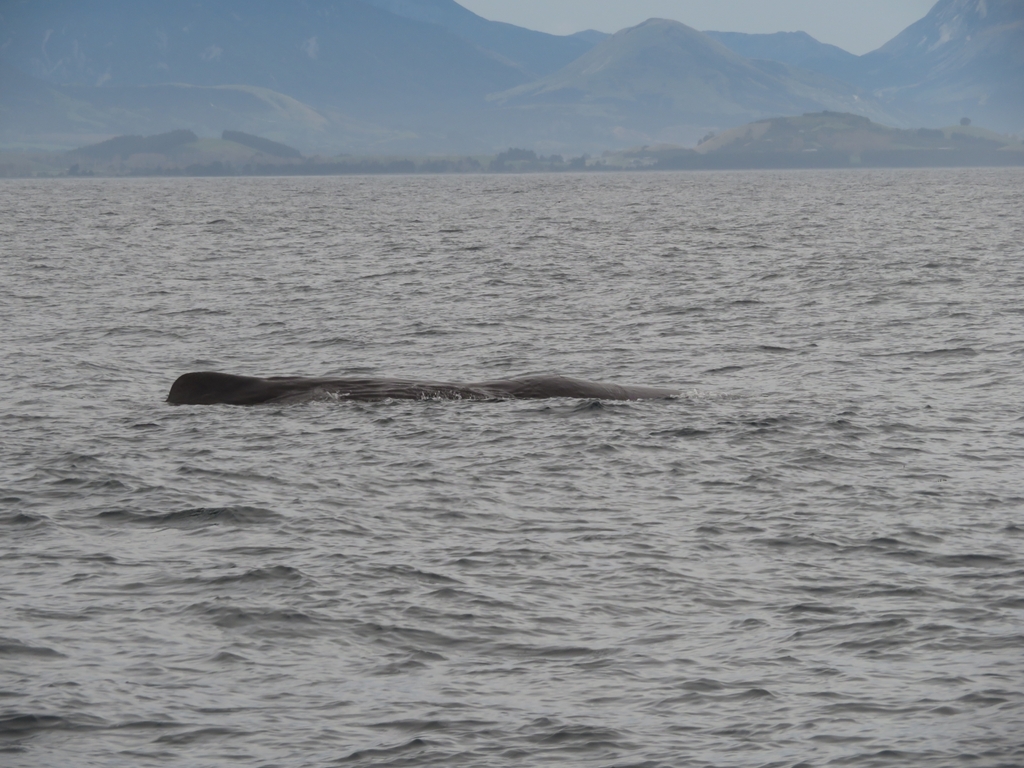
The sperm whale or cachalot (Physeter macrocephalus) is the largest of the toothed whales and the largest toothed predator.
- Kingdom
- Animalia
- Phylum
- Chordata
- Class
- Mammalia
- Order
- Cetacea
- Family
- Physeteridae
- Genus
- Physeter
- Species
- Physeter macrocephalus
Description
The sperm whale or cachalot (Physeter macrocephalus) is the largest of the toothed whales and the largest toothed predator. It is the only living member of the genus Physeter and one of three extant species in the sperm whale superfamily Physeteroidea, along with the pygmy sperm whale and dwarf sperm whale of the genus Kogia. The sperm whale is a pelagic mammal with a worldwide range, and will migrate seasonally for feeding and breeding. Females and young males live together in groups, while mature males (bulls) live solitary lives outside of the mating season. The females cooperate to protect and nurse their young. Females give birth every four to twenty years and care for the calves for more than a decade. A mature, healthy sperm whale has no natural predators, although calves and weakened adults are sometimes killed by pods of orcas. Mature males average 16 metres (52 ft) in length, with the head representing up to one-third of the animal's length. Plunging to 2,250 metres (7,380 ft), it is the third deepest diving mammal, exceeded only by the southern elephant seal and Cuvier's beaked whale. The sperm whale uses echolocation and vocalization with source level as loud as 236 decibels (re 1 μPa m) underwater, the loudest of any animal. It has the largest brain on Earth, more than five times heavier than a human's. Sperm whales can live 70 years or more. Sperm whales' heads are filled with a waxy substance called "spermaceti" (sperm oil), from which the whale derives its name. Spermaceti was a prime target of the whaling industry and was sought after for use in oil lamps, lubricants, and candles. Ambergris, a solid waxy waste product sometimes present in its digestive system, is still highly valued as a fixative in perfumes, among other uses. Beachcombers look out for ambergris as flotsam. Sperm whaling was a major industry in the 19th century, depicted in the novel Moby-Dick. The species is protected by the International Whaling Commission moratorium, and is listed as vulnerable by the International Union for Conservation of Nature.
Gallery
Ajouter des photos
Partagez vos photos de cette espèce (jusqu'à 20 à la fois) : elles sont vérifiées automatiquement, puis publiées.
Répartition
Occurrences observées (données GBIF). Les zones hors aire d'origine peuvent indiquer une présence introduite ou invasive.
Sources et crédits
Informations provenant de plusieurs sources vérifiées. Dernière mise à jour : .
Crédits photos (5)
- Photo : Max G.W. Verheij (@maxverheij) · CC0 (domaine public) · via iNaturalist
- Photo : @wiktorbort · CC BY-NC 4.0 · via iNaturalist
- Photo : Quentin Paynter (@paynterq) · CC BY-NC 4.0 · via iNaturalist
- Photo : @clararodrigues · CC BY-NC 4.0 · via iNaturalist
- Photo : Daniel Villarreal (@danielhvg) · CC BY-NC 4.0 · via iNaturalist
Mentions de licence
Texte disponible sous licence CC BY-SA 4.0. Il adapte notamment Wikipedia (CC BY-SA) : Sperm whale (Wikipédia, auteurs dans l’historique de l’article).
- Taxonomie : GBIF Backbone Taxonomy (CC BY 4.0)
- Carte : occurrences GBIF, fond © contributeurs OpenStreetMap (ODbL)
- Statut de conservation : Liste rouge de l'UICN, via Wikidata (CC0)
Détail : Sources et licences.
Discussion (0)
Aucun message pour l’instant. Lancez la discussion sur cette fiche (sources, précisions, débats éditoriaux).
Connectez-vous pour participer à la discussion.